Blog

  • Puppy: Cute Fun Ways To Surprise Your Family With a Puppy at Christmas

    Christmas is a time for spreading cheer and a puppy will always bring joy around. It is hard to find someone who doesn’t get excited when a puppy is looking up at them with a wet nose and trusting eyes. Gifting a new puppy to your loved one during Christmas is sure to make them happy and you can make the event even more enjoyable by planning it as a surprise! The puppy is soon to win them over with lots of wet kisses and cuddles and it will be the beginning of a meaningful relationship.

    Here are some cute ways in which you can surprise your family or a loved one with a puppy at Christmas.

    Delaying the Surprise

    Yes, the best way of making the surprise even better is to delay it. There might be several occasions when your friend or a family member has gone looking for puppies at pet stores. When this happens again, tell them why taking a puppy is a bad idea at that moment. Being familiar with the person will help you come with all the reasons why they might not want a puppy, like anyone to take care of it when they are out for work.

    They are going to be immensely disappointed at first and you have to deal with this phase. However, tell the caretaker of the puppy secretly that you are interested, and then go back alone to get it right before Christmas. The surprise and joy on their faces when they finally lay eyes on the puppy will be worth all this effort.

    Puppy in Gift Wrapping

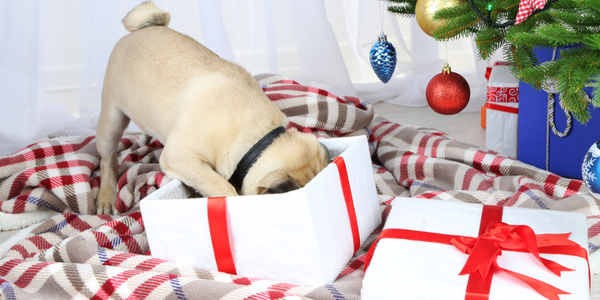
    While this might seem like a cliché to many, there is a reason why this is done so many times. Putting the puppy in a present box never fails to make an impact. This works best as a Christmas present, as you put the puppy inside a box and place it under the Christmas. Wrap the box in pretty paper with a bow on top! When the ‘present’ is unboxed, the squeals of joy will not stop anytime soon!

    Of course, you have to careful while placing the puppy inside the box or basket. Make sure you put the puppy just minutes before you are about the spring the surprise. This will avoid any discomfort from the puppy’s side. However, a typical puppy can still make cute noises from the moment they are put inside the box, so you could put in a treat or two with him, or a toy to keep him quiet.

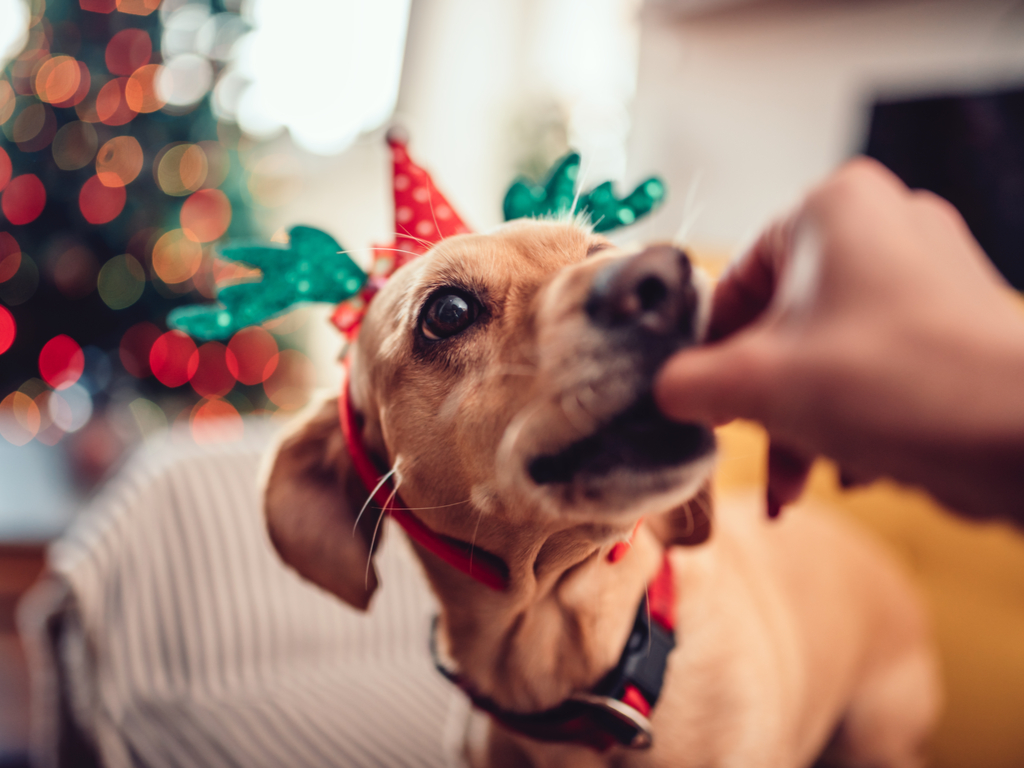
    Even if he does make some sounds, it still makes for a great surprise as everyone is startled by puppy noises in the room. Make sure you leave a gap in the box for ventilation. Putting a small Santa cap on the puppy is sure to melt everyone’s heart.

    Surprise Visit

    You can make the puppy the star of your Christmas dinner! Gather everyone around for the grand Christmas meal and make everyone is in the same room while they are eating. Confide in a friend and let him slip the puppy into the room. Everyone is sure to be caught off guard when they see a puppy exploring the room all by himself. There are going to be frantic inquiries while some will leave their seats to cuddle the little bundle of joy.

    After the puppy has managed to surprise everyone, introduce it to the family. This surprise always works the best with children because not knowing that the puppy is already a part of the family, they will insist on keeping the puppy that has just walked in. Tell them they cannot, and you have to return the puppy to whoever it belongs- maybe a neighbor. Then, when you finally tell them the truth, they are most likely to shed tears of joy.

    Treasure Hunts

    Can there be a treasure hunt better than the one which involves a puppy? Surely not. Organize a treasure hunt for Christmas and leave clues around the house for everyone, telling them this is how they find their gifts. In the meantime, hide the puppy in a well-ventilated basket and place it in a safe corner of the house.

    As the clues lead your family towards that spot, they are sure to be intrigued by that basket, which in all probability, will also be swaying a little. Tell them to open it and the boundless joy on the faces as they greet the new puppy is going to be the best Christmas gift for you ever.

    Car Surprise

    With all your Christmas shopping just about over, ask your family to help you with all the bags that you have in the car. Tell them to open the car door carefully, because you have some very precious shopping inside. As they open the car door, Tada! There is the puppy, sitting snug on the backseat, looking all pretty with a bow! This surprise is sure to bring all your neighbors to your driveway because of course your family would be screaming in joy!

    With a car surprise, remember to keep the windows down when the puppy is inside by a couple of inches. However, the doors should be locked so that they do not accidentally open while you are telling your family to get the bags. You should also avoid doing this if it is very hot or very cold. Some Christmases can be freezing, so you could consider leaving your car heater on. But overall, do not leave the puppy inside alone for more than a few minutes. You could also confide in a friend to hold the puppy if it is very small or is particularly restless.

    With these ideas, you are sure to surprise your family in a novel way. While there is no dearth of gifts on the shop shelves for the festive season, a puppy will bring your family way more joy than you could have ever imagined. It will be your best Christmas ever.

  • Puppy Pals For Tough Times: Service Dogs In The Time of COVID

    2020 has been a hard time for dog lovers. COVID has made it difficult to take care of them, be it getting to the vet for treatments or even adopting one in the first place. And the stress it’s putting on their owners isn’t great for them either.

    But for all of the disruptions, there’s still a great way to get a dog to love and support you. Service dogs have been considered an essential service by the federal government. This makes it fully possible to get a dog to help you through these trying times.

    Let’s take a look at the process, and a few of the many benefits a canine friend can bring you.

    The Benefits of Service Dogs

    Service dogs have been a great option for a long time. And now, with all the restrictions in place to fight the pandemic, it’s one of the easiest ways to acquire an animal.

    Service dogs are provided to those who have some kind of physical, mental, or emotional need that the dog can meet. One of the most obvious examples would be a seeing-eye dog for people who suffer from blindness. But these aren’t the only examples.

    Emotional support animals have been shown to have positive effects on people suffering from a wide variety of problems or conditions. People with bipolar disorder, clinical depression, and chronic anxiety are eligible for a service dog. Studies have shown that they work wonders in helping to manage these issues.

    Service dogs have also been shown to be highly beneficial in the management of autism, particularly in children. They help provide emotional support, and a comforting atmosphere.

    How to Get a Service Dog

    Acquiring a service dog is a more complicated and involved process than simply adopting a dog. Emotional support alone does not qualify the dog as a service animal. Instead, it has to be trained in some way that actively aids in the management of a disability, illness, or other condition.

    Physical examples of this, such as support dogs for people with blindness, or people who suffer from seizures, are the most well known. Nowadays, it is also possible to qualify for a service dog for mental health reasons.

    A clinical diagnosis of conditions such as clinical depression, bipolar disorder, obsessive-compulsive disorder, or PTSD qualifies you for a service animal. However, a clinical diagnosis of the condition is often a prerequisite for obtaining a service animal.

    Service Dogs Make Perfect Companions

    Service dogs are wonderful companions and a great choice for many people. They have been shown time and time again to provide help to people struggling with all kinds of illnesses, disabilities, and other issues. They provide comfort, stability, and a sense of relief. In these trying times, we could all use that.

    So if you’re struggling, and feel that a service animal could help you, see about adopting an animal as a service dog. Or, if you already own a dog, look into registering them as a service animal.

  • National Cat Lovers Month: 10 Reasons We Love Cats

    It’s National Cat Lovers Month! Time to celebrate everything we love about our little furry friends. There are good reasons why dogs and cats are the standard pet of choice.

    While both make great pets, many have a great deal of love for cats in particular. So whether you already own a pet cat or getting one, here are ten reasons why they’re often the pet of choice.

    They’re Independent

    Some consider cats to be arrogant as they go about their business like they own the place. But they still have their ancestral instincts, often cautiously looking out for themselves. They don’t constantly need your attention or approval.

    They Clean Themselves

    Due to their independent nature, cats will happily clean and groom themselves so you don’t have to. They can spend half the day cleaning (if they’re not sleeping), which means your cat is happy, comfortable, and most of all, clean.

    Quiet Creatures

    A dog can drive you bonkers with barking. But a cat is barely audible at all. They might meow when hungry, but they move around gracefully and quietly. When they’re not, they’re probably sleeping, so they’re far more peaceful than a puppy.

    Cats Are Curious

    Cats are curious about everything. They love to explore the great outdoors as well as every nook and cranny at home. This makes them interesting, and oftentimes hilarious to watch as they discover something they didn’t expect.

    They’re Intelligent

    While they don’t work the same way as dogs, cats can be trained, just not in the same way. They behave in accordance with how you treat them and will communicate this to get what they want. They know just how cute to be when they want attention or food!

    They Help You Relax

    After a long day, it can be nice to sit down and stroke your cat while it happily purrs away. Science has shown that this positive bonding, rhythmic stroking, and focused attention is a great way to relax and relieve daily stresses.

    Good For Our Health

    They also play a huge part in our mental and physical health. Interaction with them helps lower blood pressure and releases dopamine and serotonin. This helps improve our mood, immune function, and reduce the risk of illness and disease.

    Majestic and Adorable

    The way they move and position themselves can be both adorable and funny. They have elegant agility at times and can bend themselves into all sorts of shapes, making them interesting and fun to watch.

    Excellent Reflexes

    They can climb almost anything and fit into any small space. Some like to play fetch and some like to catch bugs. They’re so quick they can even catch and dispose of pesky flies, making them great pest controllers.

    They Show Love

    They may not jump about and lick us like a dog, but they show their love in other ways. Whether it’s rubbing against your leg, meowing, or cuddling up on your lap, they can be very lovable and affectionate.

    More Than a Standard Pet

    As you can see, cats are wonderfully adorable and intelligent animals and are so much more than just a standard pet. With all of their quirks and peculiarities, they are the majestic moggies we’ve come to love.

    Good for our health and great for our soul, making them one of the most loved animals in the world. For more about pets, come and check out our blog today.

  • Thanksgiving With Your Pets

    The year 2020 has been different than any year we have experienced, and with the holidays right around the corner, we don’t see that letting up. So Thanksgiving may look different this year. Perhaps the meal will be a bit smaller and the gathering less crowded, but something that absolutely will not change is that our pets will celebrate the day with us.

    While it is not unanimous that people-food wisely given is okay for most pets, there are a number of factors to keep in mind. It’s not only your pet’s physical health that is affected when you feed them from the table according to Malia Friesen, a veterinarian writing for PetMD.com.

    ●     Establishing a habit of feeding from the table usually starts with just a taste. But just as Fido has us trained to pet him when he nudges our hand or take him outside when he barks, he can train us pretty quickly to feed him whenever he smells something you are eating. It’s better not to start a habit that is difficult to break.

    ●     Giving our pets food from the table can result in their consuming toxic foods that are completely safe for us but potentially hazardous for them.

    ●     Once Fido and Fluffy get used to people food, they may become unwilling to eat their own food, preferring yours. They may even refuse to eat any form of pet food or need to have their food constantly change as they quickly decide they don’t like that one, either.

    To be sure, that turkey smell will certainly pull Fido into the kitchen and have Fluffy demanding her share, too. Here’s what to know about the turkey and trimmings to keep them safe and healthy this year.

    10 things your pets can enjoy this Thanksgiving

    1. Turkey with all fat, skin, and bones removed. If the meat has been roasted with spices, best to skip it (or wash it off) as some spices can be toxic. Feeding skin can cause pancreatitis.
    2. Although both dogs and cats can eat mashed potatoes, regular potatoes contain solanine, a defensive poison designed to keep animals from chomping on them. A better choice would be sweet potatoes, which don’t contain solanine. However, give them the sweet potatoes before you add the sugar, butter, and spices from candied yams, advises Gary Richter, MS, DVM and author of The Ultimate Pet Health Guide: Breakthrough Nutrition and Integrative Care for Dogs and Cats.
    3. Pumpkin is a great treat for pets, dogs and cats alike.  Pumpkin itself is a very healthy snack, inches explains Dr. Richter.  Pumpkin helps with digestive health and it’s great for a dog’s skin and coat. Also, if feeding canned pumpkin, make sure it’s just pumpkin and not the pre-spiced pie mix. [1]
    4. Carrots are a favorite food to give your dog anytime of the year, so Thanksgiving is a good opportunity to give him this treat. Although cats are not usually particularly fond of carrots, some like them as much as their canine counterparts. When preparing your special carrot dish for your family, just set aside a few pieces of carrot that is washed so you can indulge your pet without any additional ingredients.
    5. Many people favor the traditional green bean casserole and the holiday just wouldn’t be Thanksgiving without it. And green beans are nutritious and healthy for your pets, too. Once again, set aside cooked green beans before you add all the other ingredients.
    6. Corn off the cob is fine for dogs, but it’s best to avoid giving your cat corn. She probably won’t eat it anyway, since it should be served plain without any embellishment. The majority of commercial dog foods contain corn, so serving him a little bit of corn is fine, so long as it is just corn. Corn cobs are very hard to digest and can cause blockages in the digestive tract. Best to just cut the corn off the cob before giving it to Fido.
    7. Dogs can eat bread, as grains are a large part of most dog food. But yeast can cause bloating and gas, so go lightly on this treat. A whole roll, even for a big dog, is a bit too much. Same for cats.
    8. That apple pie should be served to your guests, not your pets. But since most dogs (and some cats) do like apples, freshly sliced apples are fine. The seeds in the apple core contain arsenic, though admittedly a small amount. Still, why risk it?
    9. Cranberries are fine for dogs, but keep them away from cats. This, of course, it not talking about cranberry sauce, which contains lots of sugar and other ingredients pets should stay away from.
    10. The best dessert for a pet during Thanksgiving is a slice of banana. Fresh or frozen, most dogs and some cats, enjoy bananas. Again, don’t feed them banana pudding, but just the plain fruit.

     10 things not to feed your pet on Thanksgiving

    It goes without saying that sugar is as bad for your pet as it is for you, so if the recipe calls for sugar, don’t give it to your pet. Here are some more foods you should avoid.

    1. Alcohol. There is no circumstance under which your pet should drink alcohol, and Thanksgiving is no exception. Alcohol can cause vomiting, diarrhea, decreased coordination, central nervous system depression, difficulty breathing, tremors, abnormal blood acidity, coma and even death.
    2. Never give your dog or cat chocolate in any form. All forms of chocolate contain substances called methylxanthines, which are found in cacao seeds. When your pet eats chocolate, these substances can cause vomiting and diarrhea, panting, excessive thirst and urination, hyperactivity, abnormal heart rhythm, tremors, seizures and even death. And yes, just one piece is enough to cause harm.
    3. Grapes and raisins have an unidentified toxin in them that can cause kidney failure. More research is needed to identify why this happens, but the point is that it  does happen, and often very suddenly. (Dried, unsweetened cranberries are fine.)
    4. Onions (and chives, in the onion family) are very toxic substances to pets. If your recipe calls for onions, avoid allowing your pet to even get a tiny lick in.
    5. Garlic is often included alongside onions in Thanksgiving dishes, but it, too, should never be given to pets. Cats are more susceptible to the toxins in onions, chives and garlic, but dogs are vulnerable, too.
    6. Nuts (except cashews) should be avoided by animals, especially macadamia nuts. Because of their high fat content, they can cause digestive upset or even pancreatitis, which is very painful and can actually lead to death, according to ruffhero.com.[2]
    7. Milk and dairy products can cause significant digestive upset in pets because they do not possessive adequate amounts of the enzyme lactase which is necessary to digest dairy.
    8. Raw or undercooked meats or eggs. This one is controversial, but since salmonella and e.coli are both potential hazards of feeding these foods to your pet, it is best to simply be sure that meat and eggs are thoroughly cooked.
    9. Candy and other sweet treats are on the absolutely not list. You may be under the impression that it is the sugar in these foods that make them unhealthy, but zero-sugar products often contain artificial sweeteners that may be toxic. One particularly dangerous sweetener is xylitol, often used in candy, mints, gums, and even toothpaste. Xylitol can cause death within hours of ingestion.
    10. Caffeine is very bad for your pets. In fact, within 1-2 hours of consuming caffeine, your dog or cat could experience hyperactivity, restlessness, vomiting, elevated blood pressure or heart rate, tremors, seizures and death.[3]

    This year, our holiday celebrations may be different from any we’ve celebrated before, but with wisdom and care, it can be healthy, happy, and fun for all participants, from a large family right on down to just you and your pet.

     [1] Kearl, M. (2019, November 26). Safe Thanksgiving Foods To Share With Your Dog Plus Those To Avoid. Retrieved October 04, 2020, from https://www.akc.org/expert-advice/nutrition/thanksgiving-foods-to-share-with-your-dog-or-avoid/

    [2] Ruffhero. (n.d.). Pancreatitis In Dogs Can Be Fatal. Is Your Dog At Risk? Retrieved October 04, 2020, from https://www.ruffhero.com/pancreatitis-in-dogs/

    [3] 24/7 Animal Poison Control Center. (n.d.). Retrieved October 04, 2020, from https://www.petpoisonhelpline.com/

  • Top Dog Breeds for a Busy Family

    What to do, what to do? Your family wants a dog, but with work, school, social and sports commitments, how do you work in owning a dog and what breed would be the best? Since each family is different, the answer to that question isn’t a one-size-fits-all response.

    What is a low-maintenance dog?

    What is low-maintenance for one family is a huge hassle for another. Defining low-maintenance is a subjective exercise. Does it mean the breed needs little exercise? No grooming? Tolerant of being left alone? No shedding or easily trained? No dog breed is maintenance-free, but because purebred dogs have been specifically bred for certain traits, choosing a dog based on the needs of its breed can be more satisfying. Here’s what the experts say.

    Large Breeds

    Mastiff

    If your heart’s set on a really big dog, the Mastiff may be just the dog you’re looking for. This giant breed actually has low energy, so lazing around is its idea of heaven. In fact, Mastiffs have low endurance, so long walks are not something they look forward to. They are happy alone for long stretches of time and are generally docile in temperament. Not aggressive, they do tend to be somewhat aloof and prefer the company of their family. The Mastiff likes pleasing his people, so training is fun and easy. His short coat does not require much grooming. Like most large breeds, however, the life span is somewhat short, from about 8-10 years. Height 27 – 30 inches, weight 120 – 220 pounds.

    Bullmastiff

    Still quite a large breed but smaller than a Mastiff, the Bullmastiff enjoys his daily walk as long as it’s not too far. Endurance, like its larger cousin, is still quite low. His short coat requires little maintenance and he loves to lie around watching the big game with you. Affectionate with his family and very tolerant of children, he nevertheless makes a formidable guard dog. Training him is different from most obedience training with other breeds, but not difficult. His lifespan is on par with the Mastiff at about 8 -10 years. Height 24 – 27 inches, weight 100 – 130pounds.

    Medium Breeds

    Greyhound

    Contrary to popular belief, the racing greyhound doesn’t have a lot of exercise needs. They really make wonderful couch potato companions. A daily walk and occasional run are plenty for this incredibly sweet-natured hound. Easy to train, gentle and quiet, this elegant breed might take over your couch but will not demand constant attention. Their short coat requires only minimum grooming. Greyhounds live 10-13 years. Height 25-30 inches, weight 60-80pounds.

     Basset Hound

    Bred to be a working dog, on the field the Basset Hound is very active. In the home, however, this gentle, calm dog is a totally different dog. His long, soft ears and droopy expression captivate dog lovers the world ‘round. A once-daily walk is sufficient to keep him happy and his grooming needs are quite low. He is most content when with his people, and is friendly and accepting of strangers and other pets. Early on, training is a necessary part of owning a Basset Hound so his natural propensity to stubbornness is overcome. Standing just under 15 inches, he is a medium sized breed due to his weight, 40 – 60 pounds on average. The average life span is 8 – 12 years.

    Standard Poodle

    Except for grooming, this may be the best option for busy families or even seniors. The Standard Poodle is calm and gentle, very intelligent and easy to train. A daily walk will satisfy their exercise needs. Their coats don’t shed and are hypoallergenic, which is often the deciding factor for families who suffer from allergies. A plus is that this excellent breed doesn’t mind being left alone while his family is away from the house. Weighing in at 45 – 70 pounds and standing over 15 inches tall, the Standard Poodle’s grooming needs can be taken care of by dropping him off at a grooming salon and picking him up later. Although his life span is relatively long at 12 – 15 years, some Standard Poodles have lived up to 17 years. 

    Small Breeds

    Dachshund

    Although Dachshunds are energetic little dogs, they can get too much exercise, which can affect their long backs. Climbing stairs and jumping off of things can also injure them, so keep that in mind if you have a two-story home. The short-haired variety has very low grooming needs, and all three varieties (short coat, long coat, and wire coat) stand under 9 inches. The miniature variety is even smaller. Weighing in at between 11 and 32 pounds, the sometimes clownish Dachshund is a favorite everywhere. Early training is important as they can be stubborn if not brought up to obey. The lifespan of this sweet-natured dog is from 12 – 15 years. 

    Papillon

    The Papillon (French for butterfly) has beautiful, erect ears that trail long tresses that fan out to look like a butterfly. Some have drop ears as well, looking less like a butterfly but just as beautiful Although his single layer coat is long, brushing a couple of times a week is adequate and he doesn’t require hair cuts. With no doggy odor and hypoallergenic coat, he is considered low maintenance on grooming. This breed loves to play and is affectionate with children and other pets. A daily romp in the backyard or at a dog park along with his daily walks will keep him healthy and happy. He’s a tiny spaniel, half lap dog and half court jester. Perhaps a little difficult to house train (as are most toy dogs), he is highly intelligent and learns easily with consistency. He stands just 8 – 11 inches high and weighs 6 – 10 pounds, a bundle of energy and love. With a long life span of 14 – 16 years, he is there for the long haul.

  • Life Hacks for New Puppy Owners

    You and your family made the decision to bring a new puppy into your home, found the one that stole your heart, and now that puppy you dreamed about is a reality. And reality has hit home—hard! Perhaps you hadn’t realized that raising a puppy would be quite the task it’s turning out to be, and you wonder if there are easier ways to get it done.

    Well, take heart. There are! Here’s a list of the ten best hacks for living with a new pup.

    1.  My puppy chews on everything! You’ve done the obvious and bought plenty of chew toys and kept valuables up off the floor, but Puppy is still chewing. Your computer doesn’t work because he chewed the power cord and the baseboards are looking the worse for wear, too. What to do? Spray bitter apple on a cloth and wipe those surfaces down well. Dogs hate the taste of bitter apple and will steer clear once they take the first bite.

    2.  My large-breed puppy pulls my arms off when we walk. In a matter of a few weeks, that rolly-polly puppy has increased in size, weight, and strength. Even the word walking is misleading—he’s doing the leading and dragging you behind! Switch to a front-clip harness, which puts you in control. Harnesses that clip to the back encourage pulling.

    3.  All he wants to do is play—and I have studying to do. Yes, the main goal in a puppy’s life is to get in as much play and attention from you as he can. Most pups like to play tug, but you need to be careful of their developing teeth. Make a tug toy by putting a knot in an old sock toe and making a loop at the top end. Stick your foot through it and let him tug away. Gently moving your foot back and forth gives him all the tugging attention he needs.

    4.  I don’t think he’ll ever catch on to potty training! Make each success rewarding with special treats reserved only for that purpose. Many dogs love carrots, but whatever your pup goes nuts over is the treat to choose. He’ll catch on faster when his behavior brings immediate rewards.

    5.  He doesn’t seem to understand what good behavior is. Puppy’s don’t have a value system like ours. Whatever rewards him is good, whether it’s a treat you give him or something he chooses for himself (and we certainly don’t always agree on that one!). Unfortunately, whatever he’s doing at the time you give him a reward is what he thinks he’s getting rewarded for. Any time delay between the behavior you want and the reward will make him misunderstand what you are telling him is good. Try a clicker training! Clicking and immediately rewarding will pinpoint to him what he’s doing that is right.

    6.  My puppy is afraid of new situations, people, and other dogs. The first three months of your puppy’s life have a permanent effect on his temperament. Getting him out where new people, situations, and other dogs are is paramount in his development. Not only does it help encourage interaction, it also helps reduce fears that may pop up in unusual situations, such as thunderstorms. Socialization builds confidence and a happy outlook on life.

    7.  He’s digging up my garden! Yes, some dogs love to dig. Whether he’s a terrier (the name comes from a word meaning “earth”) or he just enjoys digging, the urge can be destructive. Best hack? Give him his own place to dig! Dig a small pit and mix some sand in with the soil to keep it loose and improve draining. Bury his favorite toy and reward him when he digs it up. Before long, his digging pit will be the only place he makes a mess.

    8.  He tears the stuffing out of toys and then isn’t interested in them anymore. Some pups just love to rip the stuffing out and that seems to be the only thing they like to do. Replacing stuffed toys can get expensive, though. Here’s how to make a reusable stuffed toy that will save you tons of money. JW Pet Company makes a durable, rubber ball full of holes, appropriately called the Hole-ee Roller Ball. Stuff fabric scraps into the ball. Pupster will enjoy pulling the fabric scraps out again and again.

    9.  Pet poop bags are so expensive! That’s true, they are. But cleaning up after your dog is not only socially responsible, it’s quite often the law as well. Instead of buying expensive poop bags, use cheaper diaper-disposable bags instead. The house-brand will almost always beat out the name-brand.

    10.   My vet says I should brush my puppy’s teeth, but he hates it! Some dogs don’t seem to mind having their teeth brushed and others will fight you, well, tooth and nail. Rather than make each experience a fight, spread doggy toothpaste on a chew toy and let him brush them all by himself!

  • National Cook for Your Pets Day

    Today, November 1, 2020, is Go Cook For Your Pet Day. Here are a few great recipes to honor your BFFF (best four-footed friend) in the kitchen this year.

    Animals can have sensitive stomachs, so cooking for your pet challenges you to use healthy ingredients that your buddy will love while still maintaining his health. Drool-worthy recipes are abundant on the internet but keeping his preferences and needs balanced requires sifting through the lot. We’ve compiled three each for dogs and cats so you can make this special day truly that.

    Special considerations

    Remember NOT to include these ingredients in your pet’s special food.

    ●  Raisins

    ●  Grapes

    ●  Onions (including shallots and chives)

    ●  Garlic

    ●  Tomato

    ●  Chocolate

    ●  Avocado

    ●  Yeast dough

    ●  Caffeine

    ●  Alcohol

    ●  Artificial sweeteners

    ●  Xylitol

    ●  Macadamia nuts

    What should I cook for my dog?

    Rather than cook a whole meal for your dog which could upset his digestive system, consider making special treats and feed them small-scale so his balanced diet isn’t compromised.

    Pumpkin Ginger Dog Biscuits

    Dogs love these tasty treats and the ginger is good to settle an upset tummy (so save some for later).

    Ingredients:

    • 3 cups whole wheat flour
    • ½ cup pumpkin
    • ½ teaspoon ground ginger
    • 1 large egg, beaten
    • 1 tablespoon coconut oil, melted
    • ¼  to ½ cup water

    Directions:

    1.      Preheat the oven to 275° F.

    2.      Mix flour and ginger together until completely combined.

    3.      In a large mixing bowl, beat together pumpkin, coconut oil, and egg.

    4.      Add flour mixture and blend together with pumpkin mixture.

    5.      With the mixer on low, add water a little at a time until dough forms but isn’t sticky.

    6.      On a floured surface, roll the dough out to ¼” thickness.

    7.      Cut into shapes with a cookie cutter, a glass turned upside down, or a knife.

    8.      On an ungreased baking sheet, put the biscuits about 2” apart and bake about 2-½ hours or until lightly browned. Note that the tops may crack.

    Sweet Potato Fries

    This is one you and Fido can actually share!

    Ingredients:

    • 1 whole sweet potato
    • 1 tablespoon coconut oil, melted
    • ½ teaspoon cinnamon
    • ¼ teaspoon turmeric

    Directions:

    1.      Preheat the oven to 425° F.

    2.      Wash and peel the sweet potato, cutting it into long, thin “french fries.”

    3.      In a bowl or plastic bag, toss the potatoes with the coconut oil and spices.

    4.      Place on an ungreased baking sheet in one layer. Do not overlap potatoes.

    5.      Bake for 15 minutes, flip potatoes over and cook for another ten minutes.

    6.      Cook completely before letting your pup enjoy this treat with you!

    Treats for diabetic dogs.

    Don’t leave your beloved pup out even if he has diabetes. Here’s one just for him (other dogs like it, too).

    Ingredients:

    • ½ cup whole wheat flour
    • 2 large eggs
    • 1-½ pounds of beef liver, cut into small pieces

    Directions:

    1.      Preheat the oven to 350° F.

    2.      Line a jelly roll pan or shallow baking dish with baking parchment.

    3.      Pulse a food processor to finely chop the liver.

    4.      Add remaining ingredients and continue to process until smooth.

    5.      Spread evenly in the prepared pan.

    6.      Bake for 15 minutes (the center should be firm).

    7.      Cut with a pizza cutter and store refrigerated in a sealed container.

    What can I cook for my cat?

    Favorite Biscuit Treats for Cats

    Here’s one variety, but feel free to substitute your cat’s favorite ingredient for the catnip.

    Ingredients:

    • 1-½ cups whole wheat flour
    • 1-½ teaspoon organic catnip
    • ⅓ cup dry milk
    • ½ cup milk
    • 2 tablespoons melted butter
    • 1 tablespoon honey
    • 1 large egg

    Directions:

    1.      Preheat the oven to 350°F.

    2.      In a large mixing bowl, combine all dry ingredients and mix thoroughly.

    3.      Add all the wet ingredients and mix to form a firm dough.

    4.      Roll on lightly floured surface using a small hor d’oeuvres cutter or a knife.

    5.      Bake for 20 minutes, turning half way through to crisp both sides.

    6.      Cool completely before giving these treats to Fluffy.

    7.      These keep on the counter in an airtight container. They also freeze well.

    Cheesy Kitty Treats

    They smell good enough to eat, but save them for your kitty!

    Ingredients:

    • ¾ cup shredded cheddar cheese
    • ¾ cup whole wheat flour
    • ¼ cup sour cream or plain yogurt (I used Chobani 0% fat Greek yogurt)
    • ¼ cup cornmeal
    • 5 tablespoons grated Parmesan cheese
    • Several tablespoons of water

    Directions:

    1.      Preheat your oven to 350°F.

    2.      Line a cookie sheet with baking parchment.

    3.      Combine all ingredients except water and stir together.

    4.      Add water a tablespoon at a time until the dough comes together in a ball.

    5.      Roll out on a lightly floured surface and cut into shapes with a small hor d’oeuvres cutter or a knife.

    6.      Place on the parchment paper and bake for about 25 minutes.

    7.      Cool completely before serving and store in an airtight container.

    Treats for Finicky Eaters

    If you have a cat with tummy issues or who is picky, these nutrient-dense treats will really tickle her fancy!

    Ingredients:

    • ½ cup quinoa flour
    •  ½ cup brown rice flour or oat flour
    •  1 tablespoon dried catnip
    •  4-5 ounces sardines, tuna, or salmon (choose your cat’s favorite)
    •  ¼ cup parsley, chopped
    • 1 egg
    •  ½ tablespoon olive oil

    Directions:

    1.      Preheat the oven to 350°F.

    2.      Line a cookie sheet with baking parchment.

    3.      Pulse all ingredients in a food processor until thoroughly combined (dough will be sticky).

    4.      You can either pat the dough into a ¼” round and cut out shapes or simply pinch pieces off and make them into little balls.

    5.      Place on the parchment-lined cookie sheet and bake for about 10 minutes. They should be dry to the touch.

    6.      Let cool completely before delighting Fluffy with these treats.

    7.      Store in an airtight container.

  • Easy DIY Cat Toys

    We’re sure your cat loves some of the random things laying around the house. In that case, why spend a ton of money on cat toys? Here are 15 easy breezy cat  inchestoys inches that you probably already have at home.

    Cat toys made with household recyclables.

    1. Easiest cat toy ever. Wad up a ball of aluminum foil. It’s lightweight and skitters across a room with the gentlest touch of a paw.
    2. Wine corks, feathers and jute glued into a cork with a hole in it will keep your kitty entertained for hours. How-to here.
    3. An empty paper bag or cardboard box is preferred by cats of all sizes and ages. Cut holes for them to poke their paws through and let them at it!
    4. Toilet paper tubes with straw poked through them will demonstrate your feline’s more interesting antics which are guaranteed to make you laugh out loud.
    5. With little more than an old t-shirt, a couple of wire coat hangers and a piece of sturdy cardboard, you can make a cat tent that rivals the expensive ones sold in pet supply stores. Here’s the how-to.
    6. Another way to use toilet paper tubes is to cut the tube into four rings, inserting one inside the next until you have formed a ball. Stuff treats inside and watch Fluffy go to work trying to get them out.
    7. Pull yarn through an empty thread spool and tie knots so that the yarn doesn’t come out. Leave the yarn long enough to make ribbons.
    8. Cut the top and bottom off of an empty soda bottle and then cut the rest into a spiral. Cats find this irresistible!
    9. Cut the bottoms off of three (or more) paper bags and link one inside the other to form a tube. Toss some catnip or kibble into the tube to entice the kitty in.

    Crafty cat toys

    1. Make a wand from a dowel, some string or yarn, and a homemade pom-pom. Your cat that prefers to pounce instead of chase will love you for it!
    2. Instead of pom-poms, attach ribbons and jingle bells to the dowel for a more lively attraction. Cats seem to love the tinkly sound of the bells.
    3. Use a clear plastic food storage container to make a cat puzzle toy. Cut holes in the top big enough for Fluffy’s paws to go through and put ping-pong balls (or other small toys) inside the container. Secure the top and shake it where Fluffy can see the balls inside.

    Other things cats love to play with

    1. Give second life to a plastic easter egg by enclosing a couple of beans inside. Cats love things that rattle and are light enough to bat around.
    2. Drip tubing makes a great tease toy! Cut a piece 18 inches to 25 inches long and wave it near Kitty’s nose. Its movement will entice her to swat at it.
    3. Laser pointers are among the most beloved of all cat toys (dogs love them, too). Point it at a wall and move it around. Just be careful not to aim it into your cat’s eyes.
  • It’s Decorating Season!

    As we near the 2020 holiday season, it’s time to look back over the year and celebrate what’s coming next. There is lots of partying during the fall and early winter months, and if you have dogs or cats, chances are they will be very interested in your guests and even more in the food and decorations.

    Halloween

    When the kiddos dress up in Halloween costumes, we like to dress our pets up, too. That’s fine, because there are so many pet-safe costumes for your pets to don. However, decorations and Halloween treats can be toxic when ingested by animals, so here are a few reminders.

    1. The biggest hazard for pets on Halloween is from eating candy. All chocolate—especially dark chocolate—contains theobromine, a substance that, depending upon the amount, can cause digestive upset or even death. And don’t think other candies are okay. Sugar in the amounts humans consume is very bad for pets. Sugar-free doesn’t cut it, either, because artificial sweeteners—especially Xylitol, which can cause kidney failure and death—are bad for your furry buddies, too.
    2. Candy wrappers can become blockages in your dog or cat’s digestive tract, necessitating surgery. Some pets are quick to gobble up the wrappers because they smell like candy.
    3. Some pets find spider web decorations enticing. Cats can get entangled in them, and all pets may chew on them, once again risking blockages.
    4. Corn decorations and balloons both pose hazards for pets. Pets can choke on them or inhale them as well as the risk of intestinal blockages.
    5. Jack-o-lanterns can be hazardous to your pet, but not because they are pumpkins. Pumpkin is actually good for pets, but not in the form of carved decorations. Unrefrigerated, cut pumpkin quickly develops mold and large chunks of pumpkin with the outer shell are possibly deadly. Keep them outside on your porch and well out of the reach of pets. Of course, it goes without saying that untended candles are always dangerous!

    Thanksgiving

    The tips above for Halloween are applicable to Thanksgiving, but this holiday poses some additional problems for pet owners. Here are some tips to celebrate the day of giving thanks.

    1. Don’t feed your dog or cat leftovers from your turkey. Plain turkey is not toxic for pets and can even be part of your pet’s regular diet. But most people don’t eat plain turkey for Thanksgiving. We rub it with butter, oil, and spices and stuff it with garlic, onions, and other delicious—to us—ingredients. But some herbs, onion and garlic are very toxic to pets, causing at best digestive upset and at worst pancreatitis. 
    2. Don’t feed any bones to your pet, especially poultry bones which are brittle and can splinter and cause mouth wounds, throat wounds, and punctured stomachs or intestines. They can also cause blockages or choking.
    3. Cornucopias filled with fresh fruit can also be hazardous. Grapes in particular are especially toxic to pets and can cause death (so can raisins and currants). Citrus fruits can cause digestive upset, and virtually all seeds and pits of fruit are toxic. While dogs love apples and bananas, which are fine for them to eat, be careful that these fruits haven’t been around long enough to contain mold. Dried fruits such as strawberries, mango, pineapple, and apricots contain concentrated amounts of sugar, so they should be fed sparingly.
    4. Pumpkins, corn stalks, potted chrysanthemums and Indian corn are decorations cats can’t seem to resist. But mums are toxic and the other decorations can be choking hazards or cause choking or intestinal blockages, so consider artificial substitutes that are not so alluring to cats.

    Christmas

    Apart from the inevitable opened gift (it happens every year!), dogs and cats are wandering in a winter wonderland of hazards. From the Christmas tree to the mistletoe and the candles in the window, combining pets and Christmas decorations must be very carefully planned. First, let’s talk about the main decoration: the Christmas tree.

    1. Never use a flocked tree (or any flocked decor, for that matter). The flocking that looks like snow is attractive to pets and can easily cause blockages.
    2. Tinsel is by far the decoration that necessitates the most vet visits during Christmas.
    3. Hang your best ornaments near the top of the tree and consider replacing glass ornaments with acrylic ones. If they fall (or are batted off the tree by a cat’s paw), they won’t break.
    4. If your tree is small enough, elevate it to keep it away from dogs. Of course, a tree on a table isn’t out of the reach of cats which invariably climb into the tree.
    5. Real trees are poisonous to both dogs and cats if they munch on them and the oils in the needles can irritate skin. Those sharp needles can cause mouth wounds or eye hazards, too.
    6. If you do have a real tree, don’t use preservatives to keep it fresh longer. These substances can be poisonous to pets.
    7. Wrap the bottom of the tree in aluminum foil (covered by a tree skirt if you like) to keep the cat from climbing the tree.

    Other decorations that can cause problems are listed here.

    1. Poisonous plants. Holly and mistletoe, two Christmas favorites, are toxic to pets. So are amaryllis, poinsettias, and lilies. The silk varieties make a beautifully festive display and are not toxic.
    2. Candles are a no-brainer. Singed whiskers and tails are the least of the problems, as pets can easily knock them over and start a fire. We recommend battery-operated candles for a warm, inviting glow.
    3. Lights. Fortunately, strings of lights are going out of fashion as pre-lighted trees with LED lights become more affordable. When pets chew on electric cords or strings of lights, not only are they at risk of electrocution, the damaged cords can start a fire.

    With a little common sense and forethought, decorating your house for the holidays can be fun, festive, and safe for your pets. Happy holidays!

  • Puppy: A Guide for First Time Puppy Parents

    Yes, they are adorable. The little pitter-patter of their tiny feet as they follow you around, the tiny yips and barks, even the puppy-breath smell is irresistible. So arm yourself with knowledge so you know just what you’re getting yourself into.

    What about the costs?

    The cost of obtaining the puppy is only the beginning. Even if you are given the puppy for free, owning a dog is not. Let’s look at what expenses are involved so you are fully prepared to bring your puppy home!.

    You’ll need some equipment. 

    • Start with a crate. Dogs are by nature den animals, and once your puppy is used to the crate, he’ll go there on his own anytime he wants some alone-time. (Never use his crate as punishment. NEVER.) 
    • You’ll also need some steel or ceramic bowls to feed and water him. (Always keep his water bowl full of fresh water. FRESH.) 
    • He’ll need a good leather or canvas leash of about a six-foot length and a soft, leather collar. Rolled leather collars will not break the hair on his neck. (NO CHAIN OR SPIKED COLLARS!) 
    • Get him a bed (or two so you’ll have one for when you’re washing the other). 
    • Buy a few high-quality chew toys (but avoid rawhide, which can be swallowed and cause intestinal blockages). 
    • Lastly, you will want to invest in a pet gate (or a baby gate) to partition off areas where you don’t want him to go or to keep him confined to a “safe place.”

    Puppy-proof your home before you bring him home.

    • Get down on his level. What does he see? Can he chew on it? Can he knock it over? Can he get tangled up in it? If any of the answers are yes, change the environment so that all the answers are no.
    • Get a trash can he can’t open. Believe me, if you don’t, he will.
    • Put his new crate in your room, near your bed. It may make for a few nights of sleeplessness, but in the long run, you’ll be glad you did.
    • Watch the clutter. If you’re in the habit of leaving your shoes by the door, don’t. Shut doors to rooms that have expensive furnishings. Close closet doors and keep your stuff out of his reach.

    Sign up with a vet and consider pet insurance.

    If you have friends with dogs, ask for their recommendation on veterinarians. Make an appointment to meet the vet and ask about pet insurance. Get his or her advice on puppy food and routine vaccination schedules. Then set up your first appointment to bring your new puppy in for a check-up. It is best to schedule this visit within two or three days of bringing your pup home.

    Supervise your new puppy!

    Your puppy should only be out of his crate or a small area you have set up for him (his room) when you can watch his every movement. By supervision, I mean your eyes on him. No telephone calls, TV, or other distractions. The second you take your eyes off your puppy, he’ll get into trouble or disappear. If you must take care of something else, put him in his safe place first.

    • Take him outside to his “potty place” every time you let him out of his crate. Carry him outside and wait for results. 
    • Set a routine and stick to it. Potty training goes much easier if your puppy knows what’s coming next. Feeding and immediate play outside should be the same time every day so that digestive upsets are minimized and potty training is easier.

    Make sure everyone is on the same page.

    Don’t leave a child with the sole responsibility of caring for your new puppy, and be sure that every member of the family knows the rules and routine for his care. It’s fine to have more than one person caring for your pup, but designating one person as the main caretaker will smooth the transition from pup-less to puppy as a member of the household.

    Don’t expect good behavior unless you train him to know what that means.

    Enroll your new puppy in a “kindergarten” class. In these pre-training classes, puppies and their owners learn how to socialize with other dogs. This is a very important part of dog-training so that your puppy develops a confident, non-aggressive social personality. Without this kind of training, your puppy could end up being timid or aggressive around strangers or strange dogs. DON’T SKIP THIS ONE!

    After your pup “graduates” from kindergarten, enroll him in the next training class so that you can learn how to train him to be a happy, healthy member of your household. It’s best to have one person doing the training. Don’t switch out another family member because it’s as important for the person training the puppy as it is for the pup to learn the details and develop the techniques that will result in a well-trained dog.

    Embarking (pun intended) on your new adventure with a puppy will be immensely rewarding. You will gain a friend that will love you no matter what, loyal and constant. Throughout his life, you and he will find out what other dog-owners before you already know. A dog is man’s best friend.