Blog

  • Front Door Colors Columbus Loves (And What They Say About You)

    Front Door Colors Columbus Loves (And What They Say About You)

    Your front door does more than open and close. It sets the tone. It’s the first thing guests notice and the last detail they remember. In a city like Columbus, and throughout Ohio communities like Dublin, Westerville, and Grove City, where curb appeal matters year-round, your front door color quietly tells a story before you ever say a word.

    Choosing the right shade isn’t always easy. You want something that fits your home’s architecture, complements your exterior, and still feels like you. That’s where a little inspiration, and a bit of meaning, can help.

    The Most Popular Front Door Colors in Columbus (And What They Mean)

    Classic Black

    Timeless and sharp, black doors are a staple across Columbus, Ohio neighborhoods. They pair well with almost any exterior and instantly elevate a home’s look.

    What it says: You value sophistication, strength, and a no-fuss sense of style.

    Crisp White

    Clean, bright, and endlessly versatile, white doors feel fresh in every season. They work especially well on traditional or farmhouse-style homes.

    What it says: You appreciate simplicity, order, and a welcoming, open feel.

    Bold Red

    Red doors stand out, in the best way. They bring warmth and energy to a home, even on gray Midwest days.

    What it says: You’re confident, inviting, and not afraid to make a statement.

    Deep Blue (Navy & Slate)

    Blue continues to trend across Columbus, especially in deeper, moodier tones. It’s a modern choice that still feels grounded.

    What it says: You’re calm, dependable, and quietly stylish.

    Earthy Green

    From sage to forest green, these tones connect beautifully with nature. They’re especially popular in leafy neighborhoods and suburban settings.

    What it says: You’re balanced, grounded, and drawn to a sense of harmony.

    Warm Wood Tones

    Natural wood or wood-look finishes are making a strong comeback. They add texture and authenticity to a home’s exterior.

    What it says: You value craftsmanship, warmth, and a connection to tradition.

    Choosing the Right Color for You

    If you want a polished, timeless look, go black or navy.
    If your goal is warmth and personality, red or green might be your match.
    If you love a clean, airy feel, white is hard to beat.

    But here’s the truth: while trends and meanings are helpful, the best choice is always the one that feels right for your home and your style.

    How Color World Columbus, Ohio Can Help

    At Color World Columbus, we know that the “perfect color” isn’t one-size-fits-all. It’s all about balance: between your home’s character, your neighborhood, and your personal taste. Our team helps you narrow down options, test finishes, and land on a color that feels just right.

    Your front door is a small detail with a big impact. Whether you go bold or keep it classic, it’s an opportunity to express your style before anyone even steps inside. And when you’re ready to refresh it, we’re here to help you make it count.

  • How Long Exterior Paint Lasts in Columbus Weather (And What Affects It)

    How Long Exterior Paint Lasts in Columbus Weather (And What Affects It)

    A fresh coat of paint does more than improve your home’s look; it pulls everything together. It sharpens curb appeal, protects your exterior, and makes your space feel cared for. And while painting your home is always an exciting update, one question always follows: how long will it actually last in Columbus weather?

    The honest answer? It depends. Several factors influence how long exterior paint holds up, especially in a climate like ours.

    How Long Exterior Paint Typically Lasts in Columbus

    In general, exterior paint can last 5 to 10 years. However, in Columbus,Ohio, that range often leans toward the middle.

    Why? Our weather works overtime.

    • Hot, humid summers can cause paint to expand and soften
    • Cold winters and freeze-thaw cycles lead to cracking and peeling
    • Rain, snow, and moisture increase the risk of mildew and wear
    • UV exposure fades color over time

    All of this means your paint is constantly contracting, expanding, and weathering the elements.

    Key Factors That Affect Paint Lifespan

    Not all paint jobs age the same. Here’s what really makes the difference:

    1. Surface Material

    Wood siding typically needs repainting sooner (around 3 to 7 years), while brick or fiber cement can last longer.

    2. Paint Quality

    Higher-quality paints hold color better and resist cracking, peeling, and moisture damage.

    3. Prep Work

    Proper cleaning, sanding, and priming create a strong foundation. Skipping prep shortens lifespan, every time.

    4. Application

    Even coats and the right techniques matter. Professional application ensures better adhesion and durability.

    5. Sun Exposure

    Sides of your home that get direct sunlight will fade and wear faster than shaded areas.

    Signs It’s Time for a Repaint

    Not sure if your home is ready? Look for these quick indicators:

    • Fading or dull color
    • Peeling, cracking, or bubbling paint
    • Visible wood or surface underneath
    • Mold, mildew, or water stains
    • Chalky residue when you touch the surface

    If you’re noticing more than one of these, it’s likely time for a refresh.

    A Smarter Approach to Exterior Painting

    At Color World Columbus, we take the guesswork out of exterior painting. Our team evaluates your home’s current condition, considers Columbus-specific weather factors, and recommends the right timing and products for long-lasting results.

    We focus on proper prep, high-quality materials, and expert application, because a great paint job isn’t just about how it looks today but how it holds up years from now.

    Make Your Next Paint Job Last

    Exterior paint isn’t meant to last forever, especially in a climate like Columbus and surrounding areas like Dublin, Westerville, and Grove City. But with the right approach, you can maximize its lifespan and keep your home looking its best.

    And when it’s time for that next refresh, you’ll know exactly who to call.

  • Do Dental Offices Need Lead Aprons? Updated Guidelines Explained

    Do Dental Offices Need Lead Aprons? Updated Guidelines Explained

    When we think about safety gear, we usually picture construction sites or operating rooms. But dental offices? With X-rays being a routine part of care, radiation safety has always played a role behind the scenes.

    For years, lead aprons were a familiar part of that process. You’d sit in the chair, the apron would go on, and the X-ray would begin. Simple, standard, expected.

    Today, it’s a little different.

    Advancements in dental imaging and updated clinical research have changed how professionals approach radiation safety. So the question now is: are lead aprons still necessary in dental offices?

    Why Lead Aprons Were Once Standard

    Lead aprons were originally introduced to protect patients from scattered radiation during X-rays. Earlier imaging systems were less precise and used higher doses, so shielding made sense as an added layer of protection.

    At the time, it was the best available solution. And for decades, it became routine across dental practices.

    What Changed in Modern Dentistry

    Dental technology has evolved significantly. Today’s imaging systems are designed to be far more targeted and efficient.

    Modern dental X-rays now use:

    • Digital imaging with significantly lower radiation doses
    • Focused beams that limit exposure to only the necessary area
    • Improved techniques that reduce the need for repeat scans

    Because of these advancements, the amount of radiation used in dental imaging today is extremely low, often comparable to everyday background exposure.

    What the Latest Guidelines Actually Say

    According to the most recent update from the American Dental Association (ADA), the routine use of lead aprons and thyroid collars during dental X-rays is no longer recommended.

    This applies broadly to patients, including children and those who are pregnant. The reasoning is grounded in evidence. Research shows that with modern equipment, lead aprons do not provide meaningful additional protection. In some cases, they can even interfere with the imaging process, which may lead to retakes… and ultimately more exposure.

    So rather than adding safety, routine shielding can sometimes work against it.

    What Protects Patients Today

    The focus has shifted from physical shielding to precision and technique.

    Dental professionals now prioritize taking X-rays only when necessary and using the most advanced tools available. Proper positioning, accurate targeting, and well-maintained equipment all play a bigger role in minimizing exposure than aprons ever did.

    This approach follows what’s known as the ALARA principle: keeping radiation as low as reasonably achievable. It’s a standard that guides modern radiography across healthcare.

    A Note on Regulations

    While clinical guidelines have changed, regulations can vary.

    Some state or local requirements may still include shielding, so dental practices must follow the rules specific to their location. That’s why you may still see lead aprons used in certain offices, even as broader recommendations evolve.

    Where Attenutech Fits In

    At Attenutech, we understand that safety standards don’t stand still. Rather, they evolve with research, technology, and regulation.

    While lead aprons are no longer part of routine dental imaging, protective equipment still plays an essential role across many industries and clinical settings. The key is using the right solution for the right application, backed by current evidence.

    The Bottom Line on Dental X-Ray Safety

    Dental care has come a long way, and so has the way we think about safety. Lead aprons were once a necessary step. Today, they’re no longer part of routine best practice, not because safety matters less but because we’ve found better ways to achieve it.

    And in a field where precision matters, staying aligned with the latest guidance is what truly protects patients.

  • How to Train a Puppy: A Complete Guide for First-Time Owners

    How to Train a Puppy: A Complete Guide for First-Time Owners

    The first night home is usually when it hits.

    The excitement is still there, of course. But now there’s a puppy looking to you for direction… and suddenly, you’re the one in charge of what happens next.

    It can feel like a lot.

    There’s feeding, routines, sleep schedules. And then there’s training. It’s often the part people worry about most. The good news? It doesn’t have to be complicated. With the right approach, it becomes part of your everyday rhythm.

    A Simple, Structured Approach Makes All the Difference

    Training isn’t just about commands.

    It shapes how your puppy understands the world, how they respond to you, and how confident they feel in new situations. When approached the right way, it builds trust, creates structure, and sets the tone for your relationship moving forward.

    Building Good Habits From Day One

    While it may seem overwhelming at first, it’s much more manageable than it looks.

    Start Early and Keep It Simple

    Training begins the moment your puppy comes home.

    Not with perfection, but with consistency. Puppies learn quickly, especially in those early weeks. Short, clear sessions work best. Think minutes, not hours.

    Focus on simple cues first:

    • Name recognition
    • “Sit”
    • “Come”

    Use a calm voice and repeat often. Over time, those small moments add up.

    Use Positive Reinforcement

    Reward what you want to see again.

    Treats, praise, and gentle encouragement help puppies connect actions with outcomes. This builds trust and keeps them engaged.

    Harsh corrections don’t teach effectively. Instead, they can create confusion. Keep it positive, and your puppy will be more confident and willing to learn.

    Build a Routine That Makes Sense

    Puppies thrive on structure.

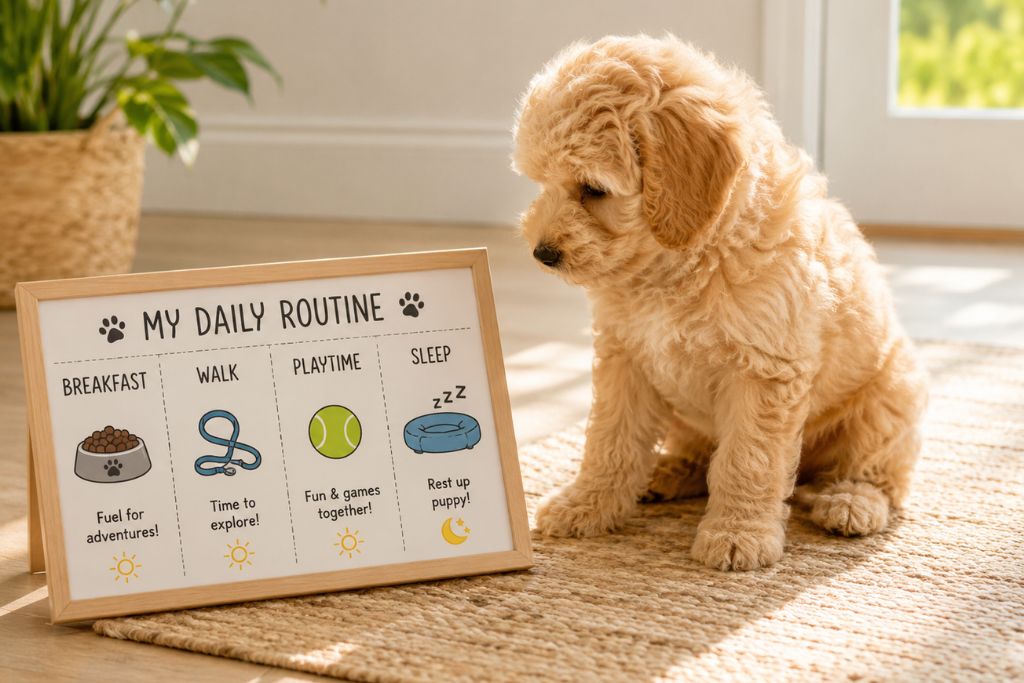
    Set regular times for meals, bathroom breaks, play, and rest. This helps with house training and reduces accidents.

    Take your puppy out:

    • First thing in the morning
    • After meals
    • After naps
    • Before bedtime

    Consistency here makes a noticeable difference.

    Keep Sessions Short and Clear

    Attention spans are limited.

    Training sessions should be brief and focused. A few minutes at a time is enough, especially for younger puppies.

    End on a good note. That way, your puppy stays motivated for the next session.

    Socialization Is Part of Training

    Training isn’t just commands.

    It also includes helping your puppy feel comfortable in the world. Introduce new sounds, people, and environments gradually.

    Positive early experiences help prevent fear later on. A well-socialized puppy is more adaptable and easier to guide.

    Be Patient

    There will be good days and setbacks.

    That’s normal.

    Puppies are learning everything for the first time. Stay patient, stay consistent, and avoid expecting too much too soon.

    Support That Goes Beyond Day One

    At Frontier Pets, we know bringing a puppy home is just the beginning.

    Training is part of building a strong, lasting relationship. That’s why we’re here as a resource, not just when you choose your puppy but as you grow together.

    A Strong Start Makes a Lasting Difference

    Training doesn’t have to feel overwhelming.

    When you keep it simple, stay consistent, and focus on building trust, everything starts to fall into place.

    And before long, those small lessons turn into lifelong habits. For both you and your furry friend.

  • Common Questions About Buying a Puppy, Answered Honestly

    Common Questions About Buying a Puppy, Answered Honestly

    Somewhere between “just looking” and seriously considering a puppy, the questions start to stack up.

    Not in a stressful way; just quietly, in the background. You start wondering about where the puppy came from, what kind of care they’ve had, and whether you’re making the right choice. It’s not hesitation. It’s care.

    Bringing a puppy home isn’t something you do lightly. You want to feel sure about it… and that starts with asking the right questions.

    The More You Ask, the Better the Outcome

    A puppy isn’t just a new addition. It’s a long-term responsibility.

    The more you understand upfront, the easier everything becomes later. Asking questions about health, background, and expectations helps you avoid surprises and sets your puppy up for a smoother transition into your home.

    At Furrylicious, those questions are always welcome. In fact, they’re encouraged. Because when families feel informed, they make decisions that are better for everyone involved.

    The Questions that Matter Most, And What You Should Know

    Here are some of the most important questions people ask, and what you should know:

    “Where does the puppy come from?”

    This is one of the most important questions you can ask. And you should always expect a clear answer.

    A responsible source will be open about where their puppies come from and the standards those breeders follow. That includes how the puppies are raised, the care they receive early on, and whether those practices prioritize their wellbeing.

    At Furrylicious, transparency around sourcing is part of the process. You’re not left guessing or piecing together information. You’re given a clear picture from the start.

    “Has the puppy been checked by a vet?”

    Health is something you should never have to assume.

    Puppies should receive proper veterinary care before going home, including exams and vaccinations. You should also be able to see documentation that confirms this, rather than relying on verbal reassurance alone.

    At Furrylicious, health records are shared openly so you know exactly what care your puppy has received and where they stand.

    “What is this breed really like?”

    Every breed comes with its own set of needs, and understanding that is just as important as choosing the puppy itself.

    Temperament, energy level, grooming requirements, and lifestyle compatibility all play a role in whether a breed is the right fit for you. It’s not just about what looks appealing; it’s about what works in real life.

    At Furrylicious, conversations around breed are honest and practical. The goal is to help you find a puppy that fits into your life naturally, not one that feels like a mismatch later on.

    “What happens after I bring my puppy home?”

    Bringing your puppy home is just the beginning.

    It’s normal to have questions after that first day: about feeding, training, behavior, and routines. A trustworthy place doesn’t disappear once you leave. They remain a resource.

    Furrylicious understands that support matters beyond the initial moment, and that ongoing guidance helps both puppies and families settle in more comfortably.

    “What does the cost actually include?”

    Clarity around cost is just as important as anything else.

    You should understand what is included, from veterinary care to any additional services or support. Transparent pricing allows you to plan properly and feel confident in your decision.

    At Furrylicious, these details are explained clearly so you’re not left wondering what’s included or why.

    “Am I ready for this?”

    It’s a simple question… but an important one.

    A puppy requires time, consistency, and attention. Taking a moment to think through your routine and responsibilities isn’t a sign of doubt; it’s part of making a responsible choice.

    A place you can trust will give you space to think that through, not rush you into a decision.

    Why Honest Answers Matter at Furrylicious

    At Furrylicious, the approach is simple: be clear, be honest, and make sure families feel confident in their decision.

    That means taking the time to answer questions thoroughly, sharing real information about sourcing and care, and helping you understand what to expect, not just today, but long-term. It’s not about quick decisions. It’s about the right ones.

    When you have all the information in front of you, everything feels more straightforward. You’re not second-guessing or relying on assumptions. You’re making a choice that feels considered and well-informed.

    Ask Everything – It’s Part of Doing It Right

    There’s no such thing as too many questions when it comes to bringing a puppy home.

    In fact, the more you ask, the more confident you’ll feel, not just in your decision, but in the journey ahead.

    At Furrylicious, that’s exactly the point. Clear answers, open conversations, and a process that makes sense from beginning to end. When you feel sure about where your puppy comes from, everything that follows becomes that much easier.

  • How Much Exercise Does Your Puppy Really Need? A Practical Guide for Growing Dogs

    How Much Exercise Does Your Puppy Really Need? A Practical Guide for Growing Dogs

    We all know what it feels like to need movement.

    A walk clears your head. A bit of activity resets your energy. It’s not just about staying in shape, it’s about feeling balanced.

    Puppies are no different.

    Exercise plays a role in how they grow, how they behave, and how they settle into daily life. And while it’s easy to assume “more is better,” that’s not always the case. Especially for young, developing dogs.

    Why Exercise Matters: Beyond the Physical

    Exercise isn’t just about burning off energy.

    For puppies, it supports muscle development, coordination, and overall health. Just as importantly, it helps with mental stimulation. A well-exercised puppy is more likely to be calm, focused, and receptive to training.

    Without enough activity, puppies can become restless or develop unwanted behaviors. But too much exercise, especially too soon, can put stress on growing joints.

    Finding the right balance is key.

    How Much Exercise Does Your Puppy Really Need?

    There isn’t a one-size-fits-all answer, but there are clear guidelines that can help.

    Start with Age-Based Guidelines

    A commonly recommended approach is the “5-minute rule”:

    • 5 minutes of structured exercise per month of age
    • Up to twice per day

    For example:

    • A 3-month-old puppy → about 15 minutes per session
    • A 5-month-old puppy → about 25 minutes per session

    This includes walks and intentional play, not free roaming.

    Consider Breed and Energy Level

    Not all puppies are built the same.

    • High-energy breeds (like working or sporting dogs) may need more frequent activity and mental challenges.
    • Lower-energy breeds may be satisfied with shorter, gentler sessions.

    What matters most is observing your puppy. Energy levels, attention span, and recovery all provide useful signals.

    Prioritize Quality Over Intensity

    Exercise for puppies should be controlled and age-appropriate.

    Good options include:

    • Short walks on even surfaces
    • Gentle play sessions
    • Basic training exercises (which also provide mental stimulation)

    Activities to limit or avoid:

    • Long-distance running
    • Repetitive jumping (like catching frisbees)
    • Hard-impact play on rough surfaces

    Puppies are still developing. Their joints and bones need time to grow properly.

    Watch for Signs of Overexertion

    It’s easy to overdo it, especially with an enthusiastic puppy.

    Look for signs like:

    • Slowing down or lagging behind
    • Excessive panting
    • Lying down mid-activity

    If you notice these, it’s time to stop and rest. Recovery is just as important as activity.

    Don’t Forget Mental Exercise

    Physical activity is only part of the picture.

    Training sessions, puzzle toys, and new environments all help stimulate your puppy’s mind. In many cases, mental enrichment can be just as tiring, and just as beneficial, as a walk.

    A Thoughtful Approach to Healthy Puppies

    At Charlotte Dog Club, we place a strong emphasis on overall wellbeing.

    That means helping families understand not just how to care for their puppies but how to support their development in a balanced, informed way. Exercise is a big part of that, but it’s always approached with intention.

    Healthy puppies aren’t just active. They’re supported, guided, and given what they need at the right time.

    Finding the Right Rhythm

    The goal isn’t to tire your puppy out. It’s to build a routine that works for their age, breed, and stage of development.

    When exercise is done right, you’ll see it. Better focus. Smoother training. A puppy that knows when it’s time to play… and when it’s time to rest.

    And that’s where everything starts to come together.

    If you’re up for another good read, these articles are a great place to start:

  • Puppy Sourcing & Breed Information: How Happiness Is Pets Delivers True Transparency

    Puppy Sourcing & Breed Information: How Happiness Is Pets Delivers True Transparency

    Not all questions get asked out loud.

    When you’re looking for a puppy, you might focus on the fun parts first: the breed, the look, the personality. But just beneath that excitement are quieter, more important questions: Where did this puppy come from? How were they raised? Is this the right fit for my life?

    Those answers matter. And more importantly, they should be easy to find.

    Why Transparency Should Be Part of Your Decision

    Choosing a puppy is a long-term commitment, and the more you understand upfront, the better prepared you’ll be.

    Transparency means knowing your puppy’s background, their health history, and what to expect from their breed, not guessing or filling in the blanks later. It builds confidence, sets expectations, and helps ensure a smoother transition for both you and your puppy.

    At Happiness Is Pets, that level of clarity is part of the experience from the start.

    How We Ensure Transparency in Puppy Sourcing and Breed Information

    Here’s how that commitment shows up in real, tangible ways:

    Carefully Selected, Responsible Breeders

    Happiness Is Pets partners with professional breeders who meet established standards for care and animal welfare. These breeders are chosen with intention and are expected to follow both state and federal guidelines.

    It’s not a one-time relationship. There’s ongoing communication and accountability, which helps ensure consistency in how puppies are raised and cared for before they ever meet their new families.

    Verified Health Records and Veterinary Care

    Each puppy receives a veterinary exam and comes with documented health records, including vaccinations and care history.

    This information is shared openly, so families know exactly what their puppy has received in terms of medical attention. In addition, a health warranty is provided, offering added reassurance as you bring your puppy home and begin this new chapter.

    Clear, Honest Breed Education

    Every breed is different, and understanding those differences is key to making the right decision.

    Happiness Is Pets provides straightforward, accurate information about each breed’s temperament, energy level, grooming needs, and overall lifestyle fit. The goal is not just to introduce you to a puppy but to help you understand what life with that puppy will actually look like.

    That kind of clarity helps prevent surprises and builds stronger, more successful matches.

    Support That Continues Beyond Day One

    Transparency doesn’t stop once you’ve chosen your puppy.

    The team at Happiness Is Pets is there to answer questions, offer guidance, and help you feel confident moving forward. Whether it’s nutrition, training, or general care, families have access to support that extends beyond the initial visit.

    Why Families Trust Happiness Is Pets

    Happiness Is Pets focuses on making the process clear, honest, and supportive from beginning to end. That includes:

    • Partnering with responsible, vetted breeders
    • Providing full health documentation and veterinary oversight
    • Offering accurate, easy-to-understand breed information
    • Supporting families throughout their journey

    A More Confident Way to Bring a Puppy Home

    Bringing home a puppy should feel exciting… but it should also feel clear.

    When you have real information about where your puppy comes from and what they need, you’re able to move forward with confidence. And that’s what Happiness Is Pets aims to provide: a straightforward, transparent experience that puts both pets and people first.

    If you’re up for another read, these posts are popular with puppy parents:

  • How Much Exercise Does Your Puppy Really Need? A Practical Guide for Growing Dogs

    How Much Exercise Does Your Puppy Really Need? A Practical Guide for Growing Dogs

    We all know what it feels like to need movement.

    A walk clears your head. A bit of activity resets your energy. It’s not just about staying in shape, it’s about feeling balanced.

    Puppies are no different.

    Exercise plays a role in how they grow, how they behave, and how they settle into daily life. And while it’s easy to assume “more is better,” that’s not always the case. Especially for young, developing dogs.

    Why Exercise Matters: Beyond the Physical

    Exercise isn’t just about burning off energy.

    For puppies, it supports muscle development, coordination, and overall health. Just as importantly, it helps with mental stimulation. A well-exercised puppy is more likely to be calm, focused, and receptive to training.

    Without enough activity, puppies can become restless or develop unwanted behaviors. But too much exercise, especially too soon, can put stress on growing joints.

    Finding the right balance is key.

    How Much Exercise Does Your Puppy Really Need?

    There isn’t a one-size-fits-all answer, but there are clear guidelines that can help.

    Start with Age-Based Guidelines

    A commonly recommended approach is the “5-minute rule”:

    • 5 minutes of structured exercise per month of age
    • Up to twice per day

    For example:

    • A 3-month-old puppy → about 15 minutes per session
    • A 5-month-old puppy → about 25 minutes per session

    This includes walks and intentional play, not free roaming.

    Consider Breed and Energy Level

    Not all puppies are built the same.

    • High-energy breeds (like working or sporting dogs) may need more frequent activity and mental challenges.
    • Lower-energy breeds may be satisfied with shorter, gentler sessions.

    What matters most is observing your puppy. Energy levels, attention span, and recovery all provide useful signals.

    Prioritize Quality Over Intensity

    Exercise for puppies should be controlled and age-appropriate.

    Good options include:

    • Short walks on even surfaces
    • Gentle play sessions
    • Basic training exercises (which also provide mental stimulation)

    Activities to limit or avoid:

    • Long-distance running
    • Repetitive jumping (like catching frisbees)
    • Hard-impact play on rough surfaces

    Puppies are still developing. Their joints and bones need time to grow properly.

    Watch for Signs of Overexertion

    It’s easy to overdo it, especially with an enthusiastic puppy.

    Look for signs like:

    • Slowing down or lagging behind
    • Excessive panting
    • Lying down mid-activity

    If you notice these, it’s time to stop and rest. Recovery is just as important as activity.

    Don’t Forget Mental Exercise

    Physical activity is only part of the picture.

    Training sessions, puzzle toys, and new environments all help stimulate your puppy’s mind. In many cases, mental enrichment can be just as tiring, and just as beneficial, as a walk.

    A Thoughtful Approach to Healthy Puppies

    At Georgia Dog Club, we place a strong emphasis on overall wellbeing.

    That means helping families understand not just how to care for their puppies but how to support their development in a balanced, informed way. Exercise is a big part of that, but it’s always approached with intention.

    Healthy puppies aren’t just active. They’re supported, guided, and given what they need at the right time.

    Finding the Right Rhythm

    The goal isn’t to tire your puppy out. It’s to build a routine that works for their age, breed, and stage of development.

    When exercise is done right, you’ll see it. Better focus. Smoother training. A puppy that knows when it’s time to play… and when it’s time to rest.

    And that’s where everything starts to come together.

    If you’re up for another good read, these articles are a great place to start:

  • Backyard Personality Test: What Your Patio Style Says About You

    Backyard Personality Test: What Your Patio Style Says About You

    Your backyard isn’t just extra space. It’s an extension of your home. Around here in Pennsylvania, especially throughout the Lehigh Valley in areas like Allentown, Bethlehem, and Easton, where we make the most of warm evenings and crisp fall weekends, a well-designed patio becomes the heart of it all. It’s where you host, unwind, and create those everyday moments that feel a little more special.

    And whether you realize it or not, your patio style says a lot about you.

    What’s Your Backyard Personality?

    Every outdoor space is unique. Still, most fall into a few familiar styles. Not sure where yours lands? Let’s have a little fun with it.

    The Cozy Gatherer

    Think soft seating, warm lighting, maybe even a fire pit. Your patio is built for connection: long chats, shared meals, and relaxed nights outdoors.

    What it says about you: You value comfort, community, and creating a space where everyone feels at home.

    The Entertainer

    You’ve got defined zones, plenty of seating, and maybe an outdoor kitchen or bar setup. Your space is ready for anything.

    What it says about you: You’re social, organized, and love bringing people together, especially on those perfect summer nights in neighborhoods from Lower Macungie Township to Forks Township.

    The Nature Lover

    Your patio blends seamlessly with the landscape. Think natural stone, lush greenery, and a design that feels calm and grounded. This is something often seen in more wooded areas like Upper Saucon Township or Whitehall Township.

    What it says about you: You appreciate balance, quiet moments, and a strong connection to the outdoors.

    The Modern Minimalist

    Clean lines, neutral tones, and a “less is more” approach. Everything has a purpose, and nothing feels cluttered.

    What it says about you: You’re intentional, detail-oriented, and drawn to simplicity that still makes a statement.

    The Family Hub

    Durable materials, open space, and room to move. Your patio is built for real life: kids, pets, and everything in between. This works well whether you’re in a suburban setting like Nazareth or a growing community like Emmaus.

    What it says about you: You prioritize function, flexibility, and making memories with the people who matter most.

    Finding the Right Style for You

    If you’re drawn to cozy spaces, lean into layered textures and warm lighting.

    If entertaining is your thing, focus on layout and flow.

    If you love nature, incorporate organic materials and greenery.

    The key is designing a space that fits how you actually live. Not just what looks good, but what feels right every time you step outside.

    Designed With You in Mind

    At Creative Landscapes, great outdoor spaces start with understanding you. This includes how you use your space, what you need from it, and how it should feel at the end of a long day.

    From custom patios to full backyard transformations across the Lehigh Valley, the focus is on bringing thoughtful design and expert craftsmanship together so your outdoor space isn’t just beautiful, but also works for your lifestyle.

    Your Backyard, Your Story

    At the end of the day, there’s no one “right” patio style. The best spaces are the ones that reflect you. Your pace, your people, your way of living.

    And when it’s done right, your backyard doesn’t just look good. It feels like home.

  • Why Transparency Matters When Choosing a Puppy and How Wags About You Gets It Right

    Why Transparency Matters When Choosing a Puppy and How Wags About You Gets It Right

    At some point in the search, most people realize it’s not just about finding a puppy. It’s about trying to understand the where and how of it all.

    Photos and first impressions only go so far. What really matters is the information you can’t see right away: where the puppy was raised, how they were cared for, and whether you’re getting clear, honest answers when you ask.

    That’s where transparency comes in, and why it matters more than people expect.

    It’s Not Just About the Puppy, It’s About the Process

    When people picture bringing a puppy home, they think about the fun parts. The playtime, the bonding, the new routines.

    But everything that happens before that moment matters just as much.

    Transparency means you’re not filling in gaps or making assumptions. You’re given real information: about the puppy’s background, their care, and what to expect moving forward. That kind of clarity doesn’t just help you choose a puppy. It helps you feel confident in the decision.

    At Wags About You, that clarity is part of the experience from the start.

    Why Transparency Matters When Choosing a Puppy

    Here’s what transparency actually does for you and your future dog:

    You Know Exactly Where Your Puppy Comes From

    One of the first things to look for is a clear answer to a simple question: Where did this puppy come from?

    At Wags About You, that answer is straightforward. Puppies are sourced from carefully chosen breeders who meet strong standards for care and responsibility. These relationships are intentional, not transactional.

    That means you’re not guessing. You’re informed.

    You Understand the Care They’ve Received

    A puppy’s early weeks shape their development in real ways.

    Nutrition, handling, and early socialization all play a role in how they adjust to a new home. When a business is transparent, they walk you through that early care, not just the end result.

    At Wags About You, that information is part of the conversation, not something you have to chase down.

    You Get Clear, Honest Information, Not Sales Talk

    Transparency also shows up in how things are explained.

    You should be able to ask about breed traits, energy levels, and what daily life will actually look like, and get answers that are straightforward and useful.

    At Wags About You, the goal is to help you find the right fit, not just any fit. That means being honest about what each puppy needs and what kind of home will suit them best.

    It Builds Trust That Lasts

    When things are clear from the beginning, it changes the entire experience.

    You feel more comfortable asking questions. You feel supported, not rushed. And you leave knowing you made a well-informed choice, not a quick one.

    That kind of trust doesn’t happen by accident. It’s built through consistency and openness.

    How Wags About You Prioritizes Transparency

    At Wags About You, transparency isn’t a feature or add-on. It’s a standard.

    Puppies come from responsible breeders who are selected for their commitment to proper care and ethical practices. There’s clear communication around sourcing, early care, and what families can expect.

    Information is shared openly, and questions are encouraged. The process is designed to be straightforward, so families feel confident every step of the way.

    What That Means for You

    When transparency is part of the process, everything feels different.

    You’re not second-guessing where your puppy came from. You’re not wondering if you missed something important. You’re starting with a clear understanding, and that sets you up for a better experience long-term.

    At Wags About You, that’s the goal. Not just helping you find a puppy, but making sure you feel good about how you found them, too.

    More Helpful Reads From Wags About You From planning and preparation to everyday puppy care, our articles are here to help you feel informed and confident as a pet parent. Check out the related posts below to keep learning with us.