Category: Blog

  • Can Ohio Freeze-Thaw Cycles Wreck Your Exterior Paint?

    Can Ohio Freeze-Thaw Cycles Wreck Your Exterior Paint?

    We put a lot into making our homes feel like home. We choose the siding color, obsess over the front door, and pick the perfect exterior paint. Then Ohio weather strolls in and says, “Cute.”

    We cannot control the forecast. We can control how we prepare for it. For homeowners around Powell and Columbus, that means understanding one of winter’s biggest exterior challenges: the freeze-thaw cycle.

    What Exactly Is an Ohio Freeze-Thaw Cycle?

    A freeze-thaw cycle happens when temperatures move above and below freezing, allowing moisture to freeze, expand, thaw, and repeat the process.

    That moisture can sneak into tiny cracks and gaps. When it freezes, the expanding water puts pressure on surrounding materials. Repeated cycles can turn small vulnerabilities into bigger cracks, peeling, flaking, and other damage.

    Our homes around Powell, Lewis Center, and Delaware County get plenty of seasonal temperature swings. That makes exterior preparation especially important.

    How Does Freeze-Thaw Weather Affect Exterior Paint?

    Think of your exterior paint as your home’s protective jacket. It needs to handle a lot of movement.

    Wood, vinyl, metal, stucco, and other exterior materials expand when heated and contract when cooled. Paint has to move with them. Rigid paint films can crack, peel, or lose adhesion when the surface underneath keeps shifting.

    Watch for these warning signs:

    • Hairline cracks
    • Peeling or flaking
    • Blistering
    • Chalking
    • Cracked caulk around joints
    • Exposed areas underneath the paint

    South and west-facing walls deserve extra attention. They often experience greater sun exposure and temperature swings.

    How Can We Fight Back Against Ohio Weather?

    We start before the paint goes on. Good surface preparation is one of our best defenses.

    That means cleaning the surface, addressing cracks and damaged areas, repairing caulk where needed, and choosing a coating suited to the surface. Flexible exterior coatings can better accommodate normal expansion and contraction.

    Timing matters, too. Most exterior latex paints require at least 50°F during application and curing. We also need dry conditions and enough time for the coating to cure properly.

    So, yes, Ohio gets dramatic. But your exterior paint does not have to join the drama.

    How Can We Help Protect Your Home?

    At Color World Columbus, we bring more than paint to the project. We provide exterior painting, power washing, carpentry, drywall repair, deck and fence services, and more. Our team uses quality products and detailed processes to help your property look its best.

    For homes around Powell, Downtown Columbus, and nearby Delaware County communities, we can help you tackle exterior maintenance with a plan.

    After all, Ohio weather will keep doing its thing. But we can help make sure your home’s exterior is ready for it.

  • How Often Should You Change Aquarium Water?

    How Often Should You Change Aquarium Water?

    An aquarium has a lot going on. We think about filtration, oxygen, lighting, décor, compatible fish, plants, and food. Then there is the biggest ingredient of all: water.

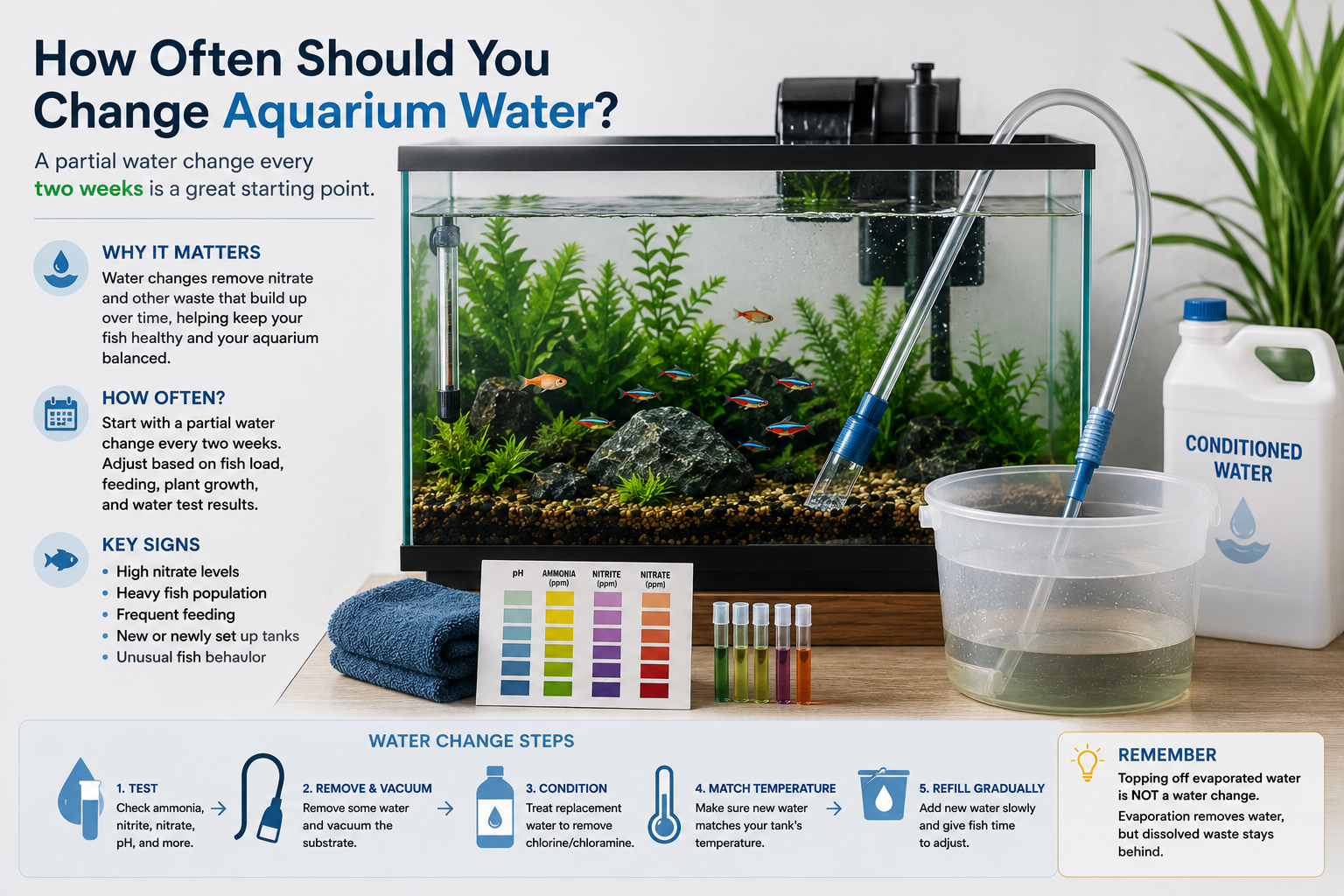
    For many established aquariums, a partial water change every two weeks is a useful maintenance starting point. Your aquarium’s stocking level and water-test results should determine the actual schedule.

    For a fishkeeper in Hoffman Estates, that means putting water changes on the calendar instead of waiting for the tank to look dirty.

    Why Do Aquarium Water Changes Matter?

    Your filter handles important mechanical and biological work. It cannot remove every dissolved waste product, though. Fish waste and decomposing food contribute to ammonia. Beneficial bacteria convert ammonia into nitrite and then nitrate.

    Nitrate accumulates over time. Partial water changes help remove it from the aquarium.

    That matters for a community tank near Schaumburg as much as a planted aquarium in Bolingbrook. Clear water does not automatically mean healthy water.

    How Often Should You Change Aquarium Water?

    Start with a partial water change every two weeks, then adjust based on your aquarium’s test results. Heavier stocking can mean more waste and a greater need for water changes.

    Pay closer attention when:

    • Your aquarium has a heavy fish population.
    • You feed frequently or generously.
    • Nitrate rises significantly between changes.
    • You have recently added fish.
    • Your aquarium is newly established.
    • Your fish show unusual behavior or signs of stress.

    New aquariums need extra attention. Ammonia and nitrite can rise while the biological filter develops, so frequent testing becomes especially important.

    That is worth remembering if you are setting up your first tank in Bartlett or building a new aquatic display in South Barrington.

    How Do You Change Aquarium Water Correctly?

    Keep the process controlled and consistent.

    1. Test the water first. Check ammonia, nitrite, nitrate, pH, and other relevant parameters.
    2. Remove some of the water. Vacuum the substrate to collect accumulated debris.
    3. Condition replacement water. Tap water may contain chlorine or chloramine.
    4. Match the temperature. Avoid sudden temperature changes.
    5. Refill gradually. Give your fish time to adjust.

    Also, topping off evaporated water is not a water change. Evaporation removes water, but dissolved substances remain behind.

    When Should You Get Professional Aquarium Advice?

    At Aquarium Adventure, we care for 450 aquariums containing 20,000 gallons of water and work with more than 1,000 species. We work with aquarium owners throughout Hoffman Estates, Bolingbrook, Schaumburg, Bartlett, South Barrington, and the surrounding Chicagoland communities.

    Our professional aquatic technicians test water chemistry, evaluate fish and plant health, inspect filtration, and perform partial water exchanges as part of our maintenance program.

    Sometimes the easiest way to understand your aquarium is to have an experienced aquarist look at the whole system.

    And at the end of the day, remember: The goal is not to chase a magic number. It is to keep your aquarium stable, your water quality appropriate for its inhabitants, and your fish thriving.

  • How Replacement Windows Can Lower Energy Bills

    How Replacement Windows Can Lower Energy Bills

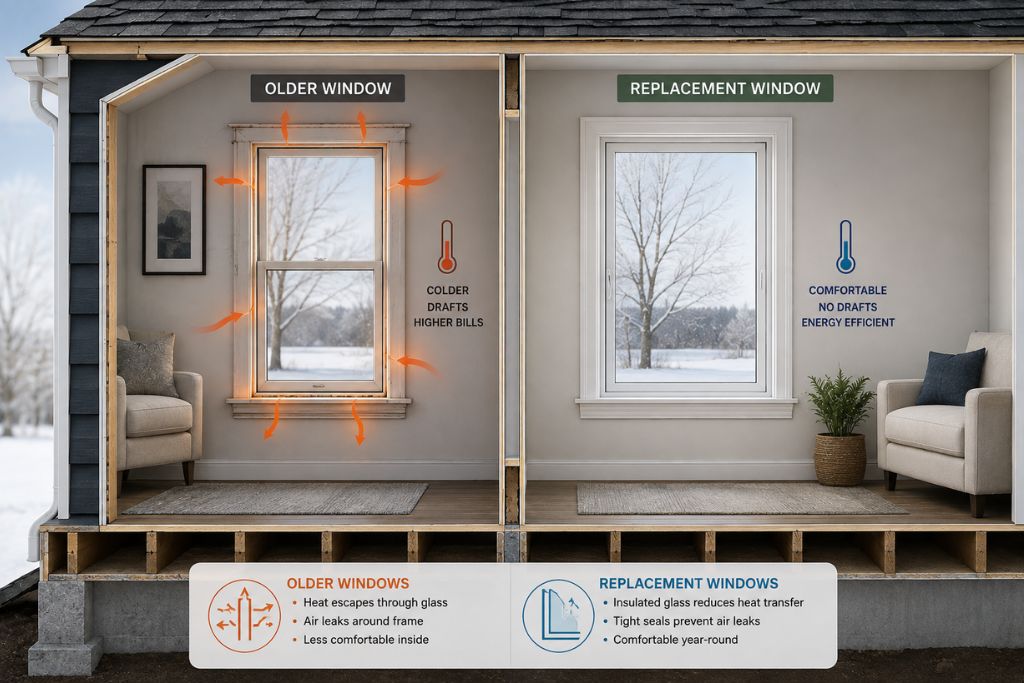
    We replace windows for plenty of reasons. Maybe one is cracked, drafty, difficult to operate, or simply no longer suits the room. Energy efficiency is another important reason to consider an upgrade. Modern replacement windows can reduce unwanted heat transfer and air leakage, helping your heating and cooling system work more efficiently.

    For homes around Allentown, Bethlehem, and the wider Lehigh Valley, that matters.

    Our winters can be cold, while summer brings plenty of heat. Your windows have to handle both.

    How Do Replacement Windows Reduce Energy Use?

    Energy-efficient windows help by slowing heat transfer and reducing air leakage. Several features work together to do that:

    • Multiple panes provide better insulation. Double- and triple-pane windows create insulating spaces between glass layers. Those spaces can contain air or insulating gases such as argon.
    • Low-E glass helps control heat transfer. Low-emissivity coatings can reduce heat loss while managing solar heat entering the home.
    • Frame construction affects performance. Different frame materials and designs conduct heat at different rates.
    • Better sealing can reduce drafts. Gaps around older windows can allow conditioned air to escape and outdoor air to enter. Proper installation helps limit that unwanted air movement.
    • The right glazing can manage sunlight. Window glass can be selected to reduce unwanted solar heat gain during warmer months.

    Picture an older bedroom in an Allentown home on a January morning. The thermostat says one thing, but the area beside the window feels noticeably colder. The heating system then has to work harder to maintain the desired temperature.

    Now flip the calendar to July. Strong afternoon sun hits a west-facing window in Bethlehem. That solar heat can increase the cooling load inside the room.

    The right replacement window can help address both situations.

    What Should You Look For in Energy-Efficient Replacement Windows?

    Look at the window’s performance ratings, not just the number of glass panes. U-factor measures how well a window insulates. Solar Heat Gain Coefficient, or SHGC, measures how much solar radiation passes through the window.

    At Penn Windows & Doors, we help homeowners compare these details alongside glass, frame, style, and installation options. We want you to understand what you are choosing before the project begins.

    Could Replacement Windows Help Lower Your Energy Bills?

    They can, especially when inefficient or drafty windows are replaced with properly selected and installed products. Actual savings depend on the home’s existing windows, climate, window area, product performance, and household energy use.

    For a home along Union Boulevard or elsewhere across the Lehigh Valley, we can help you explore the options.

    Better windows can refresh the look of your home. They can also make rooms more comfortable and help reduce unnecessary energy loss.

  • Pennsylvania Weather Vs Your Windows

    Pennsylvania Weather Vs Your Windows

    Pennsylvania weather has range. One day feels like winter, the next feels suspiciously like spring, and summer can arrive with heat and humidity ready to make themselves comfortable. Our windows experience all of it right along with us.

    For homes around Allentown and the Lehigh Valley, those seasonal swings can affect window comfort, condensation, air leakage, and overall performance. Pennsylvania itself spans three climate zones, with cold winters and hot, humid summers.

    So, how does your window feel about all this? Let’s check in.

    How Does a Pennsylvania Winter Affect Your Windows?

    Cold weather increases the temperature difference between your home and the outdoors, which can make heat loss and condensation more noticeable.

    Think of your window as the employee who keeps getting handed another task.

    Cold January temperatures arrive in Allentown. Your heating system works to keep the house comfortable. Meanwhile, the window sits between that warm indoor air and the freezing outdoors.

    If a window has poor insulation or significant air leakage, you may notice drafts or cold spots. Older windows can also have a harder time keeping interior glass warm.

    Then comes condensation.

    When warm, moisture-filled indoor air hits a sufficiently cold window surface, moisture can condense on the glass. Higher indoor humidity increases the potential.

    That foggy glass in your Bethlehem home isn’t your window being dramatic. It is physics.

    What Does Pennsylvania’s Summer Heat Do to Windows?

    Summer brings a different challenge: solar heat gain and humidity.

    That sunny afternoon in an Easton living room can turn a beautiful window into a surprisingly effective solar heater. Sunlight entering through glass can add heat to the home, increasing the cooling load.

    Then Pennsylvania adds humidity to the situation.

    Warm, humid air can make condensation more likely when it meets a sufficiently cool surface. That’s why windows can sometimes look a little sweaty during humid weather.

    Your window isn’t having a summer meltdown. Your home’s indoor and outdoor conditions are simply interacting.

    What About Rain, Wind, and Seasonal Swings?

    Rain and wind make proper sealing and drainage important, while repeated temperature changes can put materials through ongoing expansion and contraction.

    A poorly sealed window can allow unwanted air and moisture infiltration. Properly designed drainage paths help direct water away from the window assembly.

    And Pennsylvania doesn’t exactly believe in easing into a new season.

    That means windows around Allentown, Bethlehem, and the surrounding Lehigh Valley need to perform across a wide range of conditions.

    How Can We Help Your Windows Handle Pennsylvania Weather?

    At Penn Windows & Doors, we understand that replacing windows isn’t simply about picking a style you like. We help you consider the glass, frame, energy-performance characteristics, installation, and the specific needs of your home.

    From Union Boulevard to neighborhoods throughout the Lehigh Valley, we’re here to help you choose windows that make sense for the way your home actually lives.

    So, Is Pennsylvania Weather Tough on Windows?

    Absolutely. But the right window, proper installation, and regular maintenance can help your home handle those seasonal mood swings.

    Pennsylvania can keep changing its mind.

    We’re just here to make sure your windows are ready for whatever comes next!

  • The Best Window Treatments for Every Room

    The Best Window Treatments for Every Room

    Windows are everywhere. They bring in light, frame a view, and help define the feel of a room. But if you’ve ever looked at one and thought, I think we need to change this up, we’re with you.

    The good news? Window treatments don’t have to match throughout the entire house. The best choice depends on the room, the amount of light, privacy needs, and how you use the space.

    That matters in the Lehigh Valley, too. A bright Allentown kitchen has different needs from a cozy bedroom facing a snowy Pennsylvania morning.

    What Should You Consider Before Choosing a Window Treatment?

    Start with function, then bring in the style. Ask three simple questions:

    • How much light do we want?
    • How much privacy do we need?
    • What should the treatment add to the room?

    From there, we can narrow down the options. Richards Window Fashions offers blinds, shades, and shutters, including options for light control, privacy, and energy efficiency.

    What Window Treatments Work Best in the Living Room?

    Layered shades and drapery can work beautifully in living rooms. They give you flexible light control while adding softness and dimension.

    A bright room overlooking an Allentown neighborhood may benefit from a shade that filters strong daylight. Drapery can then add warmth and visual height.

    For large windows or glass doors, larger-scale treatments can also create a more cohesive look.

    Which Window Treatments Make Sense for Bedrooms?

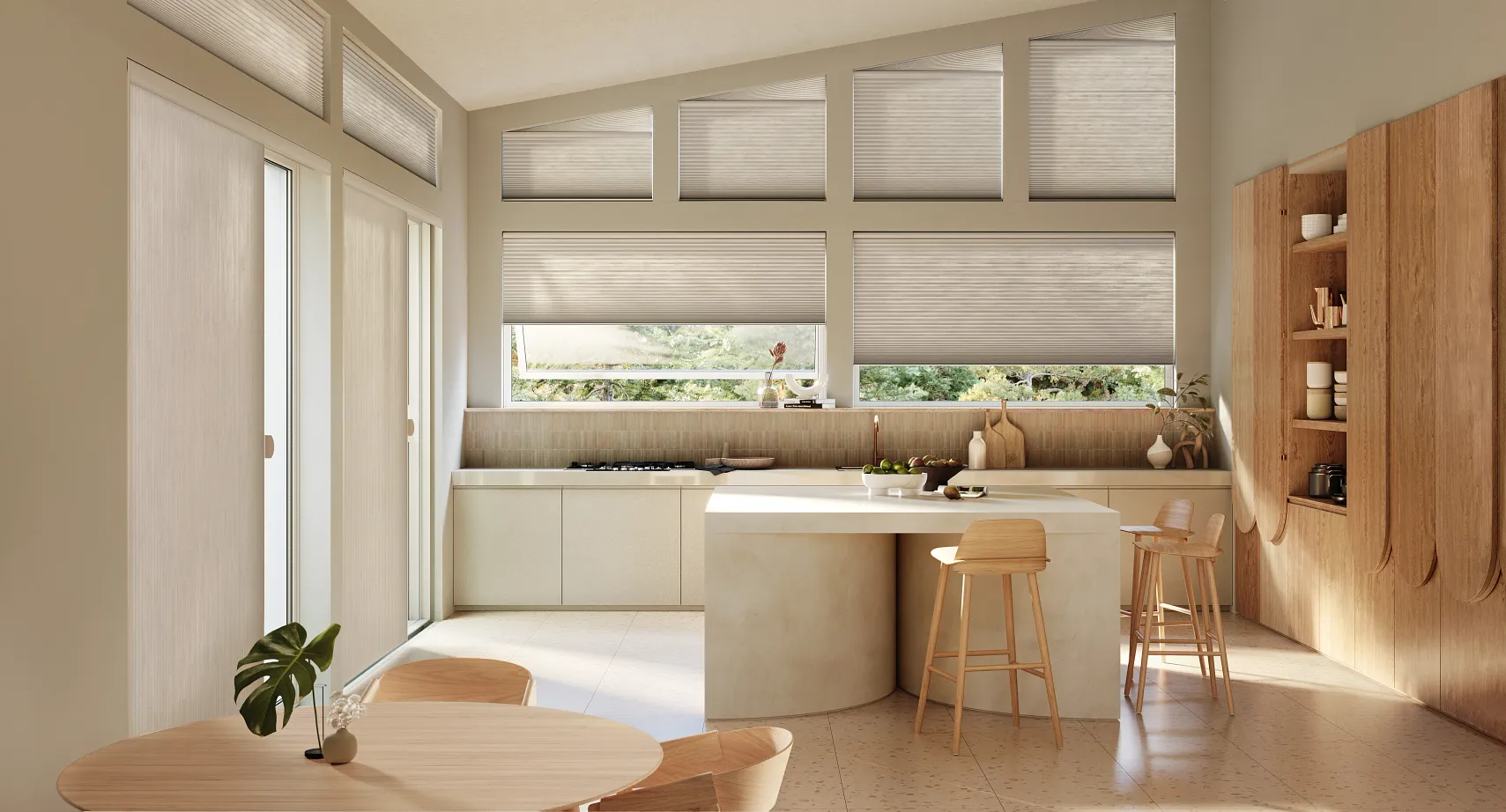
    Bedrooms usually benefit from treatments that provide strong light control and privacy. Cellular shades, Roman shades, or lined drapery can help create a darker, more restful environment.

    Cellular shades also offer insulating properties, which can be useful during Pennsylvania’s colder months.

    For a bedroom facing a busy street near Bethlehem, privacy becomes just as important as style.

    What Works Best in the Kitchen?

    Choose something practical, easy to operate, and suited to the window’s location. Roman shades can provide a tailored look without taking up much space.

    Smaller windows above counters or sinks can also work well with shades that stay close to the window.

    And yes, practicality matters. Your kitchen window should look beautiful without getting in the way of everyday life.

    What About the Dining Room?

    Dining rooms give us more room to play with style. Roman shades can add polish, while drapery can create a softer, more dramatic finish.

    Natural light also plays a major role, so light-filtering options can keep the room bright without making it feel harsh.

    That can be especially welcome during those darker Pennsylvania afternoons.

    How Can We Help You Choose the Right Treatment?

    At Richards Window Fashions, we don’t believe in forcing every window into the same solution. We offer full-service in-home consultations, so we can consider your actual windows, rooms, light, privacy needs, and design goals together.

    From Union Boulevard in Allentown to homes throughout the Lehigh Valley, we’re here to make the process feel personal and straightforward.

    So, What Is the Best Window Treatment?

    The best window treatment is the one that fits the room and how you live in it.

    Your living room doesn’t need to dress like your bedroom. Your kitchen doesn’t need the same treatment as your dining room.

    Give every window its moment. We’ll help you make sure it gets the right one.

  • Window Treatments for Pennsylvania’s Four Seasons

    Window Treatments for Pennsylvania’s Four Seasons

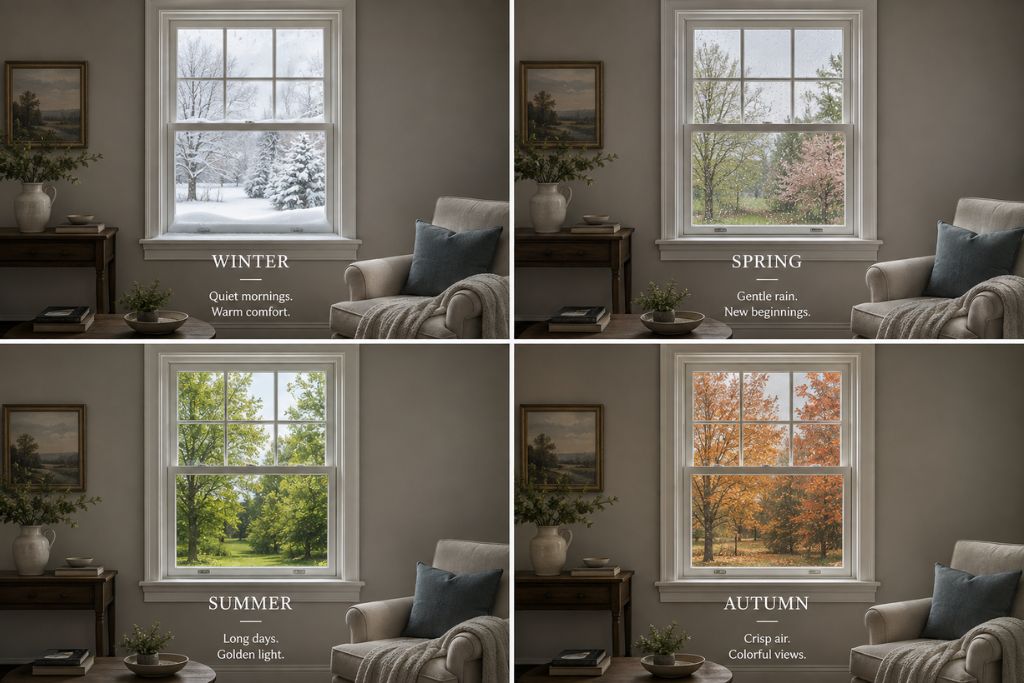
    Window treatments are basically clothes for your windows. And just like we don’t wear a puffer coat to an August barbecue, our windows can benefit from different strategies as Pennsylvania’s seasons change.

    Here in the Lehigh Valley, we get the full wardrobe: cold winters, colorful autumns, humid summers, and springs that sometimes can’t quite make up their minds. The right window treatments can help manage light, privacy, glare, and comfort throughout the year.

    So let’s open the window-treatment closet.

    What Should Our Windows Wear in Winter?

    Winter calls for treatments that can help limit heat loss and keep rooms comfortable.

    This is where cellular shades really shine. Their honeycomb construction creates insulating air pockets, which can add insulation at the window.

    For an Allentown bedroom on a freezing January night, that extra layer can make the window feel less like a direct line to the outdoors.

    Drapery can also add an insulating layer, especially when closed at night. Think of it as your window putting on a sweater.

    What Is the Best Window Treatment for Pennsylvania Spring?

    Spring is all about flexibility.

    We want daylight, but we don’t always want full-strength sunshine blasting across the kitchen table at 8 a.m. Sheer shades and adjustable blinds can give us control without making a room feel closed off.

    And after a long Pennsylvania winter, let’s be honest. We want to see the sunshine.

    How Should We Dress Our Windows for Summer?

    Summer calls for thoughtful solar and glare control.

    South and west-facing windows can receive substantial direct sunlight. Interior shades and blinds can help manage that light and glare.

    For a sunny living room near Bethlehem, solar shades or sheer shades can help filter intense daylight while maintaining a view. Cellular shades can also provide insulating value.

    The goal isn’t to banish the sunshine. We just want it to behave.

    What Window Treatments Work Best in Pennsylvania Fall?

    Fall gives us another chance to balance beautiful natural light with changing temperatures.

    This is a great season for layered treatments. Pairing shades with drapery lets us adjust light and privacy as daylight changes.

    And those warm autumn tones outside an Allentown window? Let them be part of the room.

    How Do We Choose Treatments for All Four Seasons?

    We look at the window, the room, and how you use the space before choosing the treatment.

    At Richards Window Fashions, we offer custom blinds, shades, and shutters. We also provide full-service in-home consultations and install and service everything we sell.
    We understand that every home has its own personality and every window has its own job.

    From Union Boulevard in Allentown to homes throughout the surrounding communities, we’re here to help you find the right fit.

    Ready to Give Your Windows a Four-Season Wardrobe?

    Pennsylvania isn’t exactly predictable. Your window treatments don’t have to be stuck in one season, either.

    With the right combination of shades, blinds, shutters, and drapery, we can make your windows work beautifully all year long.

  • Freshwater vs. Saltwater Aquariums: Which Side Are You On?

    Freshwater vs. Saltwater Aquariums: Which Side Are You On?

    Every aquarium owner reaches this moment.

    You’re ready to dive into the hobby. You’ve cleared the perfect spot for a tank. You’ve already imagined yourself relaxing as fish glide through the water after a long day.

    Then comes the first big question: Freshwater or saltwater?

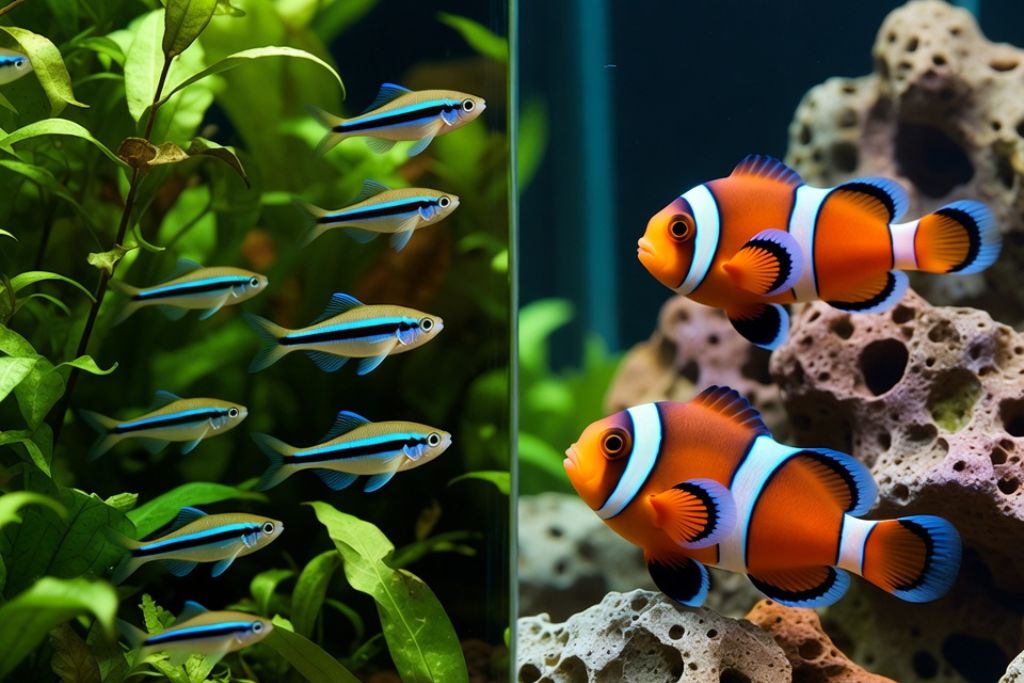
    You can’t combine the two in the same aquarium, so it’s time to pick a team. At first, that decision feels enormous. Freshwater tanks have a reputation for being more forgiving, while saltwater aquariums are famous for their dazzling marine fish and breathtaking reef displays.

    It’s a bit like choosing between the mountains and the beach. Both are incredible. Both have loyal fans. Ask ten fishkeepers which is better, and don’t be surprised if you hear twelve different opinions.

    One thing is true across the board: both freshwater and saltwater aquariums require proper cycling, regular maintenance, and consistent water quality to help fish thrive.

    At our Hoffman Estates and Bolingbrook stores, we see this debate play out every week. Someone walks in planning to start a freshwater tank, catches sight of a colorful reef display, and suddenly they’re asking about clownfish instead. It happens just as often the other way around. Hobbyists visiting from Schaumburg, South Barrington, Naperville, and Plainfield discover the incredible variety of freshwater fish and realize they’ve found exactly what they were looking for.

    Team Freshwater: Relaxed, Colorful, and Full of Personality

    Freshwater aquariums are a popular starting point because they’re generally simpler to set up and maintain than saltwater systems. They also require less specialized equipment, making them an approachable choice for many beginners.

    That doesn’t mean they’re boring. Far from it.

    From peaceful planted aquariums filled with tetras and corydoras to elegant angelfish or vibrant African cichlids, freshwater offers remarkable variety. Every tank tells its own story.

    Team Freshwater might be for you if…

    • You enjoy learning at a comfortable pace.
    • You want lots of fish choices.
    • You’d rather spend more time admiring your aquarium than fine-tuning equipment.

    Team Saltwater: The Ocean Comes Home

    Saltwater aquariums have a way of stopping people in their tracks.

    Brilliant marine fish, fascinating invertebrates, live rock, and colorful corals can transform a room into something that feels remarkably close to a living reef. Watching a mature marine aquarium change and grow over time is part of what makes the hobby so rewarding.

    Saltwater systems usually require additional equipment, careful salinity management, and closer attention to water chemistry. For hobbyists who enjoy learning and refining their setup, that’s often part of the fun.

    Team Saltwater might be for you if…

    • You love a hands-on hobby.
    • You enjoy learning the finer details.
    • You’ve always dreamed of creating your own slice of the ocean.

    The Winner? It Depends on the Fishkeeper

    After countless conversations in our stores (and more than a few friendly debates!) the answer hasn’t changed.

    Both sides win.

    The best aquarium is the one that matches your interests, your schedule, and the experience you’re hoping to create. Some hobbyists happily keep freshwater aquariums for decades. Others eventually fall in love with reef keeping. Many enjoy both at different points in their fishkeeping journey.

    Whichever Side You Choose, Enjoy The Journey

    Every week, our team helps families and hobbyists from Hoffman Estates, Schaumburg, South Barrington, Bolingbrook, Naperville, and Plainfield build aquariums they’re excited to come home to. Some leave with the beginnings of a peaceful freshwater community tank. Others start planning their very first marine aquarium.

    No matter which path you choose, you’ll find experienced guidance, healthy fish, quality equipment, and plenty of friendly advice at Aquarium Adventure. After all, every unforgettable aquarium starts with one simple decision. 

    And there’s no wrong side to be on when you’re building it with care.

  • 10 Common Aquarium Mistakes New Fish Owners Make (And How to Avoid Them)

    10 Common Aquarium Mistakes New Fish Owners Make (And How to Avoid Them)

    You’ve been dreaming about this for ages.

    Now the aquarium is finally sitting in your home. You’ve imagined the fish you’ll keep, picked out decorations, and can already picture yourself unwinding while your new underwater world comes to life. It’s exciting. It’s rewarding. And yes—it can feel a little intimidating at first.

    Then reality kicks in.

    “Is my tank actually ready?” “Did I buy the right fish?” “How much should I feed them?” If those questions sound familiar, you’re in excellent company. Every experienced fishkeeper started exactly where you are.

    Across Hoffman Estates, Schaumburg, South Barrington, Bolingbrook, and nearby communities, we meet first-time aquarium owners every day. Some visit our stores after spending the afternoon at The Promenade Bolingbrook or The Arboretum of South Barrington, excited to begin their first tank. The same questions come up again and again. And thankfully, so do the solutions.

    1. Adding Fish Before the Tank Is Cycled

    It’s hard to wait when the aquarium is finally set up.

    However, a new tank needs time to establish beneficial bacteria that convert harmful ammonia into less toxic compounds. Introducing fish too early can expose them to unsafe water conditions. Cycling the aquarium first gives your fish a much healthier start.

    2. Choosing Fish That Aren’t Compatible

    Just because two fish look great together doesn’t mean they’ll enjoy living together.

    Some species are peaceful community fish. Others become territorial or simply grow much larger than many beginners expect. Researching adult size, temperament, and water requirements before stocking your tank prevents many common problems.

    3. Feeding Too Much

    Your fish may always look hungry. That doesn’t mean they need another meal.

    Extra food sinks to the bottom, breaks down, and quickly affects water quality. Feed only the amount your fish can comfortably consume within a few minutes, following the recommendations for the species you’re keeping.

    4. Starting with a Tiny Aquarium

    Small aquariums are often marketed to beginners. Ironically, they’re usually less forgiving.

    Water chemistry changes much faster in smaller tanks, making it harder to maintain stable conditions. A larger aquarium often gives new hobbyists a smoother learning experience.

    5. Skipping Water Tests

    Clear water isn’t always healthy water.

    Regular testing helps monitor ammonia, nitrite, nitrate, and pH before they become problems. It’s one of the easiest ways to protect your fish.

    6. Forgetting Water Changes

    Even the best filter can’t remove everything.

    Routine partial water changes help remove excess nitrate, replenish important minerals in freshwater aquariums, and support stable water quality.

    7. Deep Cleaning the Entire Aquarium

    A sparkling tank sounds like a good goal. Cleaning everything at once isn’t.

    Beneficial bacteria colonize your filter media, substrate, decorations, and virtually every hard surface in the aquarium. Replacing all of your filter media or deep-cleaning everything at once can disrupt the biological filtration your tank depends on.

    8. Ignoring Your Equipment

    Filters, heaters, and air pumps work hard every day.

    Checking them regularly helps you catch small issues before they become big ones.

    9. Constantly Adjusting the Water

    New fishkeepers sometimes chase the “perfect” water parameters.

    In reality, stable conditions are usually far healthier than numbers that constantly swing. Make changes gradually and only when they’re truly needed.

    10. Trying to Learn Everything Alone

    Nobody becomes an aquarium expert overnight.

    Asking questions, learning from experienced fishkeepers, and getting advice before making changes can save you a lot of frustration and help your fish thrive.

    Start Your Aquarium Adventure with Confidence

    Setting up an aquarium is one of the most rewarding hobbies you can enjoy, and you don’t have to figure everything out by yourself. The team at Aquarium Adventure is always happy to help hobbyists throughout Hoffman Estates, Schaumburg, South Barrington, Bolingbrook, Naperville, and surrounding communities choose compatible fish, quality equipment, and the right supplies for lasting success.

    Every thriving aquarium starts with curiosity, a little patience, and a willingness to learn. Before long, the questions that seemed overwhelming become second nature, and you’ll be enjoying the underwater world you’ve built with confidence. With a little patience, reliable guidance, and the right setup from the start, you’ll spend less time troubleshooting and a lot more time enjoying the incredible underwater world you’ve created.

  • How to Choose the Right Lead Apron for Your Role

    How to Choose the Right Lead Apron for Your Role

    Radiation protection is part of everyday life for many healthcare professionals. 

    Choosing the right lead apron is one of the most important decisions you’ll make not just for compliance, but for your comfort throughout the workday.

    No two clinical roles are exactly alike. An interventional radiologist performing lengthy fluoroscopic procedures has different protection needs than a veterinary professional taking diagnostic X-rays or a surgical technologist assisting in the operating room. Procedure length, proximity to the imaging source, mobility, and frequency of radiation exposure all influence which apron features may be the best fit.

    Attenutech offers a broad range of customizable lead aprons in multiple ergonomic styles, lightweight core material options, and 0.35 mm Pb and 0.50 mm Pb lead equivalencies, helping healthcare professionals select protective apparel that aligns with their clinical responsibilities and their facility’s radiation safety protocols.

    Interventional Radiologists: Ergonomic Support for Long Procedures

    Interventional radiologists frequently perform image-guided procedures using fluoroscopy, often spending extended periods close to the imaging field. Over time, repeated exposure to scatter radiation makes properly fitted personal protective equipment an essential part of radiation safety.

    Because these procedures can last for extended periods, many clinicians prioritize apron designs that help distribute weight more comfortably while maintaining comprehensive coverage.

    Attenutech offers ergonomic options such as the Reverse Vest & Skirt, which distributes weight between the shoulders and hips through its two-piece design, and the Reverse Flex Jacket One-Piece, which combines full frontal protection with a flexible ergonomic fit for prolonged wear.

    Cath Lab Staff: Protection Designed for Extended Wear

    Cardiac catheterization laboratories rely heavily on fluoroscopy, and physicians, nurses, and technologists may spend several hours each day working around imaging equipment. Consistent protection from occupational scatter radiation is essential throughout these procedures.

    Since long cases can place additional strain on the neck, shoulders, and back, many healthcare professionals look for lead aprons that improve weight distribution while allowing unrestricted movement.

    Attenutech’s Reverse Vest & Skirt provides overlapping front protection while shifting weight more evenly across the body. The Reverse Flex Jacket One-Piece also offers ergonomic support for professionals who prefer a single-piece design.

    Orthopedic Surgeons: Protection That Supports Mobility

    Orthopedic surgeons commonly use C-arm fluoroscopy during fracture fixation, trauma surgery, and many joint procedures. Although fluoroscopy times vary, surgeons often move around the operating table while remaining close to the imaging equipment.

    Protective apparel that fits securely and allows comfortable movement can help support efficiency throughout these procedures.

    Attenutech’s Flexiback Frontal Apron features an ergonomic design with adjustable closure options that help maintain a secure fit while allowing the mobility required in the operating room.

    Pain Management Physicians: Comfortable Protection for Repetitive Procedures

    Pain management physicians routinely perform fluoroscopy-guided procedures throughout the day. Individual cases may be relatively brief, but repeated procedures can contribute to cumulative occupational scatter radiation exposure over time.

    Comfort becomes especially important when protective apparel is worn repeatedly throughout a busy clinical schedule.

    Attenutech’s Flexiback Frontal apron styles combine dependable frontal protection with ergonomic features designed to support comfort during frequent daily use.

    Veterinarians: Flexible Protection for Active Clinical Environments

    Veterinary professionals often assist with diagnostic radiography while positioning animals that may shift during imaging. Their work regularly involves bending, kneeling, and moving between patients of different sizes.

    A properly fitted lead apron should provide dependable protection while allowing comfortable movement throughout the workday.

    Attenutech offers several customizable frontal and wraparound apron styles that can be configured to meet the needs of veterinary imaging environments, allowing practices to select protection that best supports their workflow.

    Surgical Technologists: Reliable Coverage Throughout the Procedure

    Surgical technologists frequently assist during procedures that utilize fluoroscopy, including orthopedic, vascular, and pain management cases. They often move around the sterile field while remaining close to imaging equipment and surgical staff.

    Protective apparel that remains securely positioned can improve comfort during longer procedures while providing dependable radiation protection.

    Attenutech’s Surgical Drop Frontal Apron features cross-back shoulder straps and a secure waist closure designed to help maintain proper positioning throughout surgical procedures while supporting all-day comfort.

    Find the Right Protection for Your Clinical Environment

    Selecting a lead apron involves more than choosing a lead equivalency. The type of procedures you perform, the amount of time spent wearing protective apparel, your mobility requirements, and your workplace’s radiation safety policies should all be part of the decision.

    At Attenutech, we design customizable lead aprons that support the diverse needs of today’s healthcare professionals. With multiple ergonomic styles, lightweight material options, and customizable configurations, our protective apparel is built to help you stay comfortable, protected, and focused on delivering exceptional patient care throughout every procedure.

  • Family-Friendly Puppy Breeds You’ll Love

    Family-Friendly Puppy Breeds You’ll Love

    Adding a puppy to your family is a milestone you’ll remember for years to come. From backyard playtime to cozy movie nights, a four-legged companion quickly becomes part of everyday life. The exciting part? Choosing your new best friend. The challenging part? Finding the breed that fits your family’s lifestyle.

    If you’re beginning your search around Old Bridge, NJ, or nearby communities like Matawan, Sayreville, East Brunswick, and Marlboro, taking time to learn about different breeds is one of the best first steps. At PetCenter, we love helping families find puppies that match their home, energy level, and long-term goals, not just the breed that catches their eye.

    Choosing a Puppy That Fits Your Family

    Every family has its own routine. Some spend weekends outdoors, while others enjoy quieter days at home. Some have young children, while others have older kids ready to help with training and playtime.

    Looking beyond appearance is important. Consider a breed’s temperament, exercise needs, grooming requirements, size, and trainability. A little research now helps create a happier experience for both your family and your future puppy.

    That’s why families from Old Bridge and throughout Middlesex County turn to PetCenter for trusted guidance. Our knowledgeable team takes time to answer questions and help you explore breeds that truly fit your home.

    Five Family-Friendly Puppy Breeds to Consider

    Golden Retriever: The Classic Family Companion

    Golden Retrievers have earned their reputation as one of the most beloved family dogs for good reason. They’re intelligent, patient, affectionate, and eager to please.

    This breed thrives in active households where family members enjoy spending time outdoors together. Golden Retrievers love walks, games of fetch, hiking, and joining in everyday adventures. Their gentle temperament and trainability also make them an excellent choice for families with children who are learning how to interact respectfully with a dog. If you’re looking for a loyal companion that’s happiest right in the middle of family life, a Golden Retriever is hard to beat.

    Labrador Retriever: Energetic and Always Ready to Play

    Labrador Retrievers love being part of the action. Friendly, outgoing, and highly trainable, they fit naturally into families with active lifestyles.

    Labs are ideal for busy households that enjoy weekend outings, backyard games, swimming, or long walks around neighborhoods like Old Bridge or nearby parks. Their intelligence and eagerness to learn make training rewarding, especially when the whole family gets involved. Families looking for an energetic, affectionate dog that loves people of all ages often find the Labrador Retriever to be an excellent match.

    Cavalier King Charles Spaniel: Small Size, Big Heart

    For families looking for a smaller breed, the Cavalier King Charles Spaniel offers the perfect balance of affection and adaptability.

    Their sweet, people-oriented personalities allow them to settle comfortably into many different family routines. Cavaliers are a wonderful option for families living in apartments, townhomes, or homes with smaller yards, as long as they receive daily walks and quality time with their people. They’re especially well suited for families looking for a calm, loving companion that enjoys both playtime and plenty of cuddles.

    Bernese Mountain Dog: Gentle Giant with a Loving Nature

    Bernese Mountain Dogs are known for their calm, devoted personalities and remarkable patience.

    Despite their impressive size, they’re famously gentle and often develop close bonds with every member of the family. They tend to do best with families who have enough indoor and outdoor space for a large dog and who enjoy including their pup in daily activities. Because Bernese Mountain Dogs thrive on companionship, they’re happiest in homes where someone is around for much of the day and where they can be a true part of family life.

    Goldendoodle: Playful, Smart, and Family-Oriented

    If your home is filled with laughter, visitors, weekend adventures, and plenty of activity, a Goldendoodle may feel right at home. Friendly and outgoing, they’re known for forming strong bonds with their families and happily joining in everything from backyard games to neighborhood strolls.

    Goldendoodles typically do best with families who have time to engage them through play, training, and daily interaction. Their affectionate nature makes them wonderful companions for children, while their adaptable personalities allow them to settle into many different family routines. Since their coats can range from wavy to curly, regular brushing and professional grooming help keep them comfortable and healthy.

    Helping Your Family Find the Perfect Match

    Choosing a puppy is about more than picking a breed. It’s about welcoming a lifelong companion into your home. At PetCenter in Old Bridge, our experienced team is here to help every step of the way. We’ll answer your questions, introduce you to breeds that fit your family’s lifestyle, and provide ongoing guidance as your puppy grows into a confident, happy dog.

    A Lifetime of Family Memories Starts Here

    The right puppy brings joy, laughter, and unconditional love into a home. With thoughtful research and support from the trusted team at PetCenter in Old Bridget New Jersey, your family can feel confident about taking that exciting next step… and creating memories that will last for years to come.

    Hungry for more? The next chapter’s even better! Follow the paw prints below to keep reading.

    8-Week-Old Puppy Potty Training Schedule: What to Expect
    Behind the Scenes: How PetCenter Cares for Puppies Every Day