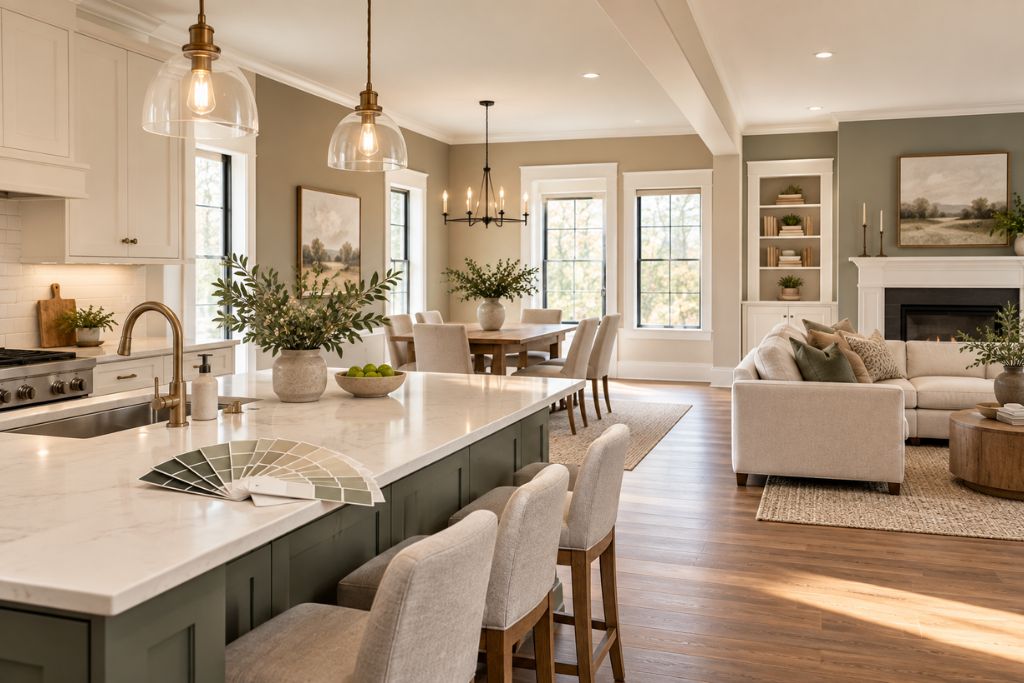
Open-concept home and a sudden urge for color? Excellent. The trick is choosing colors that play nicely across the entire space, not just one wall. With a little strategy, your kitchen, dining area, and living room can feel distinct without looking like three different houses.
Why does color matter so much in an open-concept home?
Open layouts give your eye a long runway. That means colors stay visible from multiple angles and need to work together.
A single palette can create flow. Related shades can define different zones. Architectural features such as corners, arches, built-ins, and beams can also give you natural places to change color.
So, ready to find your color personality?
Which open-concept color personality sounds like you?
A. “Keep It Calm.”
You like clean, comfortable, easygoing spaces.
Try a warm white, soft beige, greige, or another gentle neutral as your main color. These shades create a flexible backdrop for furniture, artwork, and texture.
This can work beautifully in a Powell home where natural light shifts throughout the day. Just remember: the same neutral can look different in morning sunlight than it does under evening lamps.
B. “Give Me Some Color!”
You want personality. You also want the rooms to make sense together.
Start with one dominant color, then choose supporting shades from the same family or with similar intensity. Think soft blue with deeper blue accents, or a warm neutral paired with muted terracotta.
You can use the supporting color on an island, built-in, dining area, or another natural focal point.
C. “Go Big or Go Home.”
You are ready for drama.
Color drenching can make a serious statement by carrying one color across walls and architectural details. It can work in open spaces, too, but visual breaks become important. Built-ins, beams, openings, and changes in architecture can help keep the look intentional.
And yes, you should sample first. Always.
How do you know which colors actually work together?
Start with the things you already love. Flooring, countertops, cabinetry, furniture, and natural light should influence your palette.
Then test larger samples on different walls. Open-concept rooms can show several colors at once, so check them from the kitchen, living area, and dining space.
For a Lewis Center home or a space near Downtown Columbus, that same strategy can help you see how your palette behaves in real daylight—not just on a tiny paint chip.
How can Color World Columbus help with your color decisions?
At Color World Columbus, we know choosing a color can feel like the hardest part of painting. Our personalized color consultations consider your space, vision, lighting, existing finishes, and style. We can also provide real samples so you can see your choices in natural light.
So go ahead. Have fun with the color deck.
Just make sure your colors know how to get along.
Leave a Reply