Blog

  • Twenty Awesome and Interesting Dog Facts – You’ll “Dig” Them!

    Twenty Awesome and Interesting Dog Facts – You’ll “Dig” Them!

    We love dogs as much as you do and although we may be a tad biased, we never get tired of learning more about them! We are sure you will find some of these dog facts interesting so we will share. How many of these facts did you know?

    1. The most “pupular” dog in the United States is the Labrador Retriever and has been for more than thirty straight years.
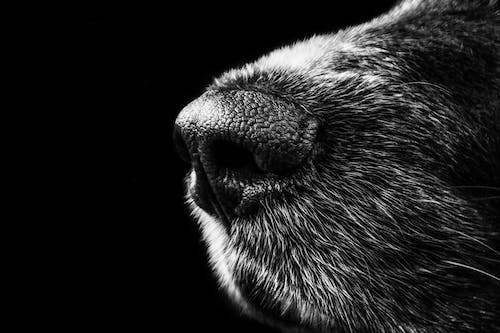
    2. Your pup’s nose print is extremely unique, very much like a person’s fingerprint.
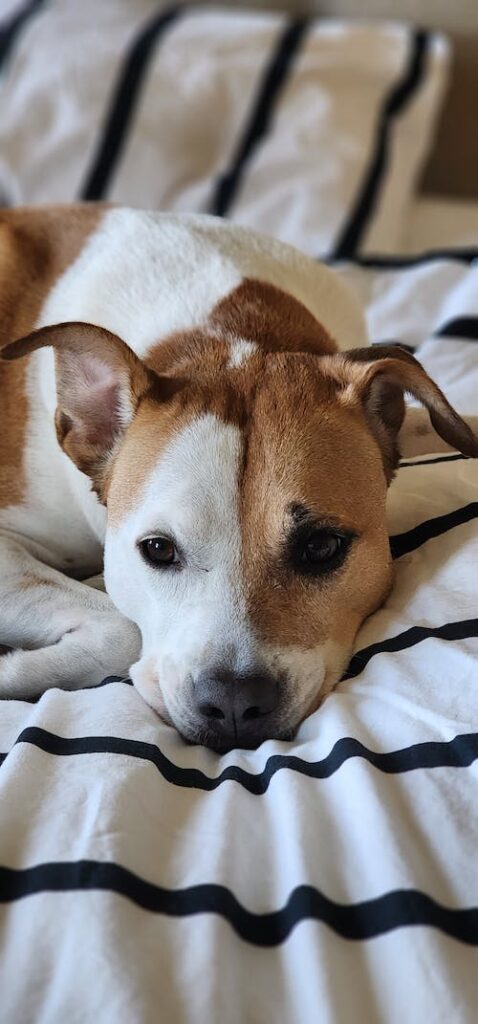
    3. Nearly half of US dog owners allow their fur-legged friend to sleep in bed with them.

    4. A recent study determined that senior dogs dream more than younger dogs.

    5. Three out of four people who send a holiday greeting card sign the name on their dog on it.

    6. A dog’s sense of smell is absolutely incredible. To put this into perspective, a human’s nose has approximately five million receptors. Your pup’s nose has between 250-300 million receptors!

    7. The famous Rin Tin Tin, who was a German Shepherd, was nominated for an Academy Award.

    8. Scientists discovered that a dogs’ noses can sense thermal radiation, (heat) which is why blind or deaf dogs are still capable of hunting.

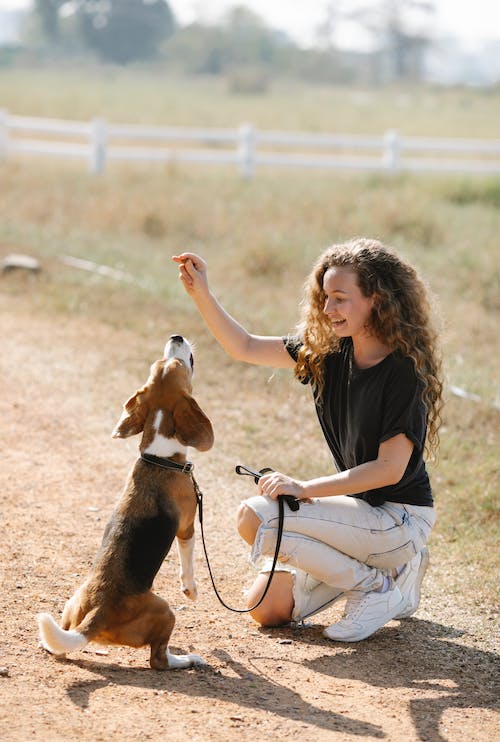
    9. The Beegle has been a family favorite dog for almost ninety years. In fact, it is the only breed that was among the five most popular breeds in 1934 to date.

    10. Have you ever watched someone yawn and then yawned yourself? The same thing happens to dogs. Give it try next time you are getting tired and watch what you pup does!

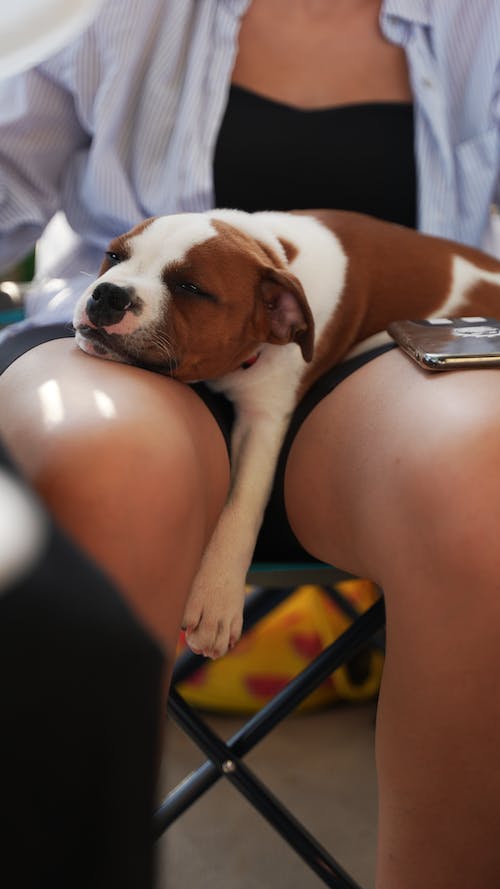
    11. Have you ever watched your dog curl up into a ball when they go to sleep? This is a natural way to protect themselves while asleep. This position allows them to be less vulnerable.

    12. The Basenji dog breed can yodel!

    13. The Australian Shepherd is not Australian. It was actually first bred in the United States.

    14. Although many believe the ever-popular Labrador Retriever was originally bred in the United States, its roots are from Newfoundland.

    15. Dogs are good for your health. Did you know that a human’s blood pressure tends to actually go down while petting a dog? (As does the dog’s!)

    16. The United States has more pet dogs than any other country in the world. 75 million!
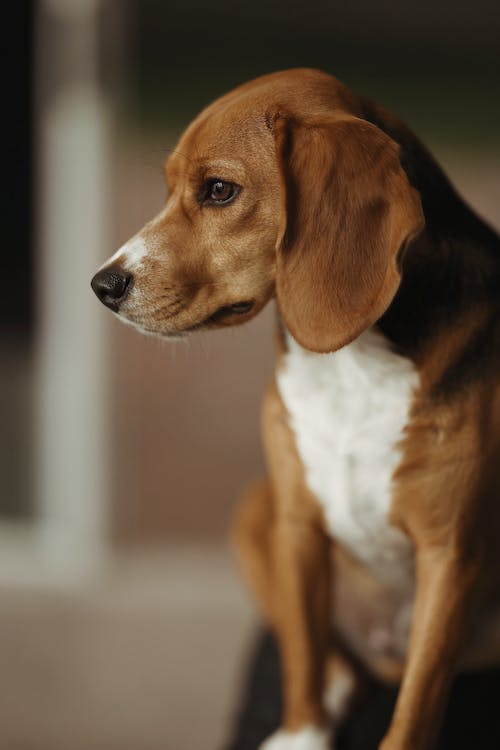
    17. A “Beagler” is the name of a person who hunts with a Beagle.

    18. Many believe that dogs are colorblind. They actually are able to detect blue and yellow.

    19. Did you know that all puppies are born deaf?
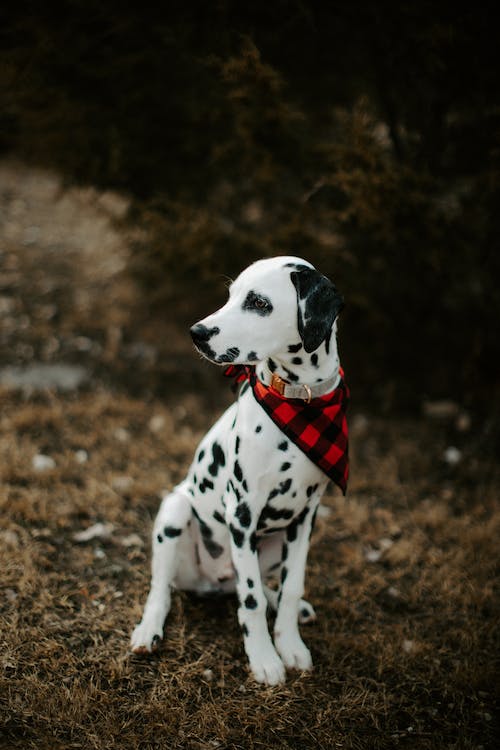
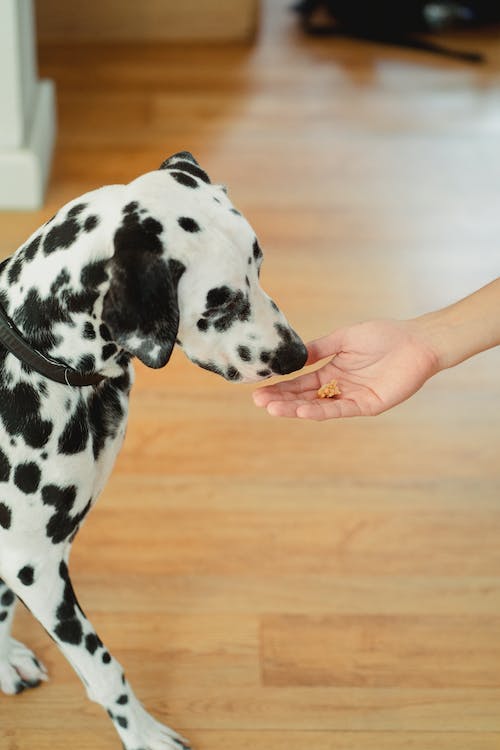
    20. The black spots on Dalmatians actually develop as they mature. These puppies are generally born all white.

    No matter which way you spin it, dog are amazing creatures that play a big role in our life. They provide us with love, companionship, and loyalty. Despite these facts being amazing, none of them compare to how amazing our fur-legged friends are to us!
  • Top Companion Dogs

    Top Companion Dogs

    Some dogs are bred for hunting, others for herding, and some for just being adorable and wanting to cuddle up! These pups are known as companion dogs and generally have extremely lovable and caring personalities. They enjoy a lap and relaxation. If you are looking for a companion dog, consider one of the five below as they are our picks for the top companion dogs.

    Papillon

    The Papillon is small, soft and loving breed of dog. They are at times playful and active, but love the comfort of a lap. They make great family pets and do well with children. The Papillon is considered a toy spaniel and is sure to win your heart… And lap.

    Breed Facts

    HEIGHT: 8 to 12 inches 

    WEIGHT: 5 to 10 pounds

    PHYSICAL CHARACTERISTICS: Long and straight coat that can be found in white with markings in red, sable, black, or lemon.

    Chihuahua

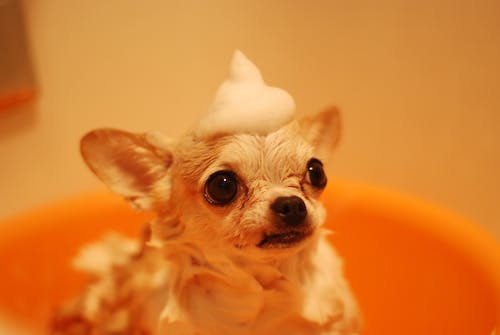
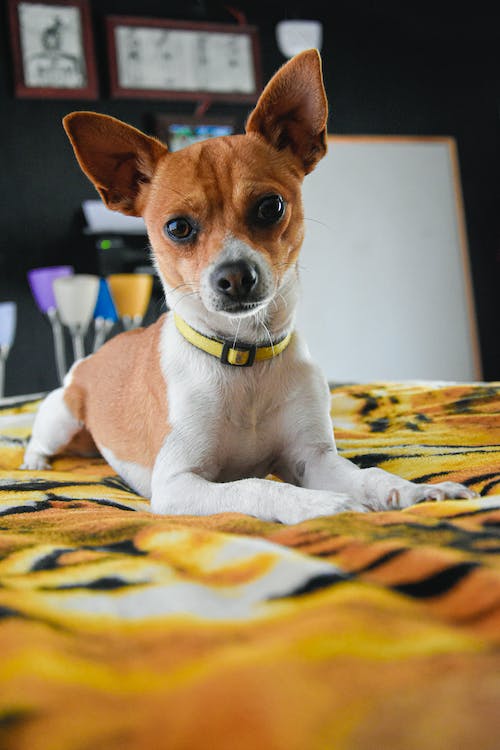
    Chihuahuas are known for their loyalty and desire to build a strong bond with their family. These tiny pups do well in all styles of housing. They are kid friendly and mom approved dogs that absolutely love a warm lap and blanket. They are also very social dogs who tend to do well with other pets in the home.

    Breed Facts

    HEIGHT: 5 to 9 inches

    WEIGHT: 4 to 7 Pounds

    PHYSICAL CHARACTERISTICS: Short or long coat that can be found in black, white, fawn and blue.

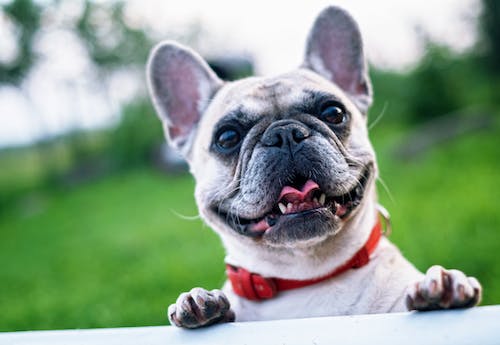
    French Bulldog

    The French Bulldog is one of the most laidback dog breeds you can find. They adore their family and love to curl up and nap next to anyone who is willing to. They are not overly energetic and have very warm and approachable demeanors. They make great family pets who tend to get along well with children and other pets in the home. The French Bulldog is certainly a top companion dog and one to be considered.

    Breed Facts

    HEIGHT: 10 to 13 inches

    WEIGHT: 19 to 30 pounds

    PHYSICAL CHARACTERISTICS: Stocky build with a large head and short snout. Their smooth coat can be found in a variety of solid colors or brindle.

    Golden Retriever

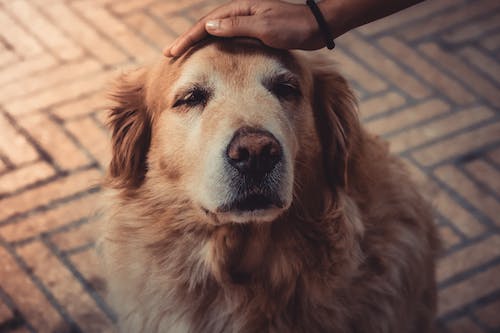
    The Golden retriever is one of the sweetest and caring breeds of dog you will find. This breed is very eager to please his family and enjoys being around them. They are not known for any aggression and their warm and outgoing personality make them a great companion dog. They also do well with other dogs in the home as well as children.

    Breed Facts

    HEIGHT: 23 to 26 inches (male); 21 to 24 inches (female)

    WEIGHT: 60 to 75 pounds (male); 50 to 65 pounds (female)

    PHYSICAL CHARACTERISTICS: Large head with expressive eyes; Their medium length coat can be found in shades from light golden to red.

    Shih Tzu

    The Shih Tzu is believed to have originated in Tibet and originally owned by Chinese emperors. This small breed of dog is known for its ability to cheer just about anyone up. They love one-on-one time with their family and enjoy napping along side of you. This breed has a very welcoming personality and does well with families that have children. These are just some of the reasons the Shih Tzu is as popular as it is today.

    Breed Facts

    HEIGHT: 7 to 11 inches

    WEIGHT: 9 to 19 pounds

    PHYSICAL CHARACTERISTICS: Can be found with a long double coat in many different colors.

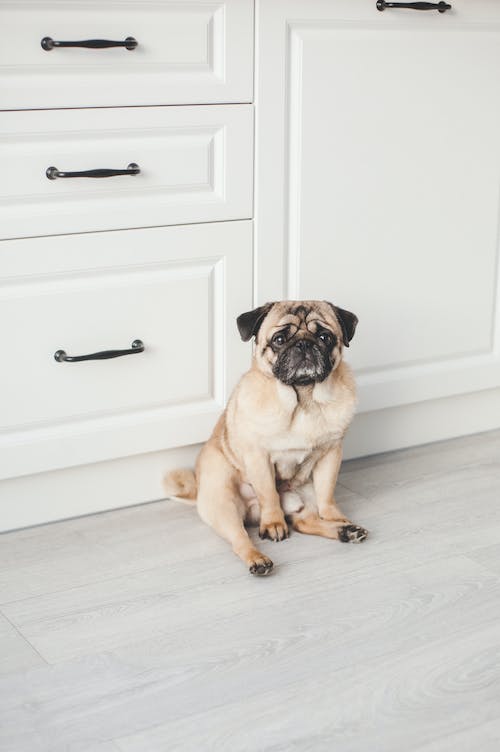
    Pug

    The Pug is sure to bring a smile to your face! This adorable pup is a joy to be around and known for its companionship qualities. The Pug enjoys his family and looks forward to spending time with his family. They make great companion dogs much thanks to their personality and demeanor. Those looking for a loving and warm and gentle pup should certainly consider the Pug.

    Breed Overview

    HEIGHT: 10 to 14 inches

    WEIGHT: 14 to 19 pounds

    PHYSICAL CHARACTERISTICS: Their smooth coat can be found in several different colors including black and fawn.

  • Simple Life Hacks for Dog Owners

    Simple Life Hacks for Dog Owners

    Below is a list of our favorite at-home dog hacks for dog owners. These tips and tricks will help you save time and are also pretty neat to try! They range from cleaning up loose dog hair to easy ways to check for fleas.

    Dryer Sheets Pick up Dog Hair

    Looking for an easy way to clean up dog hair? Use dryer sheets! They pick up loose dog hair with ease. Simply rub a dryer sheet over your furniture or wherever else pet hair collects and watch it disappear! Dryer sheets will allow for the hair to cling which makes this routine chore quick and easy to accomplish.

    Use Baking Soda to Clean up Pet Urine

    Every dog will eventually do it. When your dog pees on the carpet sprinkle some baking soda on the spot and allow it to sit for twenty to thirty minutes. The baking soda will absorb the liquid and help to remove the odor. Once dried simply vacuum it up! Depending on how saturated the carpet is, a second round may be needed which should do the trick.

    Check for Fleas by Giving Your Dog the White Towel Test

    Do you suspect that your pup has fleas? Or do you just want to check and make sure he doesn’t? Have your dog lay on a white towel while you examine & brush their fur. The white towel will make it easy to see any loose flea dirt that falls from your dog. Although these critters are very small, they will be able to be seen on a white or very light-colored towel.

    Make Your Own DIY Pill Pockets with Peanut Butter, Milk & Flour

    One of the most popular life hacks for dog owners was finding a way to get their dog to swallow pills. If you’re having a difficult time getting your dog to swallow pills consider making your own treat by mixing peanut butter, a dribble of milk, and coating it flour. Form each treat into a small round shape the size of your thumb nail. This will keep the pill secured inside the treat assuring your fur-legged friend takes his medicine.

    Soften Up Dry Food Using Warm Water

    If your pup has a hard time eating his kibble, consider mixing a little warm water over the food first. This will soften the kibble and allow your pup to enjoy his meal. This especially helpful for dogs who may have sensitive teeth.

    Skunk Spray? No Problem.

    If your dog was sprayed by a skunk the odor can be overwhelming and difficult to get rid of. One of the best ways to combat this unpleasant odor is by using pet soap, peroxide, and baking soda. These ingredients will help to remove the odor from your dog. At times, two or more rounds of cleaning your dog may be needed. Always use caution around your pup’s eyes when washing him, especially with the soap and peroxide.

    Use Flour, Cornstarch or Baking Soda to Stop Your Dogs Nail from Bleeding

    It happens to the best of us. We accidentally trim our pup’s nails too short and they begin to bleed. Use a homemade mixture of flour, cornstarch or baking soda with water until it’s a thick paste. Once the past forms apply it to the injured nail with moderate pressure for a few minutes. This will help clot the area that is bleeding.

    Make Training More Fun by Alternating the Rewards

    Rather than just giving praise for a new trick, add some tasty treats to the mix. When your pup follows the rules or is in the process of potty training, a small treat can go a long way. Alternating the types of treats will help keep your pup’s attention. This is a form of positive reinforcement and a great way to keep you fur-legged friend proud of his accomplishments.

  • High Energy Dogs

    High Energy Dogs

    Are you looking for a fast-paced high energy dog that will keep you active? If so, here is a list of the most energetic dog breeds that will keep you and your kids on the move! It is very important though to know that these dog breeds will require a lot of outdoor activity time with their family to prevent them from engaging in indoor no no’s. (Chewing furniture, etc.)

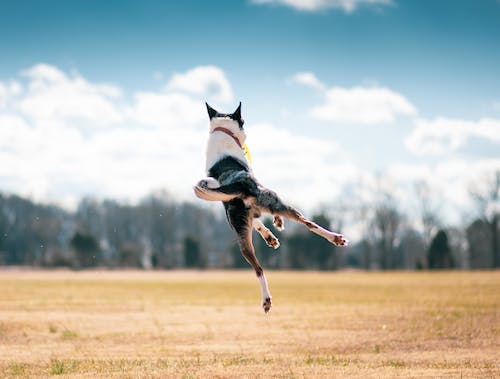
    Border Collie

    The Border Collie is an extremely intelligent, loyal, playful and energetic dog breed. They are well known for their agility and stamina. These dogs make great family pets for those who enjoy a lot of time outdoors.

    HEIGHT: 18 to 23 Inches

    WEIGHT: 30 to 60 Pounds

    PHYSICAL CHARACTERISTICS: Rough or smooth medium-length coat which can be solid, bicolor, tricolor, merle, or sable; well-balanced, athletic body.

    Australian Shepherd

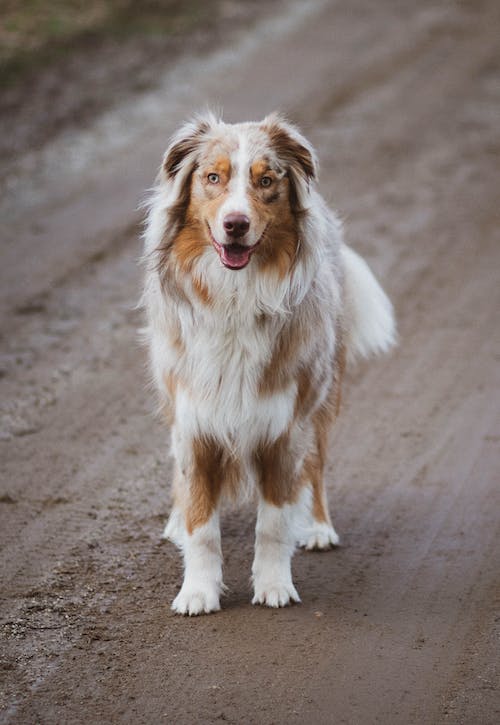
    The Australian Shepherd is a dog that is often on the move. They have a lot of energy and enjoy burning it off. This breed is a great fit for families that have active children who enjoy playing outside. It is important to make sure the Australian Shepherd receives copious amounts of activity time to prevent pent up energy.  

    HEIGHT: 18 to 24 inches

    WEIGHT: 35 to 65 pounds

    PHYSICAL CHARACTERISTICS: Medium-length coat with a well-balanced body; colors include black, blue merle, red, and red merle.

    Jack Russell Terrier

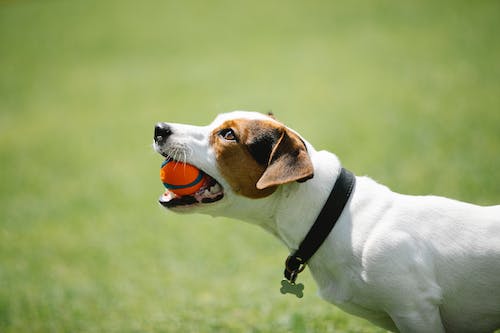
    The Jack Russell Terrier is as energetic and wiry as he looks! This small breed of dog loves playtime and will most likely outplay even the most active child. From running, to playing fetch, to a game of tug of war, the Jack Russell Terrier is top dog!

    HEIGHT: 12 to 14 inches

    WEIGHT: 13 to 10 Pounds

    PHYSICAL CHARACTERISTICS: Smooth or wiry coat with colors include white with black, brown, or tan markings

    Weimaraner

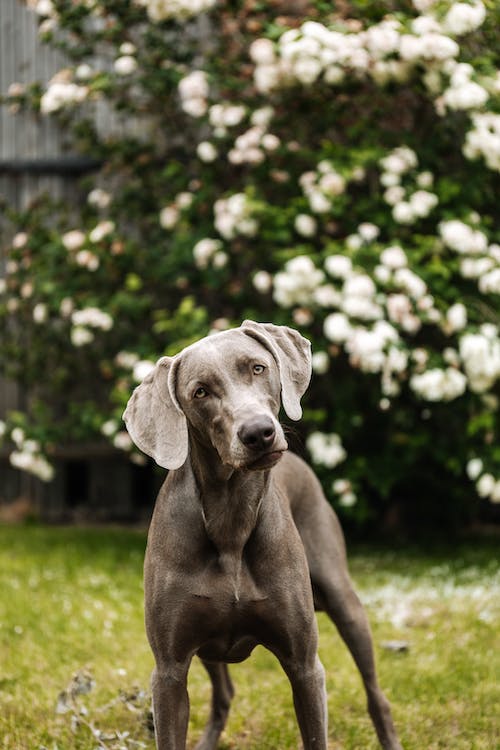
    Weimaraners were originally bred for hunting and are considered high-energy dogs. This breed loves to engage in outdoor activity time with family and does well with families who like to stay busy. About 60 minutes of activity time a day for this breed will help keep him happy and healthy.

    HEIGHT: 23 to 29 inches

    WEIGHT: 50 to 90 pounds

    PHYSICAL CHARACTERISTICS: Sleek body with a short coat; blue to gray color.

    Siberian Husky

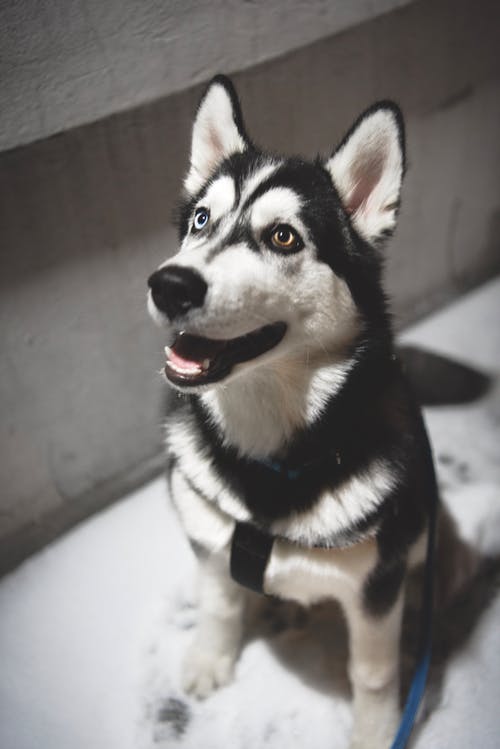
    Siberian Huskies were bred to pull sleds over very long distances. This breed is known for having an incredible amount of energy and loves to stay active. They do best with families who include them in outdoor activity time which can be anything from hiking to a brisk walk or a game of fetch. It is important to keep them active to prevent them from destroying indoor fixtures out of boredom.

    It is important to remember that all dogs require daily exercise in order to remain fit and healthy. Dogs that are considered to be high energy dogs will require even more activity time to help them feel their best. Regardless which way you accomplish this, making sure to consistently keep your pup on a good activity schedule is very important.

  • Longest Living Dog Breeds – Which are They and Ways to Achieve a Longer Life

    Longest Living Dog Breeds – Which are They and Ways to Achieve a Longer Life

    The average life expectancy of a dog varies based on many different things. Variables such as having a proper diet, remaining at a healthy weight, and routine veterinarian wellness checks do come into play. Despite all of these things, some dog breeds in general, tend to live longer than others. Below we compiled a list of the top five dogs breeds that have the longest average life expectancy.

    New Guinea Singing Dog

    The New Guinea Singing Dogs, also referred to as NGSD, are native to the Highlands of Papua New Guinea. These free-roaming dogs have evolved naturally on the island over thousands of years and were not discovered by scientists until about 1950. They have an extremely long average lifespan of about seventeen years.

    Chihuahua

    The Chihuahua is the smallest recognized dog breed, named for the Mexican state of Chihuahua, where it was first noted in the mid-19th century. It is believed that the Chihuahua is thought to derived from the Techichi, a small dog kept by the Toltec people of Mexico as long ago as the 9th century. This breed of dog has an average lifespan of about seventeen years.

    Toy Poodle

    The Toy Poodle was originally bred in the early 20th century as a companion dog. This breed is known for its loyalty and intelligence. The poodle was recognized by the American Kennel Club in 1886 and has been a family favorite for generations. This breed has an average lifespan of about sixteen years.

    Jack Russell Terrier

    The Jack Russell Terrier was originally developed in southern England during in the mid-1800s by Parson John Russell. The intentions were to create a working terrier who would hunt with hounds, bolting foxes from their dens so the hounds could chase them. This family pup has an average life expectancy of sixteen years.

    Cockapoo

    The Cockapoo was first created in the 1960s, when a breeder accidentally combined the genetic material of a Cocker Spaniel and a Poodle. This breed has since taken off in popularity and adored by many families around the world. His long average life expectancy of sixteen years is much thanks to his Poodle parent.

    Five Basic Tip to Keep Your Dog Healthy

    1- Feed Your Dog a Healthy and Balanced Diet – Always read the ingredients of their food. It is also important to feed your dog the proper amount of food. Variables such as the size of your dog, his activity level, and age must be considered. Feeding your dog too much will result in weight issues as feeding him too little will result in nutrition issues.

    2- Dental Care – Routine teeth cleaning is very important. This is not always easy, but with practice this task becomes second nature in time.

    3- Keep Your Dog Active, But Don’t Overdo It – Most dogs do well with about thirty minutes of physical exercise every day. It is important to make sure you keep an eye on your pup while exercising to make sure he is not overdoing it.

    4- Provide Mental Enrichment and Stimulation – Play with your dog. Human interaction which includes talking to him will help to stimulate his mind. One-on-one playtime vs just allowing him to run around the yard alone is an example of this.

    5- Regular Veterinary Visits – Do not wait for there to be a health concern. Routine wellness checks for your fur-legged friend are very important.

  • The Seven Oldest Breeds of Dogs

    The Seven Oldest Breeds of Dogs

    They are known as man’s best friend and recent research indicates that they may have been given this title longer than we first believed. Although many dog breeds date back centuries, there are a few that date back well before that. Below is a list of the oldest dog breeds on record and a little information about each breed.

    Akita Inu

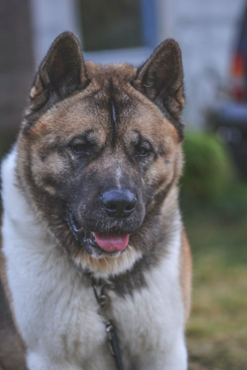
    Dating Back 10,000 Years – Akita Inu

    The Akita Inu is a historic breed of dog who originated in the mountains of northern Japan. The two separate varieties of Akita are a pure Japanese strain, also known as Akita-ken and a mixed American strain, commonly larger. This breed has a short double coat similar to northern spitz breeds. The Akita Inu is a very strong, loyal and focused dog who’s been around for a long time.

    Dating Back 9,500 Years – Greenland Sled Dog

    The Greenland Sled Dog is a sturdy, powerful and heavy-built dog with a wedge-shaped head, slightly tilted eyes and small triangular ears. This breed is covered with a thick coat which helps to prevents frostbite. This breed has a very long history of being a loyal and hardworking dog known for its incredible stamina.

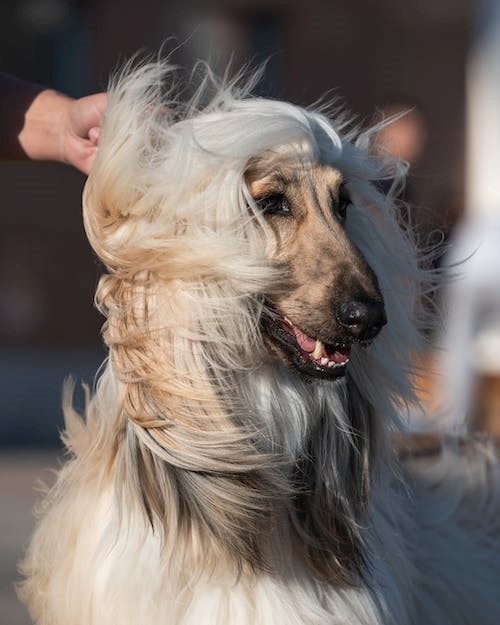
    Dating Back 8,000 Years – Afghan Hound

    While many believe that the Afghan Hound was originally from the deserts of Egypt, its name suggests otherwise, and a more realistic theory is that they were originally bred by the nomadic people of Afghanistan and its neighboring regions. This breed was used to hunt animals such as antelopes and leopards. They are very fast and focused dogs that have a very long history.

    Greyhound

    Dating Back 8,000 Years – Greyhound

    The original primary use of Greyhounds, both in the British Isles and on the Continent of Europe, was in the coursing of deer for meat and sport. Over thousands of years, this breed has become a very popular family pet due to their gentle and loving demeanor. Greyhounds are also extremely fast and are able to maintain great speeds over long distances. As of today, the Greyhound is known as the fastest breed of dog in the world clocking in at 45 mph.

    Dating Back 5,000 Years – Basenji

    The Basenji is an ancient dog breed tracing their lineage from pariah dogs to the Egyptians and then to hunting dogs for the tribes in the Congo. Running in silent packs, the Basenjis often wore bells to alert their human partners to their whereabouts in the deep jungle. This breed of dog was a tremendous hunter whose stamina and loyalty won the hearts of humans for thousands of years.

    Dating Back 5,000 Years – Tibetan Mastiff

    The Tibetan mastiff is a large-size dog breed that originated in China. They are often described to be as magnificent and alert as a lion. This breed was used in Tibet for thousands of years as powerful and imposing estate guard. They are very protective and loyal dogs whose appearance can be intimidating. Despite being very intelligent dogs, they can be stubborn and at times difficult to train. Many would suggest training at a young age will yield the best results.

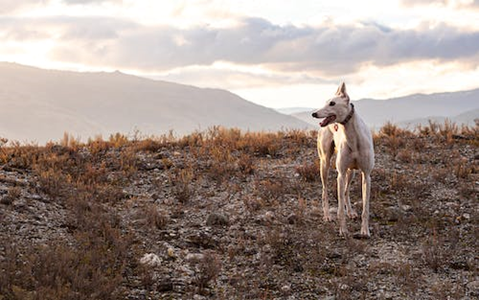
    Dating Back 5,000 Years – Saluki

    The Saluki is a very old breed of dog dating back thousands of years. Images of this breed with have been found on various artifacts in the Middle East, such as tomb paintings and mosaic sculptures. The Saluki was bred to hunt and unlike many dogs that utilize scent to do so, this breed utilizes its amazing vision. These are strong, alert, and fast dogs that have a long and proven history of helping mankind.

  • They’ll Fight Like Cats and Dogs! Or will they?

    They’ll Fight Like Cats and Dogs! Or will they?


    As the saying goes, they’ll fight like cats and dogs…

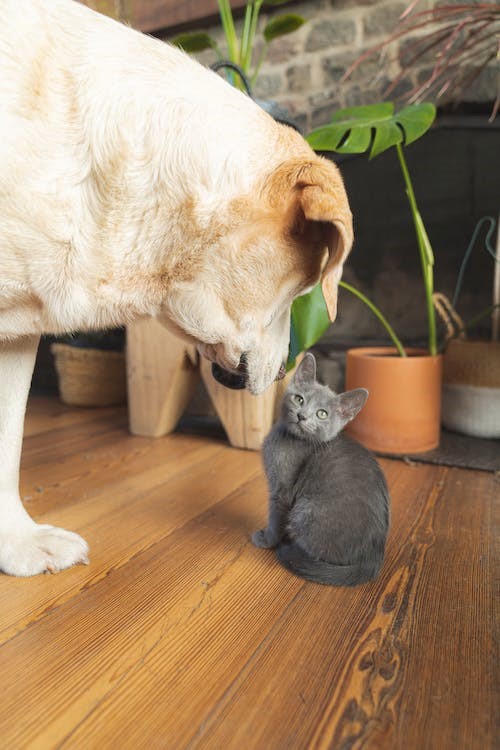
    Not necessarily if you find the right dog. But what qualities does a dog need in order for it to get along well with a cat? The first thing to take into consideration is the dog’s breed group. Dogs in the Terrier Group were by designed bred to hunt small game. (Such as a cat!) Dogs in the Hound Group were bred to chase and follow, which would mean a cat on the run could cause this type of breed to chase it.

    Dogs that fall under the Herding Group were designed to do just that, herd. Cats are very independent animals and may not appreciate being led where to walk. Although all of these types of dog breeds are able interact well with cats, many dogs within these groups naturally may have a hard time doing so.

    On the other hand, dog breed groups known for having a less energetic and more laid-back mentality tend to do well with cats. For example, the Toy Group includes smaller lapdogs who generally spend more energy gently licking their owner’s hand than chasing them.

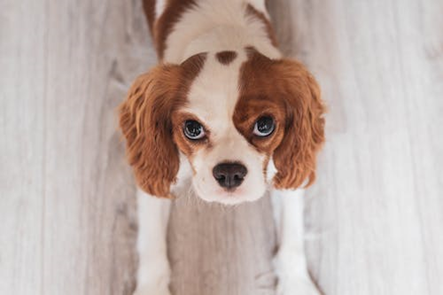
    They also tend to be less alarming to a cat since they are almost the same size. Being that they are not as active, a cat may not feel as intimidated around them. Smaller and calmer breeds such as the Cavalier King Charles Spaniel is known for their gentle disposition and do not over-bark, which can startle a cat.

    In a perfect world, the cat and dog are introduced while both are young, which allows them to grow and bond without having a territorial conflict. For those of us who add a cat to the mix after already owning a dog, it is important to remember that they first need to get familiar with one another. This will take time and initially keeping both pets spaced apart. By allowing each pet to sense (smell and hear) the other animal will allow for a gradual adjustment between the two. Eventually, both pets will need to see each other, but it is advised that they do so standing on different sides of a pet gate. This will prevent one pet from scratching or biting the other.

    Below are the top five dog breeds that we believe do best with cats inside the home.

    Bichon Fires


    The Bichon Frise has a warm and gentle demeanor and tends to do well with cats because of this. They are not aggressive dogs and enjoy curling up next to any fur-legged friend they can find. They are also a smaller dog which may allow the cat to feel less threatened.

    Cavalier King Charles Spaniel

    Cavalier King Charles Spaniel

    Cavalier King Charles Spaniels are extraordinarily loving and calm dogs who enjoy being close to family. They quickly warm up to people and other pets in the home and are not known for overly barking. This breed is gentle and caring and does make a great fit for those who also want a cat.

    Poodle

    Poodles (all three sizes) make excellent housemates for cats. Many Toy Poodles enjoy actually playing with cats. Miniature Poodles have been known to just exist with a cat and be partial. Standard Poodles seem to have a “who cares” outlook and pretend the cat isn’t even in the house. The Poodle is a very smart dog who is able to get along with just about anyone or anything.

    Golden Retriever

    Golden Retrievers are one of the top dog breeds in general. They get along well with people, other dogs, and cats. The Golden Retriever enjoys his family, and if a cat is a part of that, so be it. With very pleasant and warm personalities, this breed normally does well with cats. They are also not aggressive or known to push other animals around.

    Labrador Retriever

    Labrador Retriever

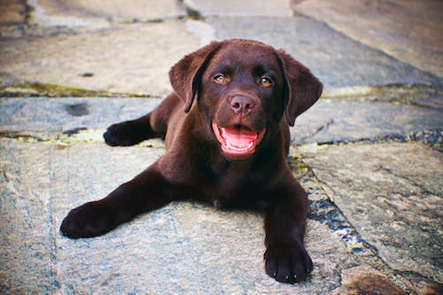
    The always “pup-ular” Labrador Retriever, or “Lab,” is a very social yet not anxious or excited dog. They tend to be patient and have very warm and loving personalities. This breed tends to coexist well with other pets in the home, including cats. For many years this breed has been ranked as a top dog breed in the United States.

    Regardless which dog breed you decide to introduce to a cat, the key is being patient. Remember, by nature not all animals “get along” but with time, care, and introducing the animals in steps, your puppy’s new best friend may be a cat.

  • The BIG Dog

    The BIG Dog

    Despite their massive and intimidating appearance, large dog breeds are generally well-tempered, warm, loving, friendly and loyal animals!  Throughout history, these dogs have been relied on for their strength which helped them to excel in guarding territory, protect livestock, and farm work. If a large dog is what you want than this is the blog for you. Below are the top six largest breeds of dogs and some information about them.

    English Mastiff

    At the top of our list of big dogs is the English Mastiff. This breed is recognized by the American Kennel Club. The biggest English Mastiff on record is named Aicama Zorba and broke the scale at 343 pounds. Typically, however, male English Mastiffs weigh 160 to 230 pounds while female English Mastiffs weigh 120 to 170 pounds. These dogs also stand about 30 inches tall at the shoulder, with females being slightly shorter.

    Boerboels

    The Boerboel generally weighs between 150 and 220 pounds, with no difference given between females and males. Farmers in South Africa began using this breed after initially developing them to hunt leopards and baboons. This dog is a very large and powerful dog and is known to be somewhat aggressive, so good socialization training at a young age is needed.

    Saint Bernard

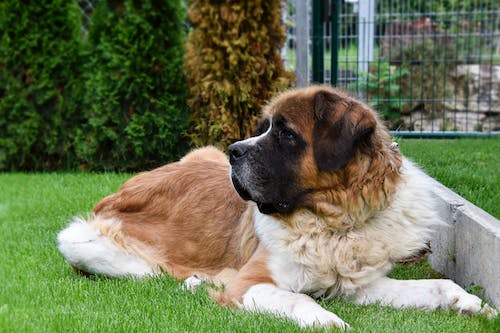
    Saint Bernard dogs are large, strong and dominant in size. Male Saint Bernards typically weigh in between 140 and 180 pounds while female Saint Bernards tend to weigh between 120 and 140 pounds. Most Saint Bernards stand just under thirty inches tall at full maturity. This breed was developed to help rescue Alpine mountaineers. The face of a Saint Bernard has a distinct appearance with a wrinkled brow and short muzzle.

    Great Dane

    The Great Dane is another large breed of dog. Male Great Danes tend to weigh in between 140 and 175 pounds. Female Great Danes generally check in between 110 and 140 pounds. The largest Great Dane in the record books was named Zeus. This gigantic dog stood nearly four feet tall and stood seven feet four inches high when on his back legs. This being almost two feet taller than the average man.

    Leonbergers

    According to the American Kennel Club, male Leonbergers weigh between 110 and 170 pounds. Female Leonbergers generally weigh between 90 and 140 pounds. Both male and female Leonbergers stand about 30 inches tall at maturity. The Leonbergers has a unique lion-like mane around its neck and chest which magnifies its large appearance. Water rescue teams often use this breed because of their water-resistant coat. Many also deploy this breed to herd animals and as watchdogs because of their size.

    Tibetan Mastiffs

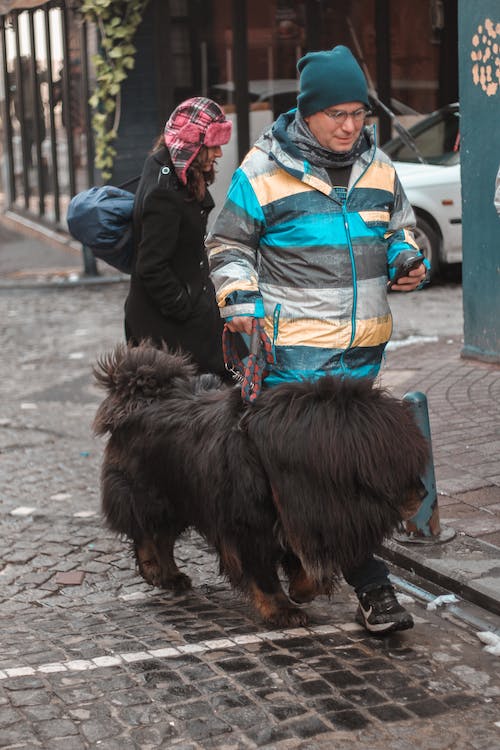
    Tibetan Mastiffs are large and solid dogs. Male Tibetan Mastiffs weigh between 90 and 150 pounds. Female Tibetan Mastiffs weigh between 70 and 120 pounds. They stand about two feet tall at maturity and are known to make an excellent watchdog. If a large dog is what you are looking for this is definitely a breed to consider.

    Anatolian Shepherd

    Anatolian Shepherds were initially developed in the Kangal region of Turkey to guard and protect livestock. Although this breed is large and strong and protective, they tend to be very gentle around their family.  Male Anatolian Shepherds weigh between 110 and 150 pounds while female Anatolian Shepherds weigh between 80 and 120 pounds. They stand about thirty inches tall at maturity.

  • Top Ways to Keep Your Pup Happy

    We love our puppies, and so do you! Nothing will stop us from doing things for them to make them feel happy and loved. Below are some ideas of ways that you can improve their life, and they are much easier than you may think!

    Boost Up the Exercise Routine!

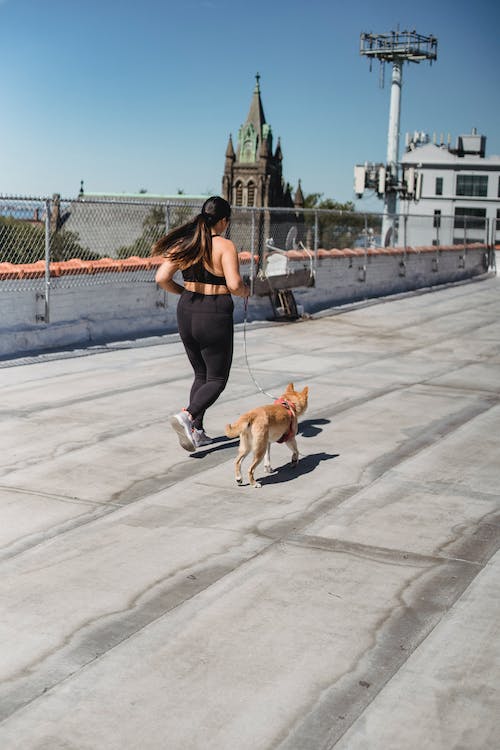
    Our pups love being active, especially with their family. A jog in the park or a walk through the neighborhood will get your pup’s heart beating and tail wagging. Some parks even offer secured off-leash areas, which is a great place for a game of fetch. Regardless of what you do, keeping your fur-legged friend active and well-exercised is a great way to keep them happy.

    Mental Stimulation

    Mental stimulation for your pup is a great way to fight boredom and stay mentally active. Taking your dog to new places and on new adventures is a great way to accomplish this. Instead of just walking your dog for exercise, try playing games that require them to follow commands. This is a good way to keep their mind sharp and happy.

    Positive Reinforcement

    When training your pup be sure to use positive reinforcement techniques. Your dog wants to make you happy and is generally happy when you are. While training him, be sure to use the same words when they accomplish an act correctly, followed by an extra pat on the back. Your dog can sense the tone in your voice, so using a consistent and upbeat voice when he does good will allow him to sense your happiness and feel the same way.

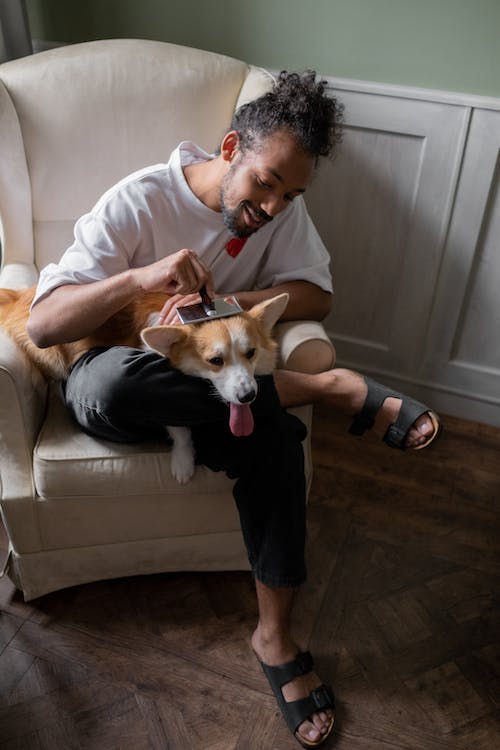
    Who doesn’t like a good massage? Well, your pup loves them too! Test out different massage techniques for your pup, and when you see one of his back legs twitching, you found the right one! This will allow you and your pup to bond while promoting relaxation. A good brushing of your dog will also accomplish similar results and make him look good too!

    Let Them Relax

    Many dog owners find it more convenient to keep their pup’s collar on day and night. Although this will save you time, collars can cause discomfort if left on too long. Consider removing your pup’s collar in the evening before bed so he can relax. A relaxed pup is a happy pup!

    Feed Them Well

    Properly fueling your pup has many advantages. For one, their overall health. A properly fed dog will look and feel better than a dog that is being fed low-quality dog food. Long-term health also greatly depends on the quality of his food. A treat here and there and fine but feeding your dog twice a day in twelve-hour intervals tends to keep their energy levels balanced.

    Grooming is Good

    Every dog needs to be groomed. Some breeds require more work than others based on their coats, etc. Daily brushing of your pup is very important as it will prevent stubborn knots and matting from forming. Not only will your dog look better being groomed, but he will feel much better too.

    Pay Attention

    Your dog seeks your undivided attention. Regardless of how busy your day is, be sure to pay your pup quality attention. That can be lying down together, petting while talking to him, or even teaching him a new trick. Your one-on-one attention with your dog is very important. This will allow him to feel loved and allow your bond to be even stronger.

    No matter how you keep your dog happy, know that he relies on you and loves your presence. Taking the time each and every day to show your fur-legged friend love is good for his health and will allow him to know he’s special.

  • Top Pups for First Time Dog Owners

    Top Pups for First Time Dog Owners

    Adding a dog to your family is a very fun and exciting part of life, however, does come with some challenges. Realistically, your pup is a part of your family and will be for many years. There are certainly many plusses to adding a fur-legged friend but there are also certain challenging aspects that come with this. Potty training, basic obedience and you being able to leave home for long periods of time while your pup is home alone are just a few. The key is finding a dog breed that best fits your family’s dynamics and routine. Certain dogs are a better fit for first-time dog owners because they are easier to care for. Below is a list of our top five dog breeds for those who never owned a dog before.

    Bichon Frise

    The Bichon Frise is more of a laidback and happy-go-lucky dog. They are easy to get along with and tend to be very simple. They also train easily and only need a moderate amount of exercise. This a big plus for families that are always on the go. They tend to do well when their family is away from the home and are not known to be destructive. This breed has been a very popular breed for many years because of this.

    GROUP: Non-Sporting (AKC)

    HEIGHT: 9 to 12 inches

    WEIGHT: 7 to 12 pounds

    COAT AND COLOR: Curly white coat; may have traces of apricot, buff, or cream LIFE EXPECTANCY: 13 to 15 years

    Cavalier King Charles Spaniel

    The Cavalier King Charles spaniel is as loving as she looks. They tend to do great with children and have warm demeanors. They do well home alone and are not known to act out when their family is away for the day. This breed also trains well and is overall a very easy dog to care for. The Cavalier King Charles Spaniel does not require excessive amounts of exercise and will be patiently waiting for you at the front door for you to come home. This breed makes a great fit for first-time dog owners.

    GROUP: Toy (AKC)

    HEIGHT: 12 to 13 inches (to the withers)

    WEIGHT: 13 to 18 pounds

    COAT AND COLOR: Long, sleek and silky coat with feathering around ears, feet, chest, and tail in four color varieties, tricolor, blenheim, ruby, and black and tan LIFE EXPECTANCY: 12 to 14 years

    Golden Retriever

    The Golden Retriever makes a great dog for first-time dog owners because they are very easy to train and very smart. They do require and do well with a little more activity time than some breeds, however, they also tend to occupy themselves when at home alone. This breed is also able to adapt to contemporary home or apartment living, does great with children and is overall one of the better dog breeds for first-time dog owners.

    GROUP: Sporting (AKC)

    HEIGHT: 20 to 24 inches

    WEIGHT: 50 to 75 pounds

    COAT AND COLOR: Medium-length double coat; light to dark gold LIFE EXPECTANCY: 10 to 12 years

    Pomeranian

    The Pomeranian is a gentle and caring lapdog who loves his family. They are easy to care for and do not require excessive exercise. They are also not known to be destructive and are good at occupying themselves when home alone. They can be at times a bit stubborn, however, do train well and make great contemporary home or apartment style living dogs. Although this good-looking dog looks high maintenance, they are anything but that and are sure to make a great fit in your home.

    GROUP: Toy (AKC)

    HEIGHT: 6 to 8 inches

    WEIGHT: 3 to 7 pounds

    COAT AND COLOR: Long, double coat that comes in many colors, though the most common are red, orange, cream, sable, black, brown, and blue LIFE EXPECTANCY: 12 to 16 years

    Poodle

    Last but certainly not least is the ever so popular Poodle. Known to be the scholars of all dogs, this breed is a great fit for new dog owners because they train with ease. The Poodle does do best with one-on-one attention from his family, but is also able to adapt to being home alone when no one is home. This Poodle comes in three sizes: toy, miniature, or standard. All are intelligent and very loving dogs.

    GROUP: Non-Sporting (AKC)

    HEIGHT: Over 15 inches (standard) 10 to 15 inches (miniature) 10 inches and under (toy)

    WEIGHT: 45 to 70 pounds (standard) 15 to 18 pounds (miniature) 5 to 9 pounds (toy)

    COAT AND COLOR: One of many solid colors, including but not limited to white, black, gray, brown, apricot, and particolored LIFE EXPECTANCY: 10 to 16 years