Tag: Water Quality

  • When Should You Hire an Aquarium Maintenance Company?

    When Should You Hire an Aquarium Maintenance Company?

    You have an aquarium because you enjoy the underwater world. You want to understand your fish, learn the equipment, test the water, and keep everything looking its best. That is part of the adventure.

    But aquarium care involves more than clean glass and clear water. As a system becomes larger or more complex, maintenance can require real time, experience, and attention to detail. That is when professional aquarium maintenance can make a meaningful difference.

    Why does timing matter in aquarium maintenance?

    A healthy aquarium depends on balance. Water chemistry, filtration, lighting, temperature, fish health, plants, and the physical environment all work together.

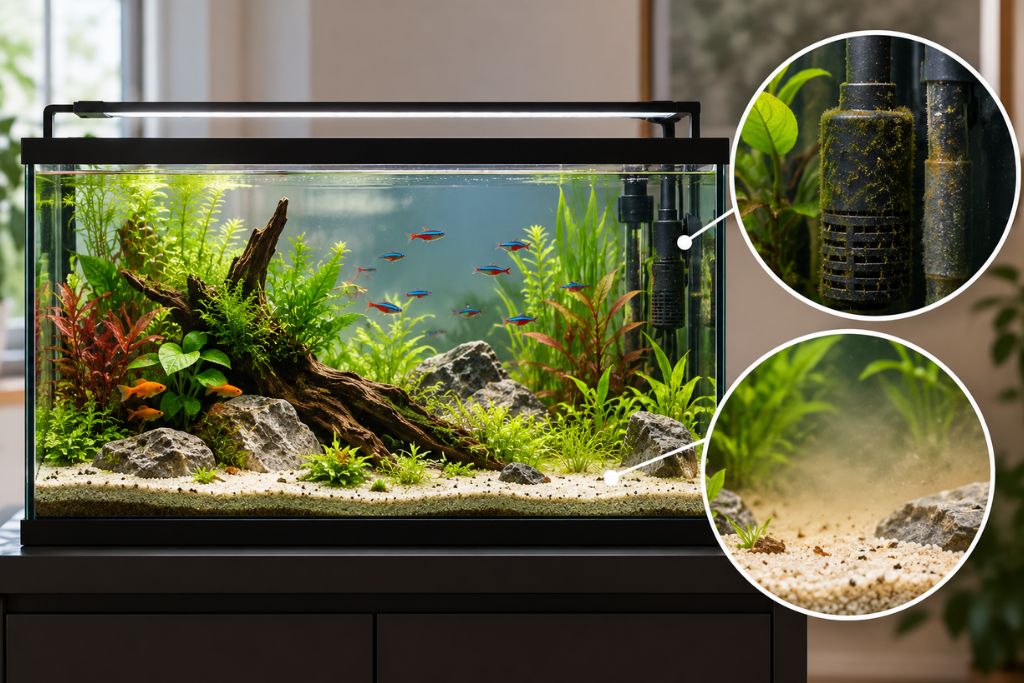
    Small changes can become larger problems when they go unnoticed. Repeated algae growth, unusual fish behavior, cloudy water, or equipment issues can signal that something needs attention.

    Professional maintenance is not simply about making an aquarium look clean. It is about understanding the system and keeping its different parts working together.

    When should you hire an aquarium maintenance company?

    There are several situations when bringing in an aquatic professional makes sense:

    1. You are falling behind on routine maintenance

    Busy schedules happen. Missed maintenance can lead to accumulating algae, debris, and water-quality concerns. A scheduled service can keep essential care on track.

    2. Your aquarium keeps developing the same problems

    Persistent algae, cloudy water, or recurring water-quality issues deserve more than another quick cleaning. A professional can evaluate the system and look for contributing factors.

    3. You are starting a new or more complex aquarium

    New setups bring important decisions about filtration, water chemistry, stocking, lighting, plants, and fish compatibility. Professional guidance can help establish the system correctly from the beginning.

    4. Your fish or plants are behaving differently

    Changes such as unusual hiding, poor appetite, lethargy, or other abnormal behavior should not be ignored. Fish health can be affected by water quality, equipment problems, stress, or disease.

    5. Your aquarium requires more technical care

    Large, saltwater, reef, planted, and specialty aquariums can demand more precise maintenance. Professional care can include testing pH, alkalinity, salinity, and trace elements, plus evaluating filtration and aquatic life.

    6. You are traveling or moving the aquarium

    Aquariums still need attention while you are away. Moving one also requires careful handling of fish, plants, equipment, and the established biological system.

    How can Aquarium Adventure help?

    At Aquarium Adventure, our professional Aquatic Technicians provide complete maintenance for residential and commercial aquariums. Service can include water testing, partial water exchanges, filter evaluation, detailed cleaning, lighting inspections, and fish and plant health checks.

    Our Hoffman Estates team brings aquatic expertise backed by an established aquarium showroom and years of hands-on experience. That means we can help you understand your system, not simply service it.

    From Golf Center to the wider Hoffman Estates and Poplar Creek area, Aquarium Adventure is here to help you keep your aquatic environment healthy, balanced, and beautiful.

    What if I still want to handle some maintenance myself?

    You absolutely can. Professional maintenance does not mean stepping away from the hobby.

    Think of it as having an experienced aquatic resource when your aquarium needs more time, knowledge, equipment, or attention than you can provide. The goal is simple: a healthy aquarium that you can enjoy.
  • How Often Should You Change Aquarium Water?

    How Often Should You Change Aquarium Water?

    An aquarium has a lot going on. We think about filtration, oxygen, lighting, décor, compatible fish, plants, and food. Then there is the biggest ingredient of all: water.

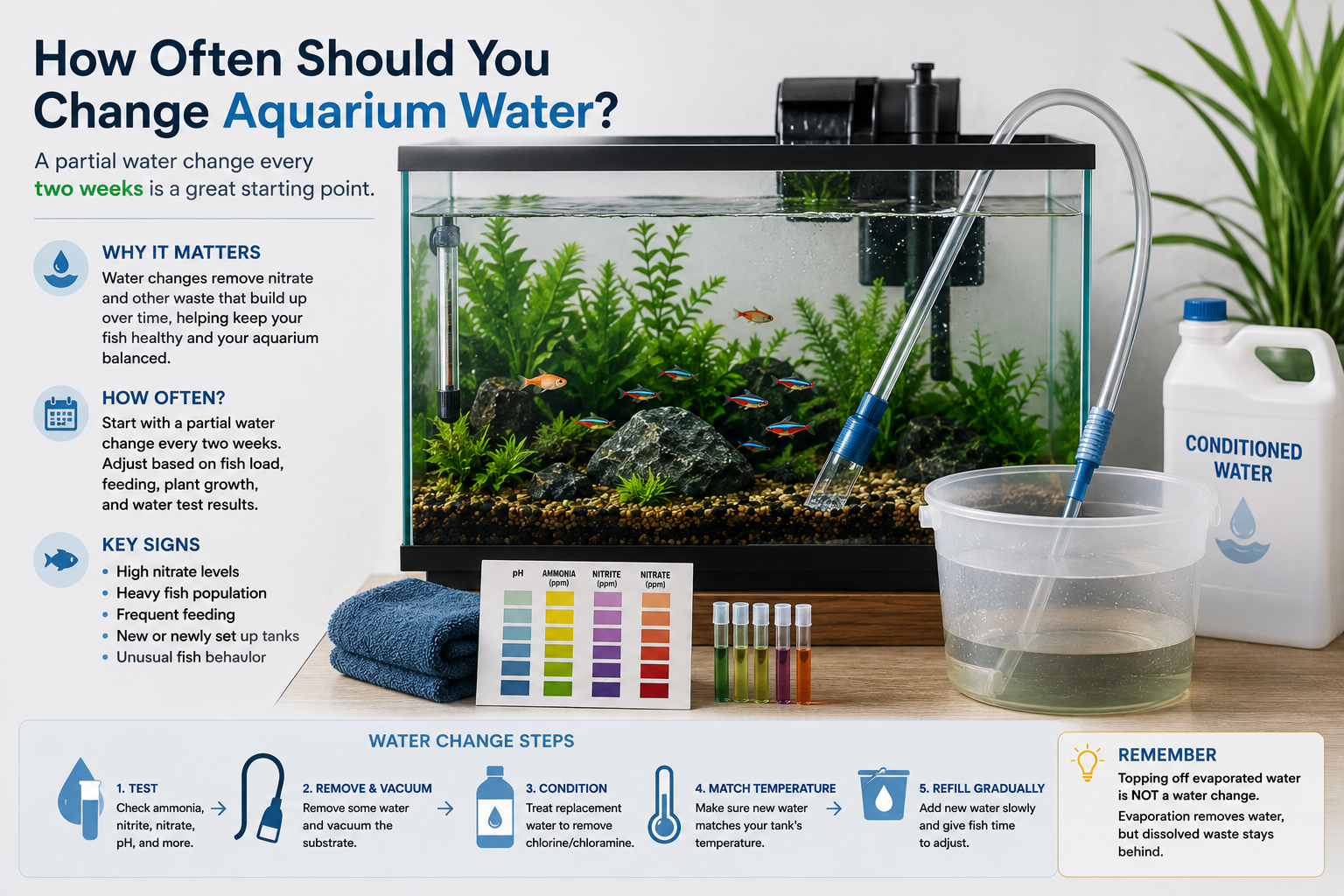
    For many established aquariums, a partial water change every two weeks is a useful maintenance starting point. Your aquarium’s stocking level and water-test results should determine the actual schedule.

    For a fishkeeper in Hoffman Estates, that means putting water changes on the calendar instead of waiting for the tank to look dirty.

    Why Do Aquarium Water Changes Matter?

    Your filter handles important mechanical and biological work. It cannot remove every dissolved waste product, though. Fish waste and decomposing food contribute to ammonia. Beneficial bacteria convert ammonia into nitrite and then nitrate.

    Nitrate accumulates over time. Partial water changes help remove it from the aquarium.

    That matters for a community tank near Schaumburg as much as a planted aquarium in Bolingbrook. Clear water does not automatically mean healthy water.

    How Often Should You Change Aquarium Water?

    Start with a partial water change every two weeks, then adjust based on your aquarium’s test results. Heavier stocking can mean more waste and a greater need for water changes.

    Pay closer attention when:

    • Your aquarium has a heavy fish population.
    • You feed frequently or generously.
    • Nitrate rises significantly between changes.
    • You have recently added fish.
    • Your aquarium is newly established.
    • Your fish show unusual behavior or signs of stress.

    New aquariums need extra attention. Ammonia and nitrite can rise while the biological filter develops, so frequent testing becomes especially important.

    That is worth remembering if you are setting up your first tank in Bartlett or building a new aquatic display in South Barrington.

    How Do You Change Aquarium Water Correctly?

    Keep the process controlled and consistent.

    1. Test the water first. Check ammonia, nitrite, nitrate, pH, and other relevant parameters.
    2. Remove some of the water. Vacuum the substrate to collect accumulated debris.
    3. Condition replacement water. Tap water may contain chlorine or chloramine.
    4. Match the temperature. Avoid sudden temperature changes.
    5. Refill gradually. Give your fish time to adjust.

    Also, topping off evaporated water is not a water change. Evaporation removes water, but dissolved substances remain behind.

    When Should You Get Professional Aquarium Advice?

    At Aquarium Adventure, we care for 450 aquariums containing 20,000 gallons of water and work with more than 1,000 species. We work with aquarium owners throughout Hoffman Estates, Bolingbrook, Schaumburg, Bartlett, South Barrington, and the surrounding Chicagoland communities.

    Our professional aquatic technicians test water chemistry, evaluate fish and plant health, inspect filtration, and perform partial water exchanges as part of our maintenance program.

    Sometimes the easiest way to understand your aquarium is to have an experienced aquarist look at the whole system.

    And at the end of the day, remember: The goal is not to chase a magic number. It is to keep your aquarium stable, your water quality appropriate for its inhabitants, and your fish thriving.

  • 10 Common Aquarium Mistakes New Fish Owners Make (And How to Avoid Them)

    10 Common Aquarium Mistakes New Fish Owners Make (And How to Avoid Them)

    You’ve been dreaming about this for ages.

    Now the aquarium is finally sitting in your home. You’ve imagined the fish you’ll keep, picked out decorations, and can already picture yourself unwinding while your new underwater world comes to life. It’s exciting. It’s rewarding. And yes—it can feel a little intimidating at first.

    Then reality kicks in.

    “Is my tank actually ready?” “Did I buy the right fish?” “How much should I feed them?” If those questions sound familiar, you’re in excellent company. Every experienced fishkeeper started exactly where you are.

    Across Hoffman Estates, Schaumburg, South Barrington, Bolingbrook, and nearby communities, we meet first-time aquarium owners every day. Some visit our stores after spending the afternoon at The Promenade Bolingbrook or The Arboretum of South Barrington, excited to begin their first tank. The same questions come up again and again. And thankfully, so do the solutions.

    1. Adding Fish Before the Tank Is Cycled

    It’s hard to wait when the aquarium is finally set up.

    However, a new tank needs time to establish beneficial bacteria that convert harmful ammonia into less toxic compounds. Introducing fish too early can expose them to unsafe water conditions. Cycling the aquarium first gives your fish a much healthier start.

    2. Choosing Fish That Aren’t Compatible

    Just because two fish look great together doesn’t mean they’ll enjoy living together.

    Some species are peaceful community fish. Others become territorial or simply grow much larger than many beginners expect. Researching adult size, temperament, and water requirements before stocking your tank prevents many common problems.

    3. Feeding Too Much

    Your fish may always look hungry. That doesn’t mean they need another meal.

    Extra food sinks to the bottom, breaks down, and quickly affects water quality. Feed only the amount your fish can comfortably consume within a few minutes, following the recommendations for the species you’re keeping.

    4. Starting with a Tiny Aquarium

    Small aquariums are often marketed to beginners. Ironically, they’re usually less forgiving.

    Water chemistry changes much faster in smaller tanks, making it harder to maintain stable conditions. A larger aquarium often gives new hobbyists a smoother learning experience.

    5. Skipping Water Tests

    Clear water isn’t always healthy water.

    Regular testing helps monitor ammonia, nitrite, nitrate, and pH before they become problems. It’s one of the easiest ways to protect your fish.

    6. Forgetting Water Changes

    Even the best filter can’t remove everything.

    Routine partial water changes help remove excess nitrate, replenish important minerals in freshwater aquariums, and support stable water quality.

    7. Deep Cleaning the Entire Aquarium

    A sparkling tank sounds like a good goal. Cleaning everything at once isn’t.

    Beneficial bacteria colonize your filter media, substrate, decorations, and virtually every hard surface in the aquarium. Replacing all of your filter media or deep-cleaning everything at once can disrupt the biological filtration your tank depends on.

    8. Ignoring Your Equipment

    Filters, heaters, and air pumps work hard every day.

    Checking them regularly helps you catch small issues before they become big ones.

    9. Constantly Adjusting the Water

    New fishkeepers sometimes chase the “perfect” water parameters.

    In reality, stable conditions are usually far healthier than numbers that constantly swing. Make changes gradually and only when they’re truly needed.

    10. Trying to Learn Everything Alone

    Nobody becomes an aquarium expert overnight.

    Asking questions, learning from experienced fishkeepers, and getting advice before making changes can save you a lot of frustration and help your fish thrive.

    Start Your Aquarium Adventure with Confidence

    Setting up an aquarium is one of the most rewarding hobbies you can enjoy, and you don’t have to figure everything out by yourself. The team at Aquarium Adventure is always happy to help hobbyists throughout Hoffman Estates, Schaumburg, South Barrington, Bolingbrook, Naperville, and surrounding communities choose compatible fish, quality equipment, and the right supplies for lasting success.

    Every thriving aquarium starts with curiosity, a little patience, and a willingness to learn. Before long, the questions that seemed overwhelming become second nature, and you’ll be enjoying the underwater world you’ve built with confidence. With a little patience, reliable guidance, and the right setup from the start, you’ll spend less time troubleshooting and a lot more time enjoying the incredible underwater world you’ve created.