Tag: Puppy Grooming

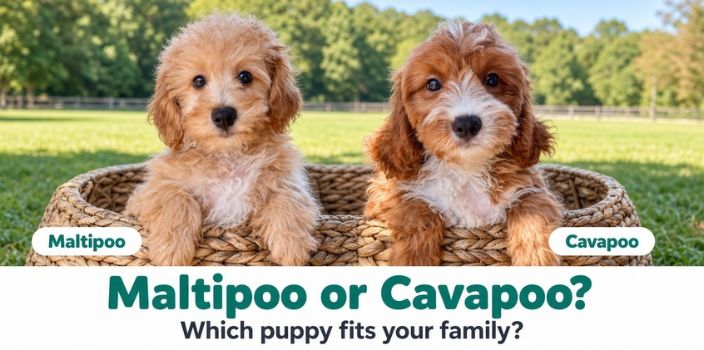
  • Maltipoo vs. Cavapoo: Which Puppy Is Right for Your Family?

    Maltipoo vs. Cavapoo: Which Puppy Is Right for Your Family?

    Quick Answer / Summary

    Maltipoos and Cavapoos are affectionate, intelligent companion dogs, but they differ in size, temperament, and care needs. Maltipoos, a Maltese–Poodle mix, are generally smaller and often lively and playful. Cavapoos, a Cavalier King Charles Spaniel–Poodle mix, tend to be slightly larger and are frequently described as gentle and sociable. Both need regular grooming, daily activity, and companionship. The right choice depends on your lifestyle and the individual puppy.

    Key Takeaways

    • Size: Maltipoos are generally smaller, although both mixes vary considerably.
    • Temperament: Maltipoos are often lively and playful, while Cavapoos are frequently gentle and outgoing.
    • Grooming: Both require regular brushing and professional coat maintenance.
    • Exercise: Daily walks, playtime, and mental enrichment are important for both.
    • Family fit: Neither mix has a guaranteed personality. Individual temperament and early socialization matter.

    Choosing between a Maltipoo and a Cavapoo is a pretty wonderful problem to have.

    Both are affectionate, adorable, and known for forming close bonds with their families. But beyond those sweet faces, they have a few differences worth considering.

    Maltipoos tend to be smaller, with lively personalities and plenty of enthusiasm for playtime. Cavapoos are often a little larger, with a gentle, sociable nature that makes them appealing family companions.

    Of course, every puppy has a personality of their own. Breed ancestry can offer helpful clues, but it doesn’t tell you everything about the dog you’ll bring home.

    At Georgia Dog Club, we love helping families understand those differences and find a puppy that fits their everyday lives.

    Here’s what to know about Maltipoo and Cavapoo size, temperament, grooming, and care before making your decision.

    What Is the Difference Between a Maltipoo and a Cavapoo?

    Both are Poodle mixes, but their other parent breeds influence their typical characteristics.

    A Maltipoo is a cross between a Maltese and a Poodle. These dogs are generally small, affectionate, alert, and playful.

    A Cavapoo is a cross between a Cavalier King Charles Spaniel and a Poodle. Cavapoos are often slightly larger and known for their friendly, people-oriented personalities.

    Both can make wonderful companions. However, their appearance, size, and behavior depend on genetics, upbringing, and individual development.

    How Do Maltipoos and Cavapoos Compare in Size?

    Maltipoos are generally smaller than Cavapoos, although their adult sizes overlap.

    • Maltipoo: Approximately 5–20 pounds.
    • Cavapoo: Approximately 8–25 pounds.

    These are estimated ranges rather than guarantees. The size of the Poodle parent, particularly whether it is a Toy or Miniature Poodle, can influence the puppy’s eventual weight.

    Does Size Matter for Family Life?

    It can, especially when considering younger children, living arrangements, and daily activities.

    A smaller Maltipoo may appeal to families looking for a petite companion. A slightly larger Cavapoo may feel sturdier during everyday interactions. Still, both require gentle handling and appropriate supervision around children.

    For families around Calhoun, Adairsville, and Cartersville, consider which size best suits your household and routines.

    Which Has the Better Temperament: Maltipoo or Cavapoo?

    Both mixes are affectionate and people-oriented, but they may express their personalities differently.

    What Is a Maltipoo’s Personality Like?

    Maltipoos are often lively, playful, and attentive to their families.

    Many enjoy learning tricks, playing games, and joining everyday household activities. Some can also be sensitive or vocal, making patient training and early socialization especially helpful.

    What Is a Cavapoo’s Personality Like?

    Cavapoos are frequently described as gentle, friendly, and sociable.

    Their Cavalier King Charles Spaniel ancestry may contribute to their affectionate nature. However, Cavapoos can also be energetic, enthusiastic, and playful, particularly during puppyhood.

    Neither mix is automatically calmer, friendlier, or easier to train. Individual temperament, socialization, and household routines all play important roles.

    How Much Grooming Do Maltipoos and Cavapoos Need?

    Both mixes need consistent grooming, even when they shed very little.

    Their coats can be straight, wavy, or curly, depending on inherited traits. Longer coats are especially prone to tangling and matting.

    What Should Their Grooming Routine Include?

    For either mix, plan for:

    • Regular brushing: Maltipoos often benefit from daily brushing. Cavapoos typically need brushing several times weekly, or more often for longer, curlier coats.
    • Professional grooming: Many benefit from appointments approximately every four to eight weeks, depending on their coat.
    • Dental care: Regular toothbrushing and veterinary dental checks.
    • Ear and nail care: Routine inspections and trimming as needed.

    Neither mix is guaranteed to be hypoallergenic. Even dogs that shed very little produce allergens.

    How Much Exercise and Training Do They Need?

    Maltipoos and Cavapoos generally enjoy moderate daily activity, including walks, playtime, and mental enrichment.

    Their exercise requirements depend on age, health, and individual energy levels.

    Both can respond well to reward-based training. Start with basic cues, consistent house-training routines, and positive introductions to new experiences.

    Around Calhoun, Rome, and Dalton, short neighborhood walks and suitable pet-friendly outings can help keep either mix active.

    For growing puppies, keep exercise age-appropriate and avoid forced running or strenuous activity.

    What Health Concerns Should Families Know About?

    Both mixes can inherit health conditions associated with their parent breeds.

    Maltipoos may be susceptible to dental disease, luxating patellas (kneecaps that slip out of position), and certain eye conditions.

    Cavapoos may also experience joint and eye problems. Their Cavalier King Charles Spaniel ancestry makes two additional conditions worth understanding:

    • Mitral valve disease: A heart condition involving deterioration of the mitral valve.
    • Syringomyelia: A neurological condition involving fluid-filled cavities within the spinal cord.

    These are recognized concerns in Cavalier King Charles Spaniels, but not every Cavapoo will develop them.

    What Should You Ask Before Choosing a Puppy?

    Ask about:

    • The puppy’s veterinary records and current health.
    • Relevant health screening of the parent dogs.
    • Expected adult size based on parentage.
    • The puppy’s temperament and early socialization.
    • Grooming, nutrition, and ongoing care requirements.

    Understanding these details can help you make a more informed decision.

    Frequently Asked Questions About Maltipoos and Cavapoos

    Are Maltipoos Smaller Than Cavapoos?

    Generally, yes. Maltipoos often weigh approximately 5–20 pounds as adults, while Cavapoos commonly weigh around 8–25 pounds. However, their size ranges overlap considerably. The Poodle parent’s size and the puppy’s genetics influence adult weight. Ask about the parents rather than relying on a breed-mix label alone.

    Which Is Better for Families With Children?

    Both can make affectionate family companions. Cavapoos may be slightly larger, while Maltipoos are often smaller and more delicate. However, neither mix is automatically better with children. Temperament, socialization, and appropriate handling matter more. Always supervise interactions between young children and puppies, and teach children to respect a dog’s need for space and rest.

    Do Maltipoos or Cavapoos Shed More?

    Either mix may shed, although many have relatively low-shedding coats. Maltipoos often inherit coat characteristics from two breeds associated with lower shedding, while Cavapoos may inherit more shedding from their Cavalier parent. Individual coats vary, and neither mix is guaranteed to be hypoallergenic. Regular brushing remains necessary even for dogs that shed very little.

    Are Maltipoos or Cavapoos Easier to Train?

    Both mixes are intelligent and can learn well through positive reinforcement. Maltipoos may be lively and occasionally vocal, while Cavapoos are often described as eager to interact with people. However, trainability varies between individuals. Short sessions, consistent routines, and rewards for desirable behavior help either puppy develop good habits.

    Can Maltipoos and Cavapoos Stay Home Alone?

    Both are companion-oriented mixes that may struggle with extended periods alone. Gradually introduce short, comfortable separations while providing appropriate enrichment and a safe resting area. Avoid suddenly leaving a young puppy alone for long stretches. Their age, temperament, and toilet-training needs should determine how long they can comfortably manage.

    Which Mix Is Better for First-Time Puppy Owners?

    Either can be a good choice for a first-time owner prepared for grooming, training, veterinary care, and daily companionship. Maltipoos may appeal to those seeking a generally smaller dog, while Cavapoos may suit families who prefer a slightly larger companion. The best decision comes from understanding the individual puppy and choosing one whose needs fit your routine.

    Finding Your Perfect Puppy Match

    Maltipoos and Cavapoos have plenty in common, but their differences can help you make a more informed choice.

    At Georgia Dog Club, we love helping families discover the personalities, characteristics, and care needs of different puppies. Our team is happy to answer questions and help you find a companion who feels right for your home.

    For families around the foothills of Northwest Georgia, we’re here to make finding your new companion a thoughtful, enjoyable experience.

    Ready to meet your match? Explore our available puppies and get to know the puppies who could become part of your family.

  • Purebred vs. Designer-Breed Puppies: What Should Families Know?

    Purebred vs. Designer-Breed Puppies: What Should Families Know?

    Quick Answer / Summary

    Purebred puppies have ancestry within one established breed, while designer-breed puppies are intentionally bred from two different breeds, such as a Maltese and a Poodle. Purebreds generally offer more predictable physical characteristics, while designer mixes may inherit a broader combination of traits. Neither is automatically healthier, easier to train, or better for families. The right choice depends on the puppy’s individual temperament, health background, and your lifestyle.

    Key Takeaways

    • Parentage: Purebreds belong to one established breed; designer mixes combine two different breeds.
    • Predictability: Purebreds generally have more consistent size, coat, and appearance.
    • Temperament: Both can make wonderful companions, but individual personalities vary.
    • Health: Neither type is automatically healthier. Parental health screening matters.
    • Family fit: Grooming, exercise, training, and companionship needs deserve careful consideration.

    Introduction

    Some people have loved Golden Retrievers their entire lives. Others have a soft spot for Shih Tzus, or one look at a Cavapoo is enough to start imagining life with a new puppy.

    We understand the appeal of both purebred and designer-breed dogs. Each offers something different, and both can bring years of wonderful companionship.

    But choosing a puppy involves more than deciding which breed catches your eye. You’ll want to understand their expected size, personality, grooming needs, and health background.

    And while breed characteristics offer useful guidance, every puppy is an individual. Two puppies with similar ancestry can have surprisingly different personalities.

    We love helping families explore their options, ask the right questions, and find a puppy whose needs suit their lifestyle.

    Here’s what to know about purebred and designer-breed puppies before making your decision.

    What Is the Difference Between Purebred and Designer-Breed Puppies?

    The main difference is their ancestry.

    A purebred puppy comes from an established breed, with ancestry tracing back through dogs of that same breed.

    A designer-breed puppy is intentionally bred from two different breeds, often to combine certain characteristics.

    What Are Some Popular Examples?

    Common purebred breeds include:

    • Golden Retriever
    • French Bulldog
    • Shih Tzu
    • Yorkshire Terrier

    Popular designer mixes include:

    • Cavapoo: Cavalier King Charles Spaniel × Poodle
    • Maltipoo: Maltese × Poodle
    • Cockapoo: Cocker Spaniel × Poodle
    • Goldendoodle: Golden Retriever × Poodle

    Does Registration Make a Puppy Purebred?

    Purebred dogs may have documented pedigrees through recognized registries, such as the American Kennel Club (AKC).

    Registration records ancestry according to the registry’s requirements. However, registration alone does not guarantee a puppy’s health, temperament, or breeding quality.

    Designer mixes may also have documented parentage, but that doesn’t make them purebred dogs.

    Are Purebred Puppies More Predictable?

    Generally, yes. Established breed standards provide guidance about typical adult size, coat, appearance, and certain behavioral tendencies.

    For example, families researching a purebred Cavalier King Charles Spaniel can find established expectations for the breed’s size and general characteristics.

    Designer mixes may inherit different combinations of traits from either parent.

    Does That Make Designer Puppies Unpredictable?

    Not entirely. Understanding both parent breeds offers helpful clues.

    However, puppies from the same designer-breed litter may develop different coat textures, sizes, or personalities.

    A Goldendoodle, for example, might inherit a curlier Poodle-like coat or one that more closely resembles its Golden Retriever ancestry.

    Purebred puppies vary, too. Neither category guarantees a particular personality or appearance.

    Are Designer-Breed Puppies Healthier Than Purebreds?

    Neither purebred nor designer-breed puppies are automatically healthier.

    Genetic diversity may influence the risk of certain inherited conditions, but crossing two breeds doesn’t eliminate health concerns.

    What Health Information Should Families Ask About?

    Before choosing a puppy, ask about:

    • Veterinary examination and medical records.
    • Relevant health screening of both parents.
    • Breed-associated health conditions.
    • Vaccination and deworming history.
    • Expected adult size and ongoing care needs.

    A puppy’s routine veterinary examination is important, but it doesn’t replace recommended parental health screening.

    Which Is Easier to Train: Purebred or Designer-Breed Puppies?

    Neither category is inherently easier to train.

    Breed ancestry may influence energy, attention, and learning preferences. However, individual temperament and training methods matter enormously.

    What Helps Any Puppy Learn?

    Regardless of parentage, focus on:

    • Positive reinforcement: Reward behaviors you want to encourage.
    • Consistency: Use clear cues and predictable routines.
    • Early socialization: Introduce new experiences safely and positively.
    • Patience: Adjust expectations to your puppy’s age and development.

    A purebred Poodle and a Maltipoo may both enjoy learning tricks, but their personalities and attention spans can differ.

    How Do Grooming and Exercise Needs Compare?

    Grooming and exercise requirements depend more on inherited characteristics than on whether a puppy is purebred or designer-bred.

    A purebred Shih Tzu may need frequent brushing and professional grooming. A designer-breed Cavapoo can require similar maintenance.

    Likewise, a Golden Retriever and a Goldendoodle may both enjoy active family routines.

    What Should You Consider Before Choosing?

    Think about:

    • How much time you can devote to brushing and grooming.
    • Your family’s typical activity level.
    • Available space for play and exercise.
    • How long your puppy will spend without company.
    • Your budget for veterinary care, training, and grooming.

    These everyday considerations often tell you more about compatibility than a breed label alone.

    Frequently Asked Questions About Purebred and Designer-Breed Puppies

    Are Designer-Breed Puppies Considered Purebred?

    No. Designer-breed puppies are intentionally bred from two different breeds. For example, a Cavapoo has Cavalier King Charles Spaniel and Poodle ancestry. Even when both parents are purebred, their offspring are considered mixed-breed dogs. Some designer mixes have established breeding programs or documented pedigrees, but that doesn’t automatically make them recognized purebred breeds.

    Are Purebred Puppies Healthier Than Designer Breeds?

    Neither is automatically healthier. Purebred dogs may have known breed-associated health risks, while designer mixes can inherit conditions from either parent breed. Genetic diversity may affect certain risks, but it doesn’t guarantee better health. Relevant parental health screening, veterinary care, nutrition, and preventive medicine are important considerations for both.

    Do Designer-Breed Puppies Shed Less?

    Some do, but shedding depends on genetics and coat type. Even puppies from the same litter may develop different coats. Low shedding also doesn’t mean allergy-free. Dog allergens occur in dander, saliva, and urine, not just fur. No dog breed is truly hypoallergenic. Families with allergies should discuss their concerns with an allergist before choosing a puppy.

    Are Purebred Puppies Better for Families With Children?

    Not necessarily. Many purebred and designer-breed dogs can become excellent family companions. Size, temperament, energy level, socialization, and training are more useful considerations than parentage alone. Families with young children should also consider how delicate a puppy may be and whether its activity needs suit their household. Adult supervision remains important during interactions.

    Can Designer-Breed Puppies Have Predictable Adult Sizes?

    Their parent breeds provide useful estimates, but adult size can vary. This is particularly relevant when one parent is a Toy or Miniature Poodle. Even puppies from the same litter may mature differently. Ask about both parents’ sizes and remember that estimates are not guarantees.

    How Do I Choose Between a Purebred and Designer-Breed Puppy?

    Start with your family’s routines, preferences, and available time for care. Research the parent breeds, ask about health screening, and learn about the individual puppy’s personality. Consider grooming, exercise, training, and long-term expenses. We’re happy to help families explore these details and understand what daily life with different puppies may involve.

    Finding the Puppy Who Fits Your Family

    Purebred or designer breed, the best choice is a puppy whose personality and care needs suit your home.

    We love helping families discover what makes different breeds and mixes special. From understanding temperament and grooming to preparing for nutrition, training, and everyday puppy care, we’re here to answer your questions and help you make a thoughtful decision.

    Ready to meet your new companion? Explore our available puppies, get to know their personalities, and let us help you find a wonderful addition to your family.

  • New Puppy Resources in Chantilly, VA: Where Should Families Start?

    New Puppy Resources in Chantilly, VA: Where Should Families Start?

    Quick Answer / Summary

    Families welcoming a puppy in Chantilly, Virginia, have access to local veterinarians, training classes, socialization programs, and grooming services. Chantilly Animal Hospital and Fairfax Ridge Animal Hospital offer veterinary care, while Lead With Fun, Dog’s Downtown, and Bark & Roll provide puppy-focused programs. At XO PUPS, we help families prepare with puppy-care guidance, nutrition resources, and supplies. Knowing where to find support makes those first months easier to navigate.

    Key Takeaways

    • Veterinary care: Arrange an early health examination and review your puppy’s vaccination schedule.
    • Training: Begin basic skills at home and explore age-appropriate local classes.
    • Socialization: Choose supervised experiences suited to your puppy’s health and temperament.
    • Grooming: Introduce gentle handling early and check professional grooming requirements.
    • Local resources: Chantilly and neighboring Fairfax County offer support for nearly every puppy-care need.

    Introduction

    The first few weeks with a puppy tend to fill your calendar surprisingly quickly.

    Between veterinary appointments, potty-training routines, feeding schedules, and teaching your new companion which household items aren’t chew toys, there’s plenty to figure out.

    Fortunately, families around Chantilly, Centreville, South Riding, and the Dulles corridor have a strong network of local puppy-care professionals.

    The important part is choosing resources that suit your puppy’s age and needs. A veterinarian comes first, while training and carefully managed socialization can begin early. Grooming and daycare may follow as your puppy grows.

    At XO PUPS, we enjoy helping families make these decisions with confidence. Here’s our guide to useful local resources and what to consider before booking.

    Where Can You Find Veterinary Care for Your New Puppy?

    Establishing veterinary care should be an early priority.

    A first appointment helps review vaccination records, parasite prevention, nutrition, and healthy development.

    Which Veterinary Clinics Serve Chantilly Families?

    • Chantilly Animal Hospital: Provides veterinary examinations, vaccinations, preventive care, and grooming.
    • VCA Centreville Animal Hospital: Offers veterinary wellness and preventive-care services for nearby Centreville families.
    • Fairfax Ridge Animal Hospital: Offers puppy wellness packages covering examinations, vaccinations, and selected preventive services.

    Bring your puppy’s medical records and ask when public walks and group activities will be appropriate.

    Where Can You Find Puppy Training Around Chantilly?

    Training can begin at home with short, positive sessions focused on everyday skills.

    What Local Puppy Training Programs Are Available?

    • Lead With Fun: Offers small, reward-based puppy classes in Chantilly for healthy puppies aged 9–16 weeks at enrollment.
    • The Dog Wizard Chantilly: Provides puppy training, private lessons, and group programs. Its trainers use balanced methods, so ask about the specific techniques proposed.
    • Fairfax County Park Authority: Offers dog-training courses through Parktakes, with class types and schedules varying by session.

    For young puppies, prioritize patient instruction, positive reinforcement, and realistic expectations.

    Where Can Puppies Safely Socialize in Chantilly?

    Socialization helps puppies become comfortable with unfamiliar people, sounds, places, and other dogs.

    The best experiences are positive and carefully managed.

    Which Local Facilities Offer Puppy Socialization?

    • Bark & Roll Chantilly: Offers puppy socialization with play areas organized by size, temperament, and play style.
    • Dog’s Downtown: Provides structured puppy socialization with enrichment, handling exercises, and supervised play. Confirm age and vaccination requirements directly.
    • Dogtopia of Dulles: Offers supervised daycare for eligible puppies beginning at 12 weeks, subject to its admission requirements.

    Puppies can begin safe socialization before completing their vaccinations. Ask your veterinarian which activities are suitable.

    Where Can You Find Grooming and Daycare Services?

    Gentle brushing, paw handling, and brief introductions to grooming tools can begin at home.

    What Grooming and Daycare Options Are Nearby?

    • Healthy Hound Playground and Grooming: Provides daycare, boarding, and grooming through its Fairfax and Sterling facilities.
    • Chantilly Animal Hospital: Offers professional bathing, brushing, and nail care by appointment, with vaccination requirements.
    • VCA Centreville Hospital: Offers grooming services alongside veterinary care.

    Ask about minimum age, vaccination requirements, supervision, and how staff introduce young puppies to unfamiliar experiences.

    What Puppy Essentials Should You Have Ready at Home?

    A few practical supplies can make those first weeks easier.

    For families around Fair Lakes, Westfields, and South Riding, start with:

    • Food and water: Age-appropriate puppy food and sturdy bowls.
    • A resting space: A comfortable bed or properly sized crate.
    • Training supplies: A harness, leash, treats, and suitable chew toys.
    • Cleaning essentials: Pet-safe cleaners and waste bags.
    • Grooming tools: A brush appropriate for your puppy’s coat.

    At XO PUPS, we offer nutrition guidance, puppy products, and training resources to help families prepare for everyday puppy care.

    Frequently Asked Questions About New Puppy Resources in Chantilly

    How Soon Should I Take My New Puppy to the Veterinarian?

    Arrange an examination within the first few days of bringing your puppy home. Your veterinarian can review medical records, check your puppy’s health, and recommend vaccinations and parasite prevention. Some puppy purchase agreements specify an examination timeframe, so review your paperwork. Establishing care early also gives you a trusted professional to contact when questions arise.

    When Should I Start Training My Puppy?

    You can begin immediately with simple, positive exercises. Focus on name recognition, house-training routines, gentle handling, and rewarding desirable behavior. Keep sessions short and enjoyable. Formal classes may begin before vaccinations are complete when appropriate health precautions are followed. Lead With Fun, for example, offers a puppy class for healthy puppies aged 9–16 weeks at enrollment.

    Can My Puppy Attend Socialization Classes Before Completing Vaccinations?

    Often, yes. Carefully managed puppy classes can support early development while reducing unnecessary disease exposure. Ask providers about vaccination requirements, cleaning procedures, supervision, and how puppies are grouped. Your veterinarian can help determine which activities are appropriate. Avoid uncontrolled interactions with unfamiliar dogs and heavily used public dog areas until your puppy has sufficient protection.

    Are There Affordable Puppy Training Options in Fairfax County?

    The Fairfax County Park Authority offers dog-training classes through its Parktakes program. Course availability, fees, locations, and eligibility requirements vary, so check the current catalog before registering. Families can also compare private lessons and group classes around Chantilly and Centreville. Group programs may offer a more economical option, depending on the provider.

    Where Can I Take My Puppy for Outdoor Activities Around Chantilly?

    Once your veterinarian approves public walks, Ellanor C. Lawrence Park offers trails and outdoor spaces for leashed exploration. Quiet neighborhood walks around Chantilly and Centreville are another option. Keep outings short and bring water. Fairfax County prohibits dogs younger than four months from its off-leash dog parks, which also have vaccination and licensing requirements.

    What Should I Look for in a Puppy Daycare or Grooming Facility?

    Ask about staff experience, vaccination requirements, supervision, and cleaning practices. For daycare, find out how puppies are grouped and whether they receive rest periods. For grooming, ask how staff introduce young dogs to unfamiliar handling and equipment. A suitable provider should explain its procedures clearly and discuss your puppy’s individual needs before enrollment.

    Helping Your Puppy Feel Right at Home

    From veterinary appointments to puppy classes, Chantilly families have plenty of resources to help their newest companions settle in.

    At XO PUPS, we know that finding the right puppy is only the beginning. Our team can help you explore different breeds, understand everyday care needs, and prepare with nutrition guidance, puppy supplies, and training resources.

    Thinking about welcoming a puppy home? Explore our available puppies and discover how XO PUPS can help you find a companion who fits your family.

    Looking for more puppy tips and tail-wagging fun? Check out our other blogs below for expert advice, breed insights, and everything puppy!

  • Bath Time Tips for First-Time Puppy Owners

    Bath Time Tips for First-Time Puppy Owners

    A puppy’s first bath is one of those moments new owners remember. It can be sweet, a little messy, and sometimes a full production involving slippery paws, flying water, and a puppy wondering why their human suddenly turned into a groomer.

    The good news? Bath time does not have to be stressful.

    With the right preparation, puppies can learn that grooming is simply another part of life with their family. A calm introduction helps puppies feel more comfortable with handling, water, brushing, and future grooming routines.

    At Frontier Pets in Cheyenne, we know bringing home a puppy comes with plenty of exciting firsts. The first walk, first training session, first trip outside, and yes, even the first bath all help build your relationship with your new companion.

    How Should First-Time Puppy Owners Prepare for Bath Time?

    A successful puppy bath starts before the water turns on.

    Gather everything you need first:

    • Puppy-safe shampoo
    • Soft towels
    • A brush
    • A non-slip mat
    • Treats for positive reinforcement

    Preparation keeps the experience calm and prevents a wet puppy from making a surprise lap around your home.

    For Cheyenne families, this kind of preparation is especially helpful after outdoor adventures around places like Lions Park or Frontier Park. Wyoming puppies love exploring, but those paws can bring home plenty of dirt.

    What Are the Best Bath Time Tips for Puppies?

    1. Introduce Water Slowly

    Do not rush your puppy into a full bath right away.

    Let your puppy explore the tub, hear running water, and get comfortable with the space first. Reward calm behavior with praise and treats.

    2. Use the Right Products

    Always choose products made specifically for dogs. Puppy skin is sensitive, and human shampoos may not be appropriate for their needs.

    Use lukewarm water and gently wash your puppy’s coat. Keep water away from their eyes and ears.

    3. Keep Bath Time Calm and Positive

    Your puppy takes cues from you. Speak gently, move slowly, and avoid turning bath time into a wrestling match.

    A relaxed approach helps your puppy build confidence.

    4. Reward Your Puppy Afterward

    Finish with praise, a treat, and plenty of affection.

    This helps your puppy connect bath time with positive experiences instead of seeing it as something scary.

    Why Does a Positive First Bath Matter?

    Grooming is part of your puppy’s lifelong care. Early positive experiences can make future brushing, nail trims, vet visits, and grooming appointments easier.

    For families near Downtown Cheyenne to nearby communities around Laramie and Wheatland, building these habits early helps puppies become confident companions.

    Building Good Puppy Care Habits From the Start

    The first bath is only one part of helping your puppy settle into life with your family. Every routine you create helps your puppy understand the world around them.

    Frontier Pets has been helping families in and around Cheyenne find their new companions for decades. Their knowledgeable team supports families beyond puppy selection with guidance on care, training, and everyday puppy questions.

    From preparing for your puppy’s first bath to learning the small details that make puppy ownership rewarding, having trusted support makes the experience even better.

    If you’re not ready to stop scrolling, these articles are a great next adventure: