Tag: Puppy care

  • Common Questions About Buying a Puppy, Answered Honestly

    Common Questions About Buying a Puppy, Answered Honestly

    Somewhere between “just looking” and seriously considering a puppy, the questions start to stack up.

    Not in a stressful way; just quietly, in the background. You start wondering about where the puppy came from, what kind of care they’ve had, and whether you’re making the right choice. It’s not hesitation. It’s care.

    Bringing a puppy home isn’t something you do lightly. You want to feel sure about it… and that starts with asking the right questions.

    The More You Ask, the Better the Outcome

    A puppy isn’t just a new addition. It’s a long-term responsibility.

    The more you understand upfront, the easier everything becomes later. Asking questions about health, background, and expectations helps you avoid surprises and sets your puppy up for a smoother transition into your home.

    At Furrylicious, those questions are always welcome. In fact, they’re encouraged. Because when families feel informed, they make decisions that are better for everyone involved.

    The Questions that Matter Most, And What You Should Know

    Here are some of the most important questions people ask, and what you should know:

    “Where does the puppy come from?”

    This is one of the most important questions you can ask. And you should always expect a clear answer.

    A responsible source will be open about where their puppies come from and the standards those breeders follow. That includes how the puppies are raised, the care they receive early on, and whether those practices prioritize their wellbeing.

    At Furrylicious, transparency around sourcing is part of the process. You’re not left guessing or piecing together information. You’re given a clear picture from the start.

    “Has the puppy been checked by a vet?”

    Health is something you should never have to assume.

    Puppies should receive proper veterinary care before going home, including exams and vaccinations. You should also be able to see documentation that confirms this, rather than relying on verbal reassurance alone.

    At Furrylicious, health records are shared openly so you know exactly what care your puppy has received and where they stand.

    “What is this breed really like?”

    Every breed comes with its own set of needs, and understanding that is just as important as choosing the puppy itself.

    Temperament, energy level, grooming requirements, and lifestyle compatibility all play a role in whether a breed is the right fit for you. It’s not just about what looks appealing; it’s about what works in real life.

    At Furrylicious, conversations around breed are honest and practical. The goal is to help you find a puppy that fits into your life naturally, not one that feels like a mismatch later on.

    “What happens after I bring my puppy home?”

    Bringing your puppy home is just the beginning.

    It’s normal to have questions after that first day: about feeding, training, behavior, and routines. A trustworthy place doesn’t disappear once you leave. They remain a resource.

    Furrylicious understands that support matters beyond the initial moment, and that ongoing guidance helps both puppies and families settle in more comfortably.

    “What does the cost actually include?”

    Clarity around cost is just as important as anything else.

    You should understand what is included, from veterinary care to any additional services or support. Transparent pricing allows you to plan properly and feel confident in your decision.

    At Furrylicious, these details are explained clearly so you’re not left wondering what’s included or why.

    “Am I ready for this?”

    It’s a simple question… but an important one.

    A puppy requires time, consistency, and attention. Taking a moment to think through your routine and responsibilities isn’t a sign of doubt; it’s part of making a responsible choice.

    A place you can trust will give you space to think that through, not rush you into a decision.

    Why Honest Answers Matter at Furrylicious

    At Furrylicious, the approach is simple: be clear, be honest, and make sure families feel confident in their decision.

    That means taking the time to answer questions thoroughly, sharing real information about sourcing and care, and helping you understand what to expect, not just today, but long-term. It’s not about quick decisions. It’s about the right ones.

    When you have all the information in front of you, everything feels more straightforward. You’re not second-guessing or relying on assumptions. You’re making a choice that feels considered and well-informed.

    Ask Everything – It’s Part of Doing It Right

    There’s no such thing as too many questions when it comes to bringing a puppy home.

    In fact, the more you ask, the more confident you’ll feel, not just in your decision, but in the journey ahead.

    At Furrylicious, that’s exactly the point. Clear answers, open conversations, and a process that makes sense from beginning to end. When you feel sure about where your puppy comes from, everything that follows becomes that much easier.

  • How to Train a Puppy: A Complete Guide for First-Time Owners

    How to Train a Puppy: A Complete Guide for First-Time Owners

    The first night home is usually when it hits.

    The excitement is still there, of course. But now there’s a puppy looking to you for direction… and suddenly, you’re the one in charge of what happens next.

    It can feel like a lot.

    There’s feeding, routines, sleep schedules. And then there’s training. It’s often the part people worry about most. The good news? It doesn’t have to be complicated. With the right approach, it becomes part of your everyday rhythm.

    A Simple, Structured Approach Makes All the Difference

    Training isn’t just about commands.

    It shapes how your puppy understands the world, how they respond to you, and how confident they feel in new situations. When approached the right way, it builds trust, creates structure, and sets the tone for your relationship moving forward.

    Building Good Habits From Day One

    While it may seem overwhelming at first, it’s much more manageable than it looks.

    Start Early and Keep It Simple

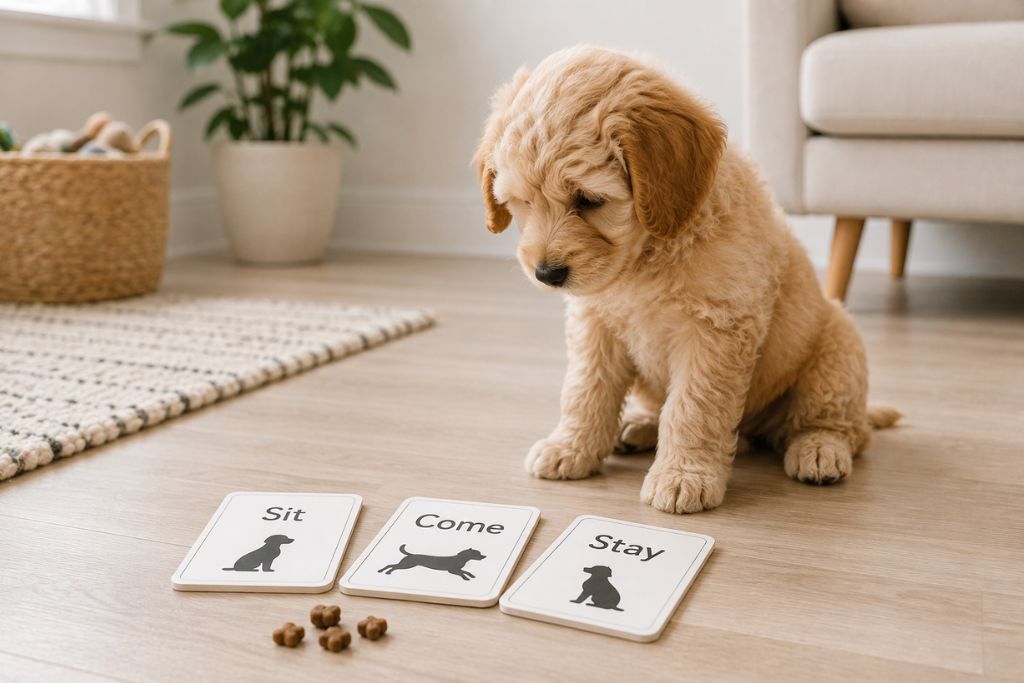
    Training begins the moment your puppy comes home.

    Not with perfection, but with consistency. Puppies learn quickly, especially in those early weeks. Short, clear sessions work best. Think minutes, not hours.

    Focus on simple cues first:

    • Name recognition
    • “Sit”
    • “Come”

    Use a calm voice and repeat often. Over time, those small moments add up.

    Use Positive Reinforcement

    Reward what you want to see again.

    Treats, praise, and gentle encouragement help puppies connect actions with outcomes. This builds trust and keeps them engaged.

    Harsh corrections don’t teach effectively. Instead, they can create confusion. Keep it positive, and your puppy will be more confident and willing to learn.

    Build a Routine That Makes Sense

    Puppies thrive on structure.

    Set regular times for meals, bathroom breaks, play, and rest. This helps with house training and reduces accidents.

    Take your puppy out:

    • First thing in the morning
    • After meals
    • After naps
    • Before bedtime

    Consistency here makes a noticeable difference.

    Keep Sessions Short and Clear

    Attention spans are limited.

    Training sessions should be brief and focused. A few minutes at a time is enough, especially for younger puppies.

    End on a good note. That way, your puppy stays motivated for the next session.

    Socialization Is Part of Training

    Training isn’t just commands.

    It also includes helping your puppy feel comfortable in the world. Introduce new sounds, people, and environments gradually.

    Positive early experiences help prevent fear later on. A well-socialized puppy is more adaptable and easier to guide.

    Be Patient

    There will be good days and setbacks.

    That’s normal.

    Puppies are learning everything for the first time. Stay patient, stay consistent, and avoid expecting too much too soon.

    Support That Goes Beyond Day One

    At Frontier Pets, we know bringing a puppy home is just the beginning.

    Training is part of building a strong, lasting relationship. That’s why we’re here as a resource, not just when you choose your puppy but as you grow together.

    A Strong Start Makes a Lasting Difference

    Training doesn’t have to feel overwhelming.

    When you keep it simple, stay consistent, and focus on building trust, everything starts to fall into place.

    And before long, those small lessons turn into lifelong habits. For both you and your furry friend.

  • How Much Exercise Does Your Puppy Really Need? A Practical Guide for Growing Dogs

    How Much Exercise Does Your Puppy Really Need? A Practical Guide for Growing Dogs

    We all know what it feels like to need movement.

    A walk clears your head. A bit of activity resets your energy. It’s not just about staying in shape, it’s about feeling balanced.

    Puppies are no different.

    Exercise plays a role in how they grow, how they behave, and how they settle into daily life. And while it’s easy to assume “more is better,” that’s not always the case. Especially for young, developing dogs.

    Why Exercise Matters: Beyond the Physical

    Exercise isn’t just about burning off energy.

    For puppies, it supports muscle development, coordination, and overall health. Just as importantly, it helps with mental stimulation. A well-exercised puppy is more likely to be calm, focused, and receptive to training.

    Without enough activity, puppies can become restless or develop unwanted behaviors. But too much exercise, especially too soon, can put stress on growing joints.

    Finding the right balance is key.

    How Much Exercise Does Your Puppy Really Need?

    There isn’t a one-size-fits-all answer, but there are clear guidelines that can help.

    Start with Age-Based Guidelines

    A commonly recommended approach is the “5-minute rule”:

    • 5 minutes of structured exercise per month of age
    • Up to twice per day

    For example:

    • A 3-month-old puppy → about 15 minutes per session
    • A 5-month-old puppy → about 25 minutes per session

    This includes walks and intentional play, not free roaming.

    Consider Breed and Energy Level

    Not all puppies are built the same.

    • High-energy breeds (like working or sporting dogs) may need more frequent activity and mental challenges.
    • Lower-energy breeds may be satisfied with shorter, gentler sessions.

    What matters most is observing your puppy. Energy levels, attention span, and recovery all provide useful signals.

    Prioritize Quality Over Intensity

    Exercise for puppies should be controlled and age-appropriate.

    Good options include:

    • Short walks on even surfaces
    • Gentle play sessions
    • Basic training exercises (which also provide mental stimulation)

    Activities to limit or avoid:

    • Long-distance running
    • Repetitive jumping (like catching frisbees)
    • Hard-impact play on rough surfaces

    Puppies are still developing. Their joints and bones need time to grow properly.

    Watch for Signs of Overexertion

    It’s easy to overdo it, especially with an enthusiastic puppy.

    Look for signs like:

    • Slowing down or lagging behind
    • Excessive panting
    • Lying down mid-activity

    If you notice these, it’s time to stop and rest. Recovery is just as important as activity.

    Don’t Forget Mental Exercise

    Physical activity is only part of the picture.

    Training sessions, puzzle toys, and new environments all help stimulate your puppy’s mind. In many cases, mental enrichment can be just as tiring, and just as beneficial, as a walk.

    A Thoughtful Approach to Healthy Puppies

    At Charlotte Dog Club, we place a strong emphasis on overall wellbeing.

    That means helping families understand not just how to care for their puppies but how to support their development in a balanced, informed way. Exercise is a big part of that, but it’s always approached with intention.

    Healthy puppies aren’t just active. They’re supported, guided, and given what they need at the right time.

    Finding the Right Rhythm

    The goal isn’t to tire your puppy out. It’s to build a routine that works for their age, breed, and stage of development.

    When exercise is done right, you’ll see it. Better focus. Smoother training. A puppy that knows when it’s time to play… and when it’s time to rest.

    And that’s where everything starts to come together.

    If you’re up for another good read, these articles are a great place to start:

  • How Much Exercise Does Your Puppy Really Need? A Practical Guide for Growing Dogs

    How Much Exercise Does Your Puppy Really Need? A Practical Guide for Growing Dogs

    We all know what it feels like to need movement.

    A walk clears your head. A bit of activity resets your energy. It’s not just about staying in shape, it’s about feeling balanced.

    Puppies are no different.

    Exercise plays a role in how they grow, how they behave, and how they settle into daily life. And while it’s easy to assume “more is better,” that’s not always the case. Especially for young, developing dogs.

    Why Exercise Matters: Beyond the Physical

    Exercise isn’t just about burning off energy.

    For puppies, it supports muscle development, coordination, and overall health. Just as importantly, it helps with mental stimulation. A well-exercised puppy is more likely to be calm, focused, and receptive to training.

    Without enough activity, puppies can become restless or develop unwanted behaviors. But too much exercise, especially too soon, can put stress on growing joints.

    Finding the right balance is key.

    How Much Exercise Does Your Puppy Really Need?

    There isn’t a one-size-fits-all answer, but there are clear guidelines that can help.

    Start with Age-Based Guidelines

    A commonly recommended approach is the “5-minute rule”:

    • 5 minutes of structured exercise per month of age
    • Up to twice per day

    For example:

    • A 3-month-old puppy → about 15 minutes per session
    • A 5-month-old puppy → about 25 minutes per session

    This includes walks and intentional play, not free roaming.

    Consider Breed and Energy Level

    Not all puppies are built the same.

    • High-energy breeds (like working or sporting dogs) may need more frequent activity and mental challenges.
    • Lower-energy breeds may be satisfied with shorter, gentler sessions.

    What matters most is observing your puppy. Energy levels, attention span, and recovery all provide useful signals.

    Prioritize Quality Over Intensity

    Exercise for puppies should be controlled and age-appropriate.

    Good options include:

    • Short walks on even surfaces
    • Gentle play sessions
    • Basic training exercises (which also provide mental stimulation)

    Activities to limit or avoid:

    • Long-distance running
    • Repetitive jumping (like catching frisbees)
    • Hard-impact play on rough surfaces

    Puppies are still developing. Their joints and bones need time to grow properly.

    Watch for Signs of Overexertion

    It’s easy to overdo it, especially with an enthusiastic puppy.

    Look for signs like:

    • Slowing down or lagging behind
    • Excessive panting
    • Lying down mid-activity

    If you notice these, it’s time to stop and rest. Recovery is just as important as activity.

    Don’t Forget Mental Exercise

    Physical activity is only part of the picture.

    Training sessions, puzzle toys, and new environments all help stimulate your puppy’s mind. In many cases, mental enrichment can be just as tiring, and just as beneficial, as a walk.

    A Thoughtful Approach to Healthy Puppies

    At Georgia Dog Club, we place a strong emphasis on overall wellbeing.

    That means helping families understand not just how to care for their puppies but how to support their development in a balanced, informed way. Exercise is a big part of that, but it’s always approached with intention.

    Healthy puppies aren’t just active. They’re supported, guided, and given what they need at the right time.

    Finding the Right Rhythm

    The goal isn’t to tire your puppy out. It’s to build a routine that works for their age, breed, and stage of development.

    When exercise is done right, you’ll see it. Better focus. Smoother training. A puppy that knows when it’s time to play… and when it’s time to rest.

    And that’s where everything starts to come together.

    If you’re up for another good read, these articles are a great place to start:

  • Why Isn’t My Puppy Potty Trained Yet? What’s Normal and What You Can Do

    Why Isn’t My Puppy Potty Trained Yet? What’s Normal and What You Can Do

    Bringing a puppy home is a lot of things. It’s fun. It’s chaotic. It’s a little bit life-changing.

    And then there’s potty training.

    You’ve been consistent. You’ve been trying. And still… accidents happen. It’s easy to wonder if something’s going wrong.

    In most cases, it’s not.

    What Potty Training Really Means (and How Long It Takes)

    Potty training isn’t just teaching a puppy where to go.

    It’s teaching timing, routine, and awareness. Puppies are learning to control their bladder, understand cues, and connect actions to outcomes.

    Most puppies start learning as soon as they come home. But full reliability takes time. For many, it can take several weeks to a few months depending on age, consistency, and routine.

    Accidents during this stage are completely normal.

    Why Your Puppy Isn’t Potty Trained Yet

    If progress feels slow, there’s usually a reason. And it’s often something simple.

    They’re Still Developing

    Young puppies don’t have full bladder control yet.

    A general guideline is one hour of control per month of age. A two-month-old puppy may only hold it for about two hours. Expecting more too soon can lead to accidents.

    The Routine Isn’t Consistent Yet

    Puppies learn through repetition.

    If bathroom breaks happen at different times each day, it becomes harder for them to understand when they’re supposed to go. Consistency helps them build that connection.

    They’re Missing Key Moments

    Timing matters.

    Puppies usually need to go:

    • Right after waking up
    • After eating or drinking
    • After playtime

    Missing these windows often leads to accidents indoors.

    They Don’t Fully Understand Yet

    Even if your puppy is doing well sometimes, it doesn’t mean they’ve mastered it.

    Learning takes repetition. Praise and reinforcement help them understand when they’ve done the right thing.

    The Environment Changed

    New spaces can reset progress.

    If you’ve moved rooms, changed routines, or introduced new stimuli, your puppy may need time to adjust and relearn where to go.

    A Few Ways to Help Things Along

    Keep it simple and consistent.

    Take your puppy out frequently and use the same spot when possible. Stay with them until they go, then reward immediately. This helps them connect the behavior with a positive outcome.

    Supervision also matters. If you can’t watch closely, a crate or confined space can help prevent accidents and support training.

    Clean accidents thoroughly. Lingering scent can encourage repeat behavior in the same spot.

    Patience Makes the Difference

    This part can test you a bit.

    But puppies aren’t being stubborn or difficult. They’re learning. And like any new skill, it takes time, repetition, and a steady approach.

    You’re Not Behind, You’re in the Process

    If your puppy isn’t fully potty trained yet, you’re not alone. And you’re not doing it wrong.

    With consistency, clear routines, and a little patience, it will come together.

    And when it does, it’s more than just a small win. It’s a clear sign that you and your puppy are learning, growing, and getting it right together.

  • Why Transparency Matters When Choosing a Puppy and How Wags About You Gets It Right

    Why Transparency Matters When Choosing a Puppy and How Wags About You Gets It Right

    At some point in the search, most people realize it’s not just about finding a puppy. It’s about trying to understand the where and how of it all.

    Photos and first impressions only go so far. What really matters is the information you can’t see right away: where the puppy was raised, how they were cared for, and whether you’re getting clear, honest answers when you ask.

    That’s where transparency comes in, and why it matters more than people expect.

    It’s Not Just About the Puppy, It’s About the Process

    When people picture bringing a puppy home, they think about the fun parts. The playtime, the bonding, the new routines.

    But everything that happens before that moment matters just as much.

    Transparency means you’re not filling in gaps or making assumptions. You’re given real information: about the puppy’s background, their care, and what to expect moving forward. That kind of clarity doesn’t just help you choose a puppy. It helps you feel confident in the decision.

    At Wags About You, that clarity is part of the experience from the start.

    Why Transparency Matters When Choosing a Puppy

    Here’s what transparency actually does for you and your future dog:

    You Know Exactly Where Your Puppy Comes From

    One of the first things to look for is a clear answer to a simple question: Where did this puppy come from?

    At Wags About You, that answer is straightforward. Puppies are sourced from carefully chosen breeders who meet strong standards for care and responsibility. These relationships are intentional, not transactional.

    That means you’re not guessing. You’re informed.

    You Understand the Care They’ve Received

    A puppy’s early weeks shape their development in real ways.

    Nutrition, handling, and early socialization all play a role in how they adjust to a new home. When a business is transparent, they walk you through that early care, not just the end result.

    At Wags About You, that information is part of the conversation, not something you have to chase down.

    You Get Clear, Honest Information, Not Sales Talk

    Transparency also shows up in how things are explained.

    You should be able to ask about breed traits, energy levels, and what daily life will actually look like, and get answers that are straightforward and useful.

    At Wags About You, the goal is to help you find the right fit, not just any fit. That means being honest about what each puppy needs and what kind of home will suit them best.

    It Builds Trust That Lasts

    When things are clear from the beginning, it changes the entire experience.

    You feel more comfortable asking questions. You feel supported, not rushed. And you leave knowing you made a well-informed choice, not a quick one.

    That kind of trust doesn’t happen by accident. It’s built through consistency and openness.

    How Wags About You Prioritizes Transparency

    At Wags About You, transparency isn’t a feature or add-on. It’s a standard.

    Puppies come from responsible breeders who are selected for their commitment to proper care and ethical practices. There’s clear communication around sourcing, early care, and what families can expect.

    Information is shared openly, and questions are encouraged. The process is designed to be straightforward, so families feel confident every step of the way.

    What That Means for You

    When transparency is part of the process, everything feels different.

    You’re not second-guessing where your puppy came from. You’re not wondering if you missed something important. You’re starting with a clear understanding, and that sets you up for a better experience long-term.

    At Wags About You, that’s the goal. Not just helping you find a puppy, but making sure you feel good about how you found them, too.

    More Helpful Reads From Wags About You From planning and preparation to everyday puppy care, our articles are here to help you feel informed and confident as a pet parent. Check out the related posts below to keep learning with us.

  • Bringing Home a Puppy in Cheyenne: Real Reviews From Frontier Pets Families

    Bringing Home a Puppy in Cheyenne: Real Reviews From Frontier Pets Families

    Getting a puppy isn’t usually a single moment. It builds. You look, you think about it, you drop in somewhere just to see. Then suddenly, you’re imagining what life would feel like with one actually home.

    That’s when the details matter. Not just the puppy, but the experience around it. And that’s when people start paying closer attention to where they go, and who they trust.

    In Cheyenne, Frontier Pets is a place many people visit during that process. But with so much noise around pet stores in general, the real question becomes simple: what is the experience actually like?

    What stands out most comes from the families who’ve already gone through it.

    What People Notice Right Away

    For some, the experience shifts almost immediately after walking in.

    One customer described feeling welcomed “from the moment you walk through the door.” They went on to describe the staff as “beyond knowledgeable – not just about the breeds, but about the entire process,” noting that everything felt “straightforward, transparent,” and centered on “matching families with the right pups.”

    That sense of trust tends to shape how people move forward. Even visits that start casually can turn into something more meaningful.

    “We only planned to casually stop in while strolling through the mall,” they wrote, “but walked out with not one… but TWO beautiful additions to our family! Our two sweet girls are healthy (yes, we double and triple checked), happy, and unbelievably cuddly. You can tell they were cared for the right way from the very beginning.”

    Support That Feels Personal

    A consistent thread across reviews is how much guidance people receive along the way.

    One family, looking for the right companion for their son, described being able to take their time and ask questions freely. “The staff at Frontier pets assisted us with looking at multiple puppies, answering questions about numerous breeds and just in general being incredibly helpful,” they shared. After bringing their puppy home, they added, “She is healthy, was super easy to potty train and bonded so well with my son.”

    Others highlight similar experiences, where the process feels easy to navigate because someone is there to walk you through it.

    “[The staff] was so nice… he was there to answer any questions that we had,” one review noted. “He made the process really easy and was super friendly.”

    What Happens After Matters Just As Much

    The real test, of course, comes after you bring your puppy home.

    That’s where many customers point to how well their puppies adjust. One owner shared, “The pup is well adjusted, no barrier or separation anxiety, and it shows that she was amazingly cared for.”

    Another reflected months later, saying, “8 months in and he’s doing amazing would recommend to everyone!”

    There’s also a strong appreciation for how prepared people feel leaving the store. Several reviews mention starter packages and included essentials.

    “Plus, when you buy a puppy, you get a kennel, a bed, food, treats, toys, a leash and collar and dog bowls… Puppies are up-to-date on current shots and you also get a free first pet visit at the local clinic,” one customer shared, adding that while some may hesitate at cost, “honestly it’s worth it you know what you’re getting and they are registered.”

    A Consistent Experience Across the Board

    When you step back, the pattern is clear.

    Customers describe a process that feels open and supported. Puppies that are healthy and well cared for. Staff who are patient, knowledgeable, and easy to work with.

    One review captures it simply: “These guys are great and truly care for and about their animals and their customers.”

    A Thoughtful Place to Start

    Bringing a puppy home should feel exciting, but also grounded in the right information and support.

    The experiences shared by families who’ve already done it offer a clearer picture of what that can look like, from the first visit to months down the line.

    All reviews sourced from Google My Business (GMB).

  • Is Canine Care Certified Just a Label for Puppy Mills? Let’s Break It Down

    Is Canine Care Certified Just a Label for Puppy Mills? Let’s Break It Down

    Is Canine Care Certified Just a Label for Puppy Mills? Let’s Break It Down

    You’re scrolling through photos of adorable puppies. Suddenly, one steals your heart. For a moment, you picture the walks, the zoomies, and the quiet evenings with a dog curled beside you.

    Then reality sets in. Questions start popping up everywhere.

    Where did the puppy come from?

    How are the parents treated?

    Is this breeder responsible?

    During that research, you may come across something called Canine Care Certified™ (CCC). At first, it sounds promising. The program highlights animal welfare and responsible breeding.

    However, keep reading online and you might see claims suggesting CCC is just a label used to hide puppy mills.

    That kind of statement can leave families confused. So it’s worth slowing down and looking at what CCC actually is… and what it isn’t.

    What Is Canine Care Certified™?

    Canine Care Certified is a welfare certification program developed by researchers at the Purdue University College of Veterinary Medicine. The program was built using animal welfare science. Its purpose is to promote higher standards of care for dogs raised by breeders. Rather than focusing only on paperwork or registration, CCC evaluates how dogs actually live and are cared for. 

    Breeders who participate must meet strict requirements across several welfare categories.

    Physical Health

    Dogs must receive regular veterinary care and preventative health support. Breeders also follow genetic health screening recommendations.

    These practices help reduce inherited health concerns and support long-term well-being.

    Behavioral Well-Being

    The program requires structured socialization, enrichment activities, and low-stress handling.

    These experiences help puppies develop confidence and healthy behavior around people.

    Living Environment

    Housing must be clean, safe, and enriched. Dogs need appropriate space, proper sanitation, and stimulation that supports normal canine behavior.

    Responsible Breeding and Retirement

    CCC guidelines also address breeding limits and responsible care for adult dogs.

    Breeders must follow standards related to breeding age, spacing between litters, and retirement planning.

    Independent Verification

    One important detail often gets overlooked.

    Certification is not self-awarded. Facilities must pass third-party audits to verify that they meet these welfare standards.

    Why CCC Isn’t a Puppy Mill Label

    The term puppy mill typically refers to operations that prioritize profit over animal welfare. Those facilities often lack proper veterinary care, enrichment, socialization, and humane living conditions.

    The CCC program was designed to address exactly those problems.

    By establishing science-based welfare standards, the program encourages breeders to improve care practices and transparency.

    Even long-time animal welfare advocates who visited CCC facilities reported seeing environments very different from the stereotypical puppy mill image. They observed enrichment areas, social interaction, and attentive care for both puppies and adult dogs.

    Programs like CCC don’t eliminate debate around dog breeding. Still, they represent an effort to raise standards within the industry.

    How Happiness Is Pets Approaches Responsible Breeding

    At Happiness Is Pets, we take sourcing seriously.

    We partner with breeders who prioritize animal welfare, veterinary oversight, and responsible breeding practices. In fact, we partner solely with breeders who participate in programs such as Canine Care Certified or follow similar welfare guidelines.

    Our team stays connected with these breeders and learns about their care practices firsthand.

    This approach helps us understand how puppies are raised and how adult dogs are treated throughout their lives.

    When Transparency Leads the Way

    Sorting through online claims about dog breeding can feel overwhelming. However, meaningful programs backed by research offer a clearer picture of how responsible breeders operate.

    For families searching for a puppy, learning about those standards can make the process easier and more informed.

    At the end of the day, finding the right puppy should never feel uncertain. When care, transparency, and welfare remain front and center, that journey becomes much easier to navigate, for both people and the dogs who join their families. 

    If you’re up for another read, these posts are popular with puppy parents:

  • What Breeds Does Frontier Pets Offer? A Clear Guide to Finding Your Perfect Puppy

    What Breeds Does Frontier Pets Offer? A Clear Guide to Finding Your Perfect Puppy

    Adding A Puppy To Your Family Is An Exciting Step. But Smart, Thoughtful Pet Parents Know That Breed Traits Matter Just As Much As Puppy Cuddles.

    Breed Impacts Size, Energy Level, Grooming Needs, Temperament, And Daily Life. Finding The Right Fit Helps Build A Harmonious, Long-Term Companionship. A Well-Matched Puppy Grows Into A Confident Companion. On The Other Hand, A Mismatch Can Create Stress For Both Dog And Owner.

    At Frontier Pets, Selecting A Puppy Is More Than A Shopping Decision. It’s A Partnership In Matching Families With Puppies Whose Traits Align With Their Lifestyle, Space, And Expectations. We Offer A Thoughtful Selection Of Breeds While Also Guiding Customers Toward The Best Choice For Their Environment And Goals.

    Why Choosing The Right Breed Matters

    Each Dog Breed Has A Story, And A Set Of Traits Shaped By History And Purpose.

    Different Breeds Come With Different Traits:

    • Size And Activity Level
    • Grooming And Coat Needs
    • Trainability And Temperament
    • Suitability For Families, Apartments, Or Active Homes

    Understanding These Elements Helps You Choose A Puppy That Becomes A Lifelong Companion, Not An Impulse That Doesn’t Fit Your Everyday Life. Frontier Pets Supports This Process By Helping You Explore Breed Options In Person, Offering Breed Information, And Connecting You With Available Puppies You Can Meet And Interact With Firsthand.

    What Breeds Does Frontier Pets Offer?

    Here’s What You Can Expect From Our Selection:

    • Purebred Registered Puppies
      Frontier Pets Offers Puppies From Recognized Pure Breeds With Documented Lineage. These Puppies Come From USDA-Licensed, Inspected Breeders, Which Helps Ensure Health And Welfare Standards Are Met Before Puppies Arrive.
    • Designer Mixed Breeds
      Designer Crosses, Such As Doodle Mixes And Other Intentional Breed Combinations, Also Appear Regularly. These Options Often Blend Desirable Traits From Two Breeds, Giving Families Friendly, Intelligent Companions With A Mix Of Characteristics.

    Frontier Pets Maintains A Dynamic Selection Of Puppies, Updated As Litters Become Available. While Availability Can Change Frequently, Here Is A Comprehensive List Of Breeds Currently Featured Or Often Offered Through The Website’s Puppies For Sale Page:

    Small & Companion Breeds:

    • Boston Terrier
    • French Bulldog
    • Havanese
    • Miniature Pinscher
    • Miniature Poodle
    • Miniature Schnauzer
    • Papillon
    • Pekingese
    • Pomeranian
    • Shih Tzu
    • Silky Terrier
    • Teddy Bear
    • Shih-Poo (Shih Tzu/Poodle Mix)
    • Shipoo (Shih Tzu/Pooche Mix)

    These Breeds Are Often Beloved For Their Affectionate Nature, Adaptability, And Suitability For A Wide Range Of Living Situations — From Apartments To Suburban Homes. Many Exhibit Friendly, Sociable Temperaments That Make Them Excellent Companions.

    Medium Breeds:

    • Cocker Spaniel
    • Schnoodle (Schnauzer/Poodle Mix)

    Medium Breeds Often Balance Playful Energy With Affectionate Companionship. They Thrive With Families Who Enjoy Outdoor Activity And Social Engagement.

    Large & Working Breeds:

    • Golden Retriever
    • Saint Bernard
    • Bernedoodle Mini F1b
    • English Mastiff
    • Tibetan Mastiff
    • Pembroke Welsh Corgi (Small But Sturdy)

    Larger Breeds Offer Loyal, Devoted Companionship And Often Enjoy Structured Activity. Some Are Calm And Steady, While Others Bring Protective Instincts And Gentle Playfulness.

    This Combination Of Breeds, From Petite Companions To Stately Family Dogs, Provides Options For Various Personalities And Lifestyles.

    How Frontier Pets Helps You Find Your Perfect Match

    Frontier Pets Stands Apart By Doing More Than Showing Puppies Online. We:

    • Encourage Visits So You Meet Puppies In Person.
    • Help Match Personalities And Lifestyle Needs To Breed Traits.
    • Provide Health Assurances, Veterinary Exams, And Warranties.
    • Support Ongoing Education And Puppy Parenting Tips.

    Our Team Understands That A Good Match Goes Beyond Breed. It’s About Temperament, Energy, And Long-Term Compatibility.

    Choose Thoughtfully. Love Fully.

    Whether Your Ideal Pup Is A Playful French Bulldog, A Devoted Golden Retriever, Or A Sociable Cocker Spaniel Mix, Frontier Pets Offers A Dynamic Selection. Choosing A Breed That Aligns With Your Home And Lifestyle Matters. With Transparency, Guidance, And Up-To-Date Breed Information, Frontier Pets Makes That Process Feel Intentional, Not Confusing.

    Explore Our Current Puppies For Sale And Let Frontier Pets Help You Take The Next Confident Step Toward Welcoming Your Perfect Puppy.

    If you’re not ready to stop scrolling, these articles are a great next adventure:

  • How Much Exercise Does Your Puppy Really Need? A Complete Guide for Furparents

    We all know the benefits of regular exercise, such as feeling energized, staying healthy, and keeping our minds sharp. Just like us, puppies need movement to thrive, and finding the right type and amount is essential for their growth, behavior, and overall happiness. Too little can lead to boredom or weight issues, and too much can put stress on their developing bodies.

    So, how much exercise does your puppy really need? Let’s break it down.

    puppy walking on a leash with its owner outdoors

    Why Puppies Need Exercise

    Exercise isn’t just playtime. It’s crucial for your puppy’s development. Some key benefits include:

    • Physical health: Strengthens muscles, bones, and joints while preventing obesity.
    • Mental stimulation: Engages their brain, reducing destructive behaviors from boredom.
    • Social skills: Interaction with people, other dogs, and environments improves confidence.
    • Emotional well-being: Helps regulate mood and energy, leading to a calmer, happier pup.
    • Understanding these benefits helps set the stage for a healthy routine that balances activity with rest.

    How Much Exercise Does Your Puppy Really Need?

    There’s no one-size-fits-all, as breed, size, and age all play a role. A general rule of thumb is 5 minutes of structured exercise per month of age, up to twice a day. So, a 3-month-old puppy may need around 15 minutes of controlled activity at a time.

    Breaking it down:

    • Short walks: Gentle strolls on a leash for puppies under 6 months. Avoid overexertion or long runs.
    • Play sessions: Interactive games like fetch, tug, or hide-and-seek, ideally 2–3 sessions per day.
    • Mental enrichment: Puzzle toys, scent games, and basic training exercises count as exercise too; mental workouts are just as important as physical.
    • Breed considerations: High-energy breeds like Border Collies or Huskies may need longer or more frequent activity, while smaller or less active breeds require gentler routines.

    Consistency is key. Spread exercise throughout the day rather than one long session to prevent fatigue or injury.

    Encouraging Exercise in Your Puppy

    Motivation is everything! Use toys, treats, and praise to make activity enjoyable. Rotate toys to keep play interesting, and mix in short training sessions to stimulate their mind. Social walks with other puppies or friendly dogs can also make exercise fun while improving social skills.

    Exercise is a cornerstone of a happy, healthy puppy. By providing the right amount of activity, both physical and mental, you’ll help your fur baby grow strong, confident, and well-adjusted. Pay attention to their energy, breed needs, and age, and always make exercise fun. Your puppy will thank you with wagging tails, joyful leaps, and endless cuddles.