Quick Answer / Summary
You can safely socialize a Dachshund puppy around Old Bridge, NJ, through supervised puppy classes, controlled introductions to healthy dogs, quiet neighborhood outings, and veterinarian-approved private play spaces. Start with positive, low-risk experiences while your puppy completes vaccinations. The goal is to introduce different people, sounds, animals, and environments at a comfortable pace, helping your Dachshund develop confidence without unnecessary health risks or overwhelming encounters.
Key Takeaways
- Start early: The first three months are especially important for puppy socialization.
- Choose controlled environments: Supervised puppy classes and introductions to familiar, healthy dogs are good starting points.
- Explore Old Bridge gradually: Neighborhood outings can introduce new sights and sounds without requiring direct contact with unfamiliar dogs.
- Respect your puppy’s comfort: Reward curiosity and calm behavior rather than forcing interactions.
- Prioritize health: Ask your veterinarian about vaccination requirements, local disease risks, and suitable activities.
Introduction
Dachshunds may be small, but they’re certainly not short on personality! Curious, clever, and famously determined, these little dogs have plenty to discover as they settle into family life.
For new puppy parents around Old Bridge, New Jersey, socialization is an important part of helping that curiosity develop into confidence. It introduces your Dachshund to the people, places, sounds, and everyday experiences they’ll encounter as they grow.
Fortunately, socialization doesn’t require crowded dog parks or constant puppy playdates.
From quiet neighborhood outings to structured training classes, there are several ways to help your puppy explore safely. The important part is choosing experiences that suit their age, health, and individual temperament.
At PetCenter, we enjoy helping families prepare for the responsibilities and rewards of puppy parenthood. Understanding safe socialization is an important part of giving your new companion a positive start.
Here’s where to socialize your Dachshund around Old Bridge, what precautions to take, and how to recognize when your puppy is ready for something new.
When Should You Start Socializing a Dachshund Puppy?
Puppy socialization should begin early, with appropriate precautions.
The first three months are particularly important for helping puppies become comfortable with unfamiliar people, animals, and environments. Early, positive experiences can reduce the likelihood of fear-related behavioral problems later in life.
However, socialization doesn’t mean exposing your puppy to every possible situation. A thoughtful approach is much more beneficial than overwhelming them with unfamiliar experiences.
Can Dachshund Puppies Socialize Before Completing Vaccinations?
Yes. Puppies can begin carefully managed socialization before their vaccination series is complete.
The American Veterinary Society of Animal Behavior supports appropriately managed puppy classes beginning as early as 7–8 weeks. Its guidance recommends at least one set of vaccinations administered seven days before the first class, along with initial deworming and continued vaccinations.
Individual class requirements may be stricter.
Other early socialization opportunities include:
- Meeting friendly visitors in your home.
- Interacting with known, healthy, appropriately vaccinated dogs.
- Observing neighborhood activity while being carried.
- Experiencing different household sounds and surfaces.
- Participating in supervised puppy classes with appropriate health precautions.
Your veterinarian should help determine which activities are suitable based on your puppy’s health and local disease risks.
Avoid dog parks and heavily used dog areas where vaccination status and sanitation are unknown.
Where Can You Socialize a Dachshund Puppy Around Old Bridge?
Old Bridge and surrounding Middlesex County communities offer several options for introducing your puppy to new experiences.
The best starting point depends on your Dachshund’s age, vaccination status, temperament, and comfort level.
1. Private Outdoor Spaces Through Sniffspot
Sniffspot includes privately bookable outdoor spaces in nearby communities, including East Brunswick.
These spaces can provide a quieter alternative to public dog parks, particularly for puppies who need time to become comfortable outdoors.
Private rentals may be useful for practicing recall, exploring new surroundings, and enjoying supervised activity without unexpected encounters with unfamiliar dogs.
However, private bookings don’t eliminate disease risks. Other dogs may have used the property previously.
Before visiting:
- Check the property’s fencing, terrain, and cleanliness.
- Ask about recent use and sanitation practices.
- Bring your own water bowl and toys.
- Consult your veterinarian about shared outdoor surfaces.
For Dachshunds, choose relatively level areas without obstacles that encourage repeated jumping.
Private spaces are useful for environmental exploration, but they don’t replace positive social experiences with people and other dogs.
2. Puppy Training Classes Around Middlesex County
Structured puppy classes are among the most useful options for early socialization.
They allow puppies to practice basic skills while becoming familiar with other dogs, people, and everyday distractions in a supervised setting.
Camp Bow Wow Middlesex offers a four-week basic puppy training class for dogs approximately 10 weeks to four months old, subject to age-appropriate vaccination requirements.
Families can also explore NJ Dog & Puppy Training and inquire about suitable puppy programs.
Before enrolling, ask about:
- Minimum age and vaccination requirements.
- Group size and supervision.
- Reward-based training methods.
- Appropriate matching by size and temperament.
- How instructors support nervous puppies.
A good class should help your Dachshund feel comfortable learning around other dogs without requiring constant interaction.
3. Camp Bow Wow Middlesex for Older, Eligible Puppies
As your Dachshund grows, supervised daycare may become another option for social interaction.
Camp Bow Wow Middlesex offers daycare with supervised indoor and outdoor play areas.
Dogs must meet the facility’s health requirements and complete an assessment before joining group play. The facility also requires participating daycare dogs to be spayed or neutered.
Daycare isn’t a substitute for early puppy socialization, and it won’t suit every dog’s temperament.
For Dachshunds, ask how dogs are grouped by size and play style. Gentle, appropriately matched interactions are especially important for protecting their backs.
Consider daycare only when your puppy meets the facility’s requirements and is comfortable participating in supervised group activities.
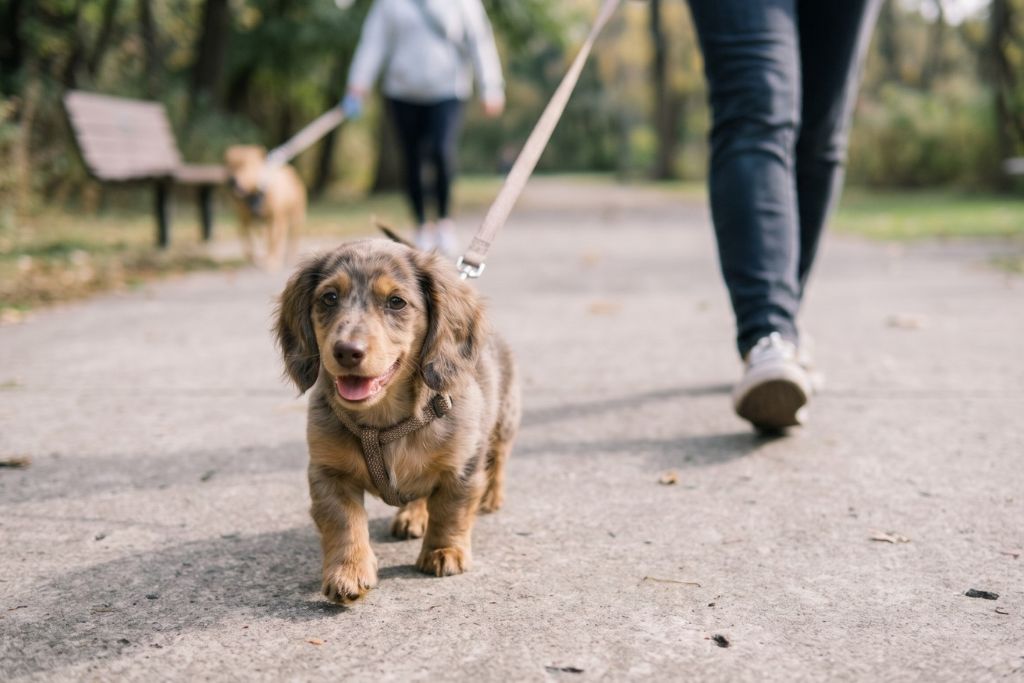
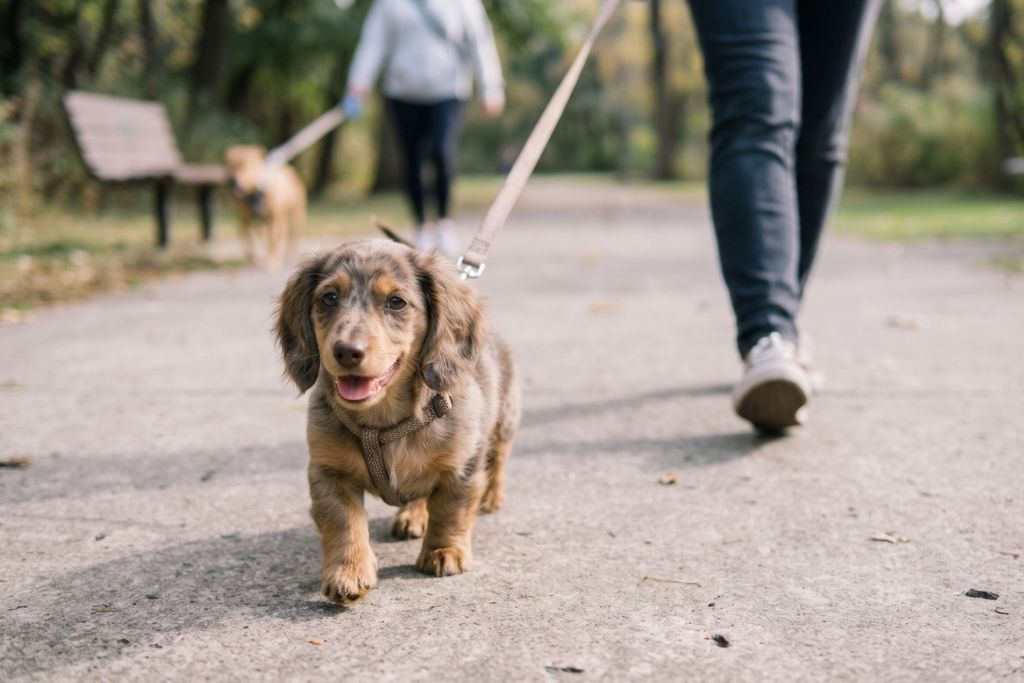
4. Quiet Neighborhood Outings Around Old Bridge
Some of the most valuable socialization experiences happen during ordinary daily activities.
Around Old Bridge, neighborhoods near Madison Park and Laurence Harbor provide opportunities to introduce puppies to everyday sights and sounds.
Start with short, comfortable outings where your puppy can observe:
- People walking, jogging, and cycling.
- Passing cars and neighborhood traffic.
- Strollers, bicycles, and delivery vehicles.
- Different voices and appearances.
- Calm, leashed dogs from a comfortable distance.
For puppies still completing vaccinations, carrying them or using a secure puppy carrier can provide valuable exposure without contact with potentially contaminated surfaces.
Once your veterinarian approves outdoor walks, gradually introduce new routes and environments.
5. Supervised Visits With Familiar Dogs
A calm, healthy, appropriately vaccinated dog belonging to a trusted friend or family member can be a helpful socialization partner.
For families around Sayreville, East Brunswick, and Old Bridge, a supervised visit in a familiar home may be more manageable than an unpredictable public setting.
Introduce the dogs gradually and watch their body language.
Keep sessions brief, allow breaks, and avoid forcing interactions.
For Dachshunds, choose playmates who interact gently and won’t overwhelm them physically.
How Can You Tell if Your Dachshund Is Enjoying Socialization?
Successful socialization isn’t about how many dogs your puppy meets. It’s about helping them feel comfortable with new experiences.
What Does Positive Socialization Look Like?
Signs your Dachshund is handling an experience well may include:
- Relaxed body language and natural curiosity.
- Willingness to explore or sniff.
- Taking treats and responding to familiar cues.
- Approaching unfamiliar things voluntarily.
- Returning to you comfortably for reassurance.
If your puppy freezes, trembles, repeatedly tries to escape, or refuses treats they normally enjoy, they may be overwhelmed.
Give them more distance or end the interaction. Avoid forcing greetings with unfamiliar people or dogs.
A puppy who can calmly observe another dog without approaching is still learning something valuable.
Why Does Gentle Handling Matter for Dachshunds?
Dachshunds have long backs and short legs, making thoughtful handling especially important.
Their body structure is associated with an increased risk of intervertebral disc disease (IVDD), a spinal condition that can cause pain and neurological problems.
During socialization, avoid rough play, repeated jumping from elevated surfaces, and situations where larger dogs might accidentally knock your puppy over.
When lifting your Dachshund, support both the chest and hindquarters.
These precautions can help reduce unnecessary physical strain, although they cannot guarantee prevention of spinal problems.
Frequently Asked Questions About Dachshund Puppy Socialization
Can I Socialize My Dachshund Before They’re Fully Vaccinated?
Yes, with appropriate precautions. Early socialization is important, and waiting until every vaccination is complete can mean missing part of a puppy’s critical learning period. Consider inviting healthy, vaccinated dogs into a controlled home environment or carrying your puppy during short neighborhood outings. Appropriately managed puppy classes may also be suitable. Ask your veterinarian about local disease risks and the activities appropriate for your puppy’s vaccination status.
Are Dog Parks Safe for Dachshund Puppies?
Public dog parks generally aren’t recommended for very young puppies, especially those who haven’t completed their vaccinations. Unfamiliar dogs, shared surfaces, and unpredictable play can create health and safety concerns. Dachshunds may also be vulnerable to injuries during rough interactions with larger dogs. Controlled introductions, appropriately managed puppy classes, and veterinarian-approved outings are better starting points. Your puppy can develop good social skills without visiting a public dog park.
How Often Should I Socialize My Dachshund Puppy?
Aim for frequent, brief, positive experiences rather than occasional overwhelming outings. Socialization can happen during ordinary activities, including meeting a visitor, hearing a new household sound, or watching neighborhood activity from a safe distance. Your puppy’s age, temperament, and comfort level should determine the pace. A few enjoyable minutes can be more valuable than a lengthy experience that leaves your puppy frightened or exhausted. Allow plenty of rest between activities.
What if My Dachshund Puppy Barks at New People or Dogs?
Barking can have several causes, including excitement, uncertainty, or fear. Rather than punishing the behavior, create enough distance for your puppy to relax and reward calm observation. Gradually introduce new experiences at a manageable pace. If barking is accompanied by persistent fear, lunging, or difficulty settling, consult your veterinarian or a qualified reward-based trainer. Early guidance can help you understand what’s triggering the behavior and develop a suitable training approach.
Can Dachshunds Become Friendly With Larger Dogs?
Yes. Dachshunds can develop positive relationships with larger dogs when introductions are managed carefully. Choose calm, socially appropriate dogs who respect your puppy’s boundaries. Supervise interactions closely and prevent rough play, chasing, or accidental collisions. Size alone doesn’t determine compatibility, but it does affect physical safety. Your Dachshund should always have the option to move away and take a break. Positive, controlled experiences are more important than encouraging immediate play.
Does Puppy Training Help With Socialization?
Yes. Well-managed puppy training classes can help young dogs become comfortable around unfamiliar people, dogs, and everyday distractions while learning useful skills. Look for positive reinforcement methods, appropriate vaccination requirements, and careful supervision.
Helping Your Dachshund Discover the World With Confidence
Socializing your Dachshund puppy doesn’t require a packed calendar or constant introductions. Thoughtful, positive experiences can help your puppy become more comfortable with everyday life.
From quiet outings around Old Bridge to supervised training opportunities throughout Middlesex County, there are plenty of ways to explore together. Start small, pay attention to your puppy’s reactions, and build on each successful experience.
At PetCenter, we believe preparing for puppy parenthood is just as important as finding the right companion. Our Pet Counselors can help you understand breed-specific needs, explore training resources, and prepare for those exciting first weeks at home.
Thinking about welcoming a Dachshund into your family? We’re here to help you find a puppy that fits your family and provide the information and support you need to start your journey together.
Hungry for more? The next chapter’s even better! Follow the paw prints below to keep reading.
Why Puppy Mental Enrichment Matters as Much as Exercise
Family-Friendly Puppy Breeds You’ll Love