Quick Answer / Summary
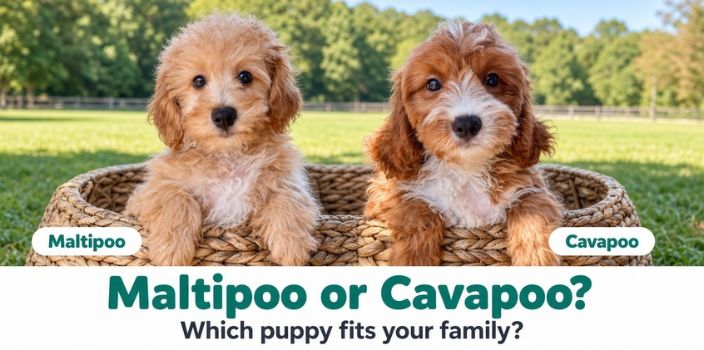
Maltipoos and Cavapoos are affectionate, intelligent companion dogs, but they differ in size, temperament, and care needs. Maltipoos, a Maltese–Poodle mix, are generally smaller and often lively and playful. Cavapoos, a Cavalier King Charles Spaniel–Poodle mix, tend to be slightly larger and are frequently described as gentle and sociable. Both need regular grooming, daily activity, and companionship. The right choice depends on your lifestyle and the individual puppy.
Key Takeaways
- Size: Maltipoos are generally smaller, although both mixes vary considerably.
- Temperament: Maltipoos are often lively and playful, while Cavapoos are frequently gentle and outgoing.
- Grooming: Both require regular brushing and professional coat maintenance.
- Exercise: Daily walks, playtime, and mental enrichment are important for both.
- Family fit: Neither mix has a guaranteed personality. Individual temperament and early socialization matter.
Choosing between a Maltipoo and a Cavapoo is a pretty wonderful problem to have.
Both are affectionate, adorable, and known for forming close bonds with their families. But beyond those sweet faces, they have a few differences worth considering.
Maltipoos tend to be smaller, with lively personalities and plenty of enthusiasm for playtime. Cavapoos are often a little larger, with a gentle, sociable nature that makes them appealing family companions.
Of course, every puppy has a personality of their own. Breed ancestry can offer helpful clues, but it doesn’t tell you everything about the dog you’ll bring home.
At Charlotte Dog Club, we love helping families understand those differences and find a puppy that fits their everyday lives.
Here’s what to know about Maltipoo and Cavapoo size, temperament, grooming, and care before making your decision.
What Is the Difference Between a Maltipoo and a Cavapoo?
Both are Poodle mixes, but their other parent breeds influence their typical characteristics.
A Maltipoo is a cross between a Maltese and a Poodle. These dogs are generally small, affectionate, alert, and playful.
A Cavapoo is a cross between a Cavalier King Charles Spaniel and a Poodle. Cavapoos are often slightly larger and known for their friendly, people-oriented personalities.
Both can make wonderful companions. However, their appearance, size, and behavior depend on genetics, upbringing, and individual development.
How Do Maltipoos and Cavapoos Compare in Size?
Maltipoos are generally smaller than Cavapoos, although their adult sizes overlap.
- Maltipoo: Approximately 5–20 pounds.
- Cavapoo: Approximately 8–25 pounds.
These are estimated ranges rather than guarantees. The size of the Poodle parent, particularly whether it is a Toy or Miniature Poodle, can influence the puppy’s eventual weight.
Does Size Matter for Family Life?
It can, especially when considering younger children, living arrangements, and daily activities.
A smaller Maltipoo may appeal to families looking for a petite companion. A slightly larger Cavapoo may feel sturdier during everyday interactions. Still, both require gentle handling and appropriate supervision around children.
For families around Cleveland, Mooresville, and Lake Norman, consider which size best suits your household and routines.
Which Has the Better Temperament: Maltipoo or Cavapoo?
Both mixes are affectionate and people-oriented, but they may express their personalities differently.
What Is a Maltipoo’s Personality Like?
Maltipoos are often lively, playful, and attentive to their families.
Many enjoy learning tricks, playing games, and joining everyday household activities. Some can also be sensitive or vocal, making patient training and early socialization especially helpful.
What Is a Cavapoo’s Personality Like?
Cavapoos are frequently described as gentle, friendly, and sociable.
Their Cavalier King Charles Spaniel ancestry may contribute to their affectionate nature. However, Cavapoos can also be energetic, enthusiastic, and playful, particularly during puppyhood.
Neither mix is automatically calmer, friendlier, or easier to train. Individual temperament, socialization, and household routines all play important roles.
How Much Grooming Do Maltipoos and Cavapoos Need?
Both mixes need consistent grooming, even when they shed very little.
Their coats can be straight, wavy, or curly, depending on inherited traits. Longer coats are especially prone to tangling and matting.
What Should Their Grooming Routine Include?
For either mix, plan for:
- Regular brushing: Maltipoos often benefit from daily brushing. Cavapoos typically need brushing several times weekly, or more often for longer, curlier coats.
- Professional grooming: Many benefit from appointments approximately every four to eight weeks, depending on their coat.
- Dental care: Regular toothbrushing and veterinary dental checks.
- Ear and nail care: Routine inspections and trimming as needed.
Neither mix is guaranteed to be hypoallergenic. Even dogs that shed very little produce allergens.
How Much Exercise and Training Do They Need?
Maltipoos and Cavapoos generally enjoy moderate daily activity, including walks, playtime, and mental enrichment.
Their exercise requirements depend on age, health, and individual energy levels.
Both can respond well to reward-based training. Start with basic cues, consistent house-training routines, and positive introductions to new experiences.
Around Cleveland, Statesville, and Salisbury, short neighborhood walks and suitable pet-friendly outings can help keep either mix active.
For growing puppies, keep exercise age-appropriate and avoid forced running or strenuous activity.
What Health Concerns Should Families Know About?
Both mixes can inherit health conditions associated with their parent breeds.
Maltipoos may be susceptible to dental disease, luxating patellas (kneecaps that slip out of position), and certain eye conditions.
Cavapoos may also experience joint and eye problems. Their Cavalier King Charles Spaniel ancestry makes two additional conditions worth understanding:
- Mitral valve disease: A heart condition involving deterioration of the mitral valve.
- Syringomyelia: A neurological condition involving fluid-filled cavities within the spinal cord.
These are recognized concerns in Cavalier King Charles Spaniels, but not every Cavapoo will develop them.
What Should You Ask Before Choosing a Puppy?
Ask about:
- The puppy’s veterinary records and current health.
- Relevant health screening of the parent dogs.
- Expected adult size based on parentage.
- The puppy’s temperament and early socialization.
- Grooming, nutrition, and ongoing care requirements.
Understanding these details can help you make a more informed decision.
Frequently Asked Questions About Maltipoos and Cavapoos
Are Maltipoos Smaller Than Cavapoos?
Generally, yes. Maltipoos often weigh approximately 5–20 pounds as adults, while Cavapoos commonly weigh around 8–25 pounds. However, their size ranges overlap considerably. The Poodle parent’s size and the puppy’s genetics influence adult weight. Ask about the parents rather than relying on a breed-mix label alone.
Which Is Better for Families With Children?
Both can make affectionate family companions. Cavapoos may be slightly larger, while Maltipoos are often smaller and more delicate. However, neither mix is automatically better with children. Temperament, socialization, and appropriate handling matter more. Always supervise interactions between young children and puppies, and teach children to respect a dog’s need for space and rest.
Do Maltipoos or Cavapoos Shed More?
Either mix may shed, although many have relatively low-shedding coats. Maltipoos often inherit coat characteristics from two breeds associated with lower shedding, while Cavapoos may inherit more shedding from their Cavalier parent. Individual coats vary, and neither mix is guaranteed to be hypoallergenic. Regular brushing remains necessary even for dogs that shed very little.
Are Maltipoos or Cavapoos Easier to Train?
Both mixes are intelligent and can learn well through positive reinforcement. Maltipoos may be lively and occasionally vocal, while Cavapoos are often described as eager to interact with people. However, trainability varies between individuals. Short sessions, consistent routines, and rewards for desirable behavior help either puppy develop good habits.
Can Maltipoos and Cavapoos Stay Home Alone?
Both are companion-oriented mixes that may struggle with extended periods alone. Gradually introduce short, comfortable separations while providing appropriate enrichment and a safe resting area. Avoid suddenly leaving a young puppy alone for long stretches. Their age, temperament, and toilet-training needs should determine how long they can comfortably manage.
Which Mix Is Better for First-Time Puppy Owners?
Either can be a good choice for a first-time owner prepared for grooming, training, veterinary care, and daily companionship. Maltipoos may appeal to those seeking a generally smaller dog, while Cavapoos may suit families who prefer a slightly larger companion. The best decision comes from understanding the individual puppy and choosing one whose needs fit your routine.
Finding Your Perfect Puppy Match
Maltipoos and Cavapoos have plenty in common, but their differences can help you make a more informed choice.
At Charlotte Dog Club, we love helping families discover the personalities, characteristics, and care needs of different puppies. Our team is happy to answer questions and help you find a companion who feels right for your home.
For families around Lake Norman, we’re here to make finding your new companion a thoughtful, enjoyable experience.
Ready to meet your match? Explore our available puppies and get to know the puppies who could become part of your family.