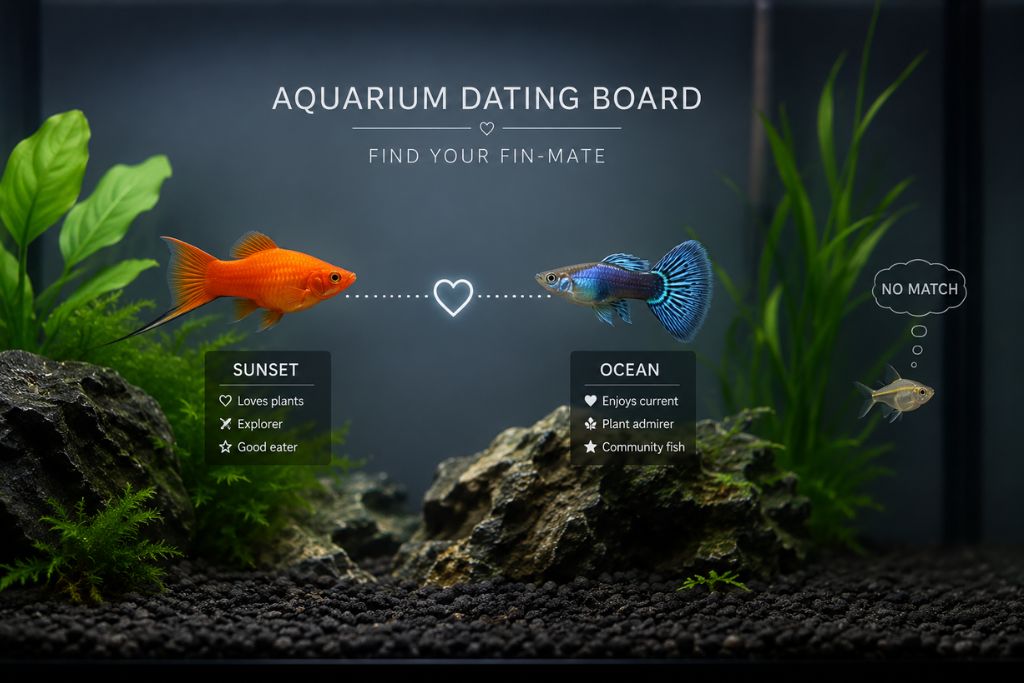
Tag: Community Fish

  • Fish Compatibility Guide: Who Should Share the Tank?

    Fish Compatibility Guide: Who Should Share the Tank?

    So you have an aquarium. Naturally, you start shopping for fish. Then you see a neon tetra. Then a gourami. Then a gorgeous angelfish. Suddenly, your original stocking plan has left the building.

    Hold up. Not every fish makes a good roommate. Fish compatibility depends on temperament, adult size, water conditions, space, and behavior.

    That matters whether you are planning a community tank in Hoffman Estates or building a colorful setup in Bolingbrook.

    Why Can’t Every Fish Just Be Friends?

    Fish have preferences. Strong ones.

    Some are peaceful community swimmers. Others are territorial. Some need a group of their own kind. Others may see a smaller tankmate as lunch.

    Tank size matters, too. Crowded fish are more likely to become stressed and quarrel. Décor also helps by creating territories and hiding places.

    So before you add that “one last fish” to your Schaumburg aquarium, let’s play matchmaker.

    Which Fish Make Good Community Tank Matches?

    Neon tetras + corydoras: A classic peaceful pairing. Tetras occupy the open water, while corydoras spend their time lower in the aquarium. Both need appropriate water conditions and enough room for their social groups.

    Guppies + platies: These peaceful livebearers can work nicely together in a properly sized community aquarium. Just remember that livebearers reproduce. Quickly. Your cute little family reunion can become a very busy aquarium.

    Rasboras + peaceful tetras: Another community-friendly combination. These schooling fish can share an aquarium when their temperature, water chemistry, size, and space requirements overlap.

    Corydoras + peaceful community fish: Corydoras generally make excellent community residents. They still need appropriate substrate, water conditions, and companionship from their own species.

    Tiger barbs + long-finned fish: Hard pass. Tiger barbs can nip fins, making slow-moving, long-finned fish poor roommates.

    Goldfish + tropical community fish: Another mismatch. Goldfish have different temperature requirements and should not simply be dropped into a tropical community aquarium.

    Angelfish + tiny fish: Proceed carefully. Angelfish become larger and can prey on sufficiently small tankmates. Adult size matters far more than the cute little fish you see at the store.

    What’s the Best Way to Choose Tankmates?

    We recommend checking five things before buying anything:

    • Temperament
    • Adult size
    • Temperature and water requirements
    • Tank size and swimming space
    • Schooling, territorial, or social needs

    Then watch the actual fish. Individual personalities can surprise us. A combination that looks perfect on paper can still fail inside the aquarium.

    That’s why we love helping aquarists around Hoffman Estates, Bolingbrook, Bartlett, and South Barrington think through the whole community before bringing anyone home.

    Ready to Build Your Fish’s Social Circle?

    At Aquarium Adventure, we work with 1,000 species across 450 aquariums and 20,000 gallons of water. That gives us plenty of experience with fish that play nicely together… and fish that absolutely did not get the memo.

    Our goal is simple: help you create an aquarium where every resident has the space, conditions, and compatible neighbors it needs to thrive.

    So go ahead and admire every fish in the room. Just don’t let the prettiest one make your stocking decisions for you.
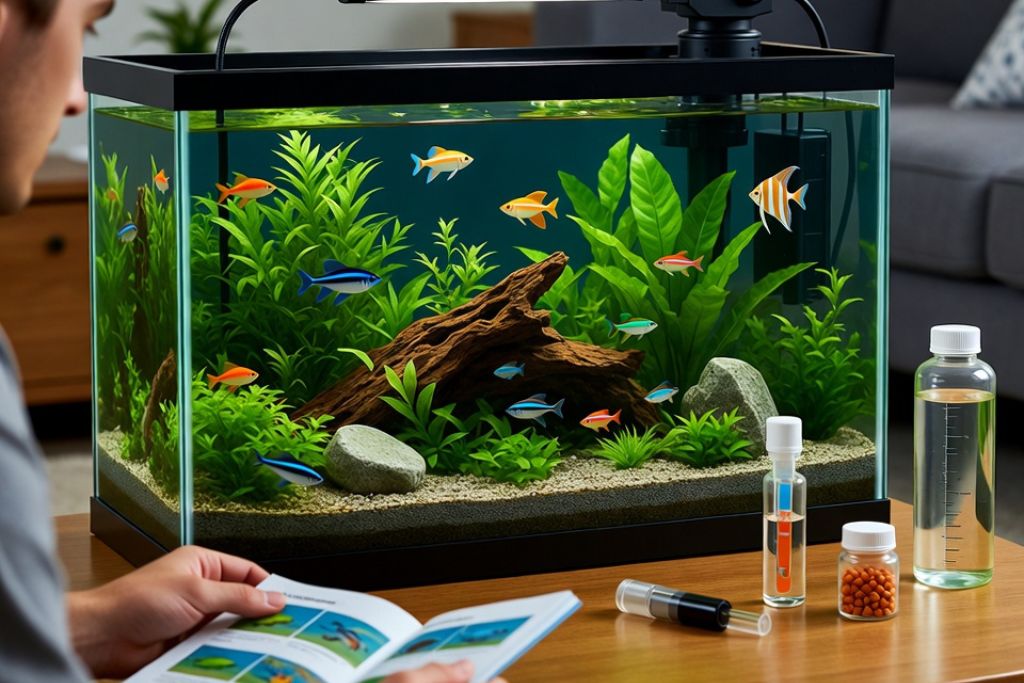
  • 10 Common Aquarium Mistakes New Fish Owners Make (And How to Avoid Them)

    10 Common Aquarium Mistakes New Fish Owners Make (And How to Avoid Them)

    You’ve been dreaming about this for ages.

    Now the aquarium is finally sitting in your home. You’ve imagined the fish you’ll keep, picked out decorations, and can already picture yourself unwinding while your new underwater world comes to life. It’s exciting. It’s rewarding. And yes—it can feel a little intimidating at first.

    Then reality kicks in.

    “Is my tank actually ready?” “Did I buy the right fish?” “How much should I feed them?” If those questions sound familiar, you’re in excellent company. Every experienced fishkeeper started exactly where you are.

    Across Hoffman Estates, Schaumburg, South Barrington, Bolingbrook, and nearby communities, we meet first-time aquarium owners every day. Some visit our stores after spending the afternoon at The Promenade Bolingbrook or The Arboretum of South Barrington, excited to begin their first tank. The same questions come up again and again. And thankfully, so do the solutions.

    1. Adding Fish Before the Tank Is Cycled

    It’s hard to wait when the aquarium is finally set up.

    However, a new tank needs time to establish beneficial bacteria that convert harmful ammonia into less toxic compounds. Introducing fish too early can expose them to unsafe water conditions. Cycling the aquarium first gives your fish a much healthier start.

    2. Choosing Fish That Aren’t Compatible

    Just because two fish look great together doesn’t mean they’ll enjoy living together.

    Some species are peaceful community fish. Others become territorial or simply grow much larger than many beginners expect. Researching adult size, temperament, and water requirements before stocking your tank prevents many common problems.

    3. Feeding Too Much

    Your fish may always look hungry. That doesn’t mean they need another meal.

    Extra food sinks to the bottom, breaks down, and quickly affects water quality. Feed only the amount your fish can comfortably consume within a few minutes, following the recommendations for the species you’re keeping.

    4. Starting with a Tiny Aquarium

    Small aquariums are often marketed to beginners. Ironically, they’re usually less forgiving.

    Water chemistry changes much faster in smaller tanks, making it harder to maintain stable conditions. A larger aquarium often gives new hobbyists a smoother learning experience.

    5. Skipping Water Tests

    Clear water isn’t always healthy water.

    Regular testing helps monitor ammonia, nitrite, nitrate, and pH before they become problems. It’s one of the easiest ways to protect your fish.

    6. Forgetting Water Changes

    Even the best filter can’t remove everything.

    Routine partial water changes help remove excess nitrate, replenish important minerals in freshwater aquariums, and support stable water quality.

    7. Deep Cleaning the Entire Aquarium

    A sparkling tank sounds like a good goal. Cleaning everything at once isn’t.

    Beneficial bacteria colonize your filter media, substrate, decorations, and virtually every hard surface in the aquarium. Replacing all of your filter media or deep-cleaning everything at once can disrupt the biological filtration your tank depends on.

    8. Ignoring Your Equipment

    Filters, heaters, and air pumps work hard every day.

    Checking them regularly helps you catch small issues before they become big ones.

    9. Constantly Adjusting the Water

    New fishkeepers sometimes chase the “perfect” water parameters.

    In reality, stable conditions are usually far healthier than numbers that constantly swing. Make changes gradually and only when they’re truly needed.

    10. Trying to Learn Everything Alone

    Nobody becomes an aquarium expert overnight.

    Asking questions, learning from experienced fishkeepers, and getting advice before making changes can save you a lot of frustration and help your fish thrive.

    Start Your Aquarium Adventure with Confidence

    Setting up an aquarium is one of the most rewarding hobbies you can enjoy, and you don’t have to figure everything out by yourself. The team at Aquarium Adventure is always happy to help hobbyists throughout Hoffman Estates, Schaumburg, South Barrington, Bolingbrook, Naperville, and surrounding communities choose compatible fish, quality equipment, and the right supplies for lasting success.

    Every thriving aquarium starts with curiosity, a little patience, and a willingness to learn. Before long, the questions that seemed overwhelming become second nature, and you’ll be enjoying the underwater world you’ve built with confidence. With a little patience, reliable guidance, and the right setup from the start, you’ll spend less time troubleshooting and a lot more time enjoying the incredible underwater world you’ve created.