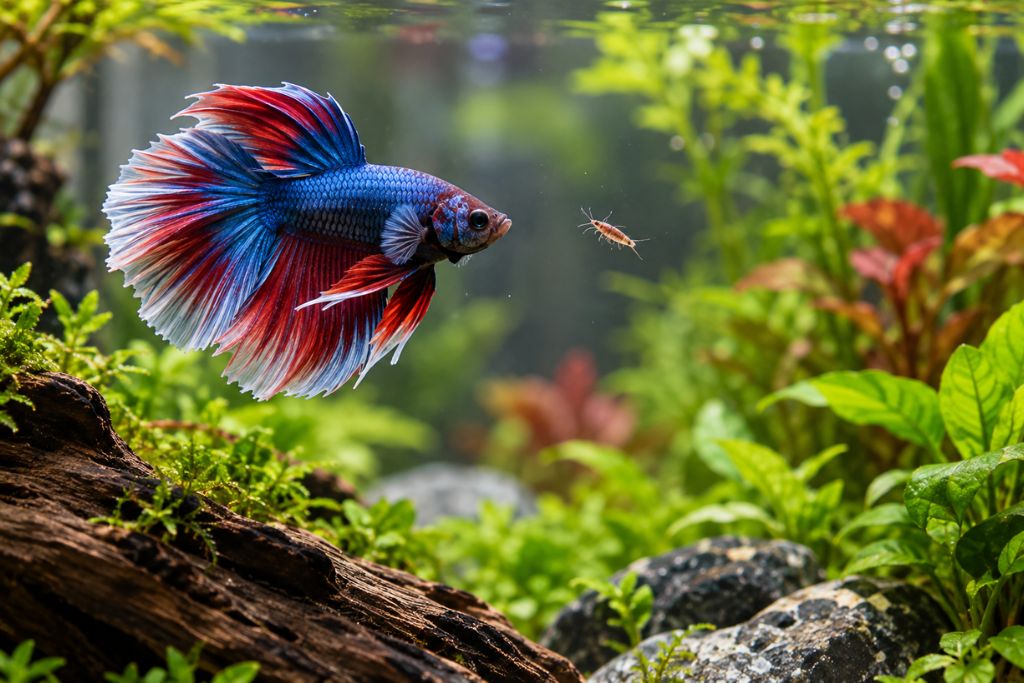
For fishkeepers in Hoffman Estates and across Chicagoland, choosing live food starts with knowing what your fish actually eat. It can be useful for young fish, species that hunt small prey, and fish that need encouragement to feed. The right choice depends on the species, life stage, and size of the food.
Live foods can provide nutrition and stimulate natural feeding behavior. They are not essential for every aquarium fish, though, and they may not provide a complete diet on their own. Merck Veterinary Manual
Which aquarium fish benefit from live food?
1. Fry: Tiny Fish, Serious Appetites
Baby fish often benefit from appropriately sized live foods, especially newly hatched brine shrimp. These tiny Artemia are suitable for many fry, but some fry need even smaller foods. Match the food to the size and nutritional needs of the species you are raising. University of Florida guidance
Other options include microworms and vinegar eels for very small fish. Size matters here. A meal does not help much if your fry cannot fit it in their mouths.
2. Bettas: The Tiny Hunters
Bettas are carnivorous and often respond strongly to moving prey. Live brine shrimp and appropriately sized worms can provide enrichment and encourage feeding.
Offer live food as part of a diet suited to your betta, rather than assuming that live food alone meets all its needs.
3. Killifish: Live-Food Enthusiasts
Killifish are another group that can benefit from live foods such as brine shrimp, daphnia, and mosquito larvae from safe, controlled sources.
Live foods are especially useful when conditioning fish for breeding. They can provide extra variety and help stimulate natural feeding behavior.
4. Discus and Other Reluctant Eaters
Moving foods such as brine shrimp or daphnia may encourage some reluctant fish to eat. A sudden loss of appetite, however, can also signal a problem with water quality or the fish’s health. Check the aquarium conditions and seek advice about a fish that continues to refuse food. Merck Veterinary Manual
Live food can be a feeding option, but it should not replace finding the cause of a change in appetite.
5. Puffers and Snail-Eating Loaches
Some puffers and loaches eat live snails. For some puffer species, appropriately sized hard-shelled prey can also help wear down teeth that grow throughout life. Feeding needs vary by species, so check what is suitable for the fish you keep. Research on pufferfish teeth
Is live food right for every aquarium fish?
No. A balanced diet should match the species. Prepared, frozen, and other foods can all play important roles.
Live food also needs careful sourcing. Wild-caught organisms can introduce unwanted pathogens, parasites, or contaminants. Reputable sources and proper handling matter. Merck Veterinary Manual
How can Aquarium Adventure help with fish nutrition?
At Aquarium Adventure, we look at the fish, the aquarium, and the goal behind the feeding plan. Our aquatic professionals can help you choose appropriate foods for your species and life stage.
Visit our team at 11 Golf Center in Hoffman Estates, and tell us your fish’s species, life stage, and current diet. That gives us a useful starting point for discussing whether live food belongs in its feeding plan.
The best dinner is one that meets your fish’s needs.