Tag: aquarium care

  • Thanksgiving for Fish: What’s on the Aquarium Feast Menu?

    Thanksgiving for Fish: What’s on the Aquarium Feast Menu?

    Thanksgiving dinner is serious business. There’s the main course, the sides, the inevitable second helping, and that one guest who acts like they haven’t eaten in weeks.

    If you’ve ever watched aquarium fish rush toward feeding time, you know exactly which guest we’re talking about.

    As Hoffman Estates families prepare their holiday spreads, we’re setting a different kind of table at Aquarium Adventure. No turkey, stuffing, or pumpkin pie here. Just a fish-friendly feast that makes nutritional sense.

    The Main Course: Something Worth Swimming For

    Every good Thanksgiving meal needs a centerpiece. For aquarium fish, that means a nutritionally complete staple food formulated for their species and life stage.

    Quality flakes, pellets, and granules can provide essential proteins, fats, vitamins, and minerals.

    But the menu isn’t identical for everyone. Bettas are carnivores that need protein-rich diets, while goldfish are omnivores that benefit from a suitable mix of nutrients.

    The lesson? Know who’s coming to dinner before planning the menu.

    The Side Dishes: A Little Variety, Please!

    Some fish appreciate a change from their usual fare.

    Depending on the species, suitable additions might include:

    • Brine shrimp: A supplemental protein source for many omnivorous and carnivorous fish.
    • Daphnia: Tiny crustaceans that add variety and encourage natural feeding behavior.
    • Algae wafers: A useful option for certain algae-grazing fish, but not every bottom-dweller.
    • Blanched zucchini: An occasional vegetable treat for appropriate species. Wash it, skip the seasonings, and remove leftovers.

    These extras can complement a balanced aquarium fish diet, but they shouldn’t automatically replace a complete staple food.

    And please, keep the actual Thanksgiving leftovers out of the aquarium!

    The Seating Chart: Everyone Gets a Plate

    Here’s where things get interesting.

    Some fish eat near the surface. Others feed in midwater or forage along the bottom.

    In a lively community tank in Schaumburg or South Barrington, dinner can get competitive. The right floating, slow-sinking, or sinking food helps everyone get a fair chance.

    Just remember that feeding location isn’t the same as dietary preference. A bottom-feeding fish doesn’t necessarily eat algae.

    Second Helpings? Not So Fast!

    Fish may eagerly approach whenever food appears, but enthusiasm isn’t a reliable measure of hunger.

    For many adult community fish, one or two appropriately portioned feedings daily may work. Other species and life stages have different requirements.

    Excess food can decompose, contribute to ammonia buildup, and harm water quality. Remove uneaten food and adjust portions to your fish’s needs.

    Everyone Ate. Nobody Needed a Nap.

    The best aquarium feast isn’t the biggest. It’s the one that suits every fish at the table.

    At Aquarium Adventure, we help Chicagoland fishkeepers understand species-specific nutrition, choose suitable foods, and build healthier feeding routines. From Hoffman Estates to communities around Busse Woods, we’re here to make fish care easier and a lot more enjoyable.

    Explore our aquarium supplies and fish foods and give your underwater dinner guests something genuinely worth celebrating.

  • Vacation Feeders vs. Automatic Feeders: Which Is Better for Your Aquarium?

    Vacation Feeders vs. Automatic Feeders: Which Is Better for Your Aquarium?

    Quick Answer / Summary

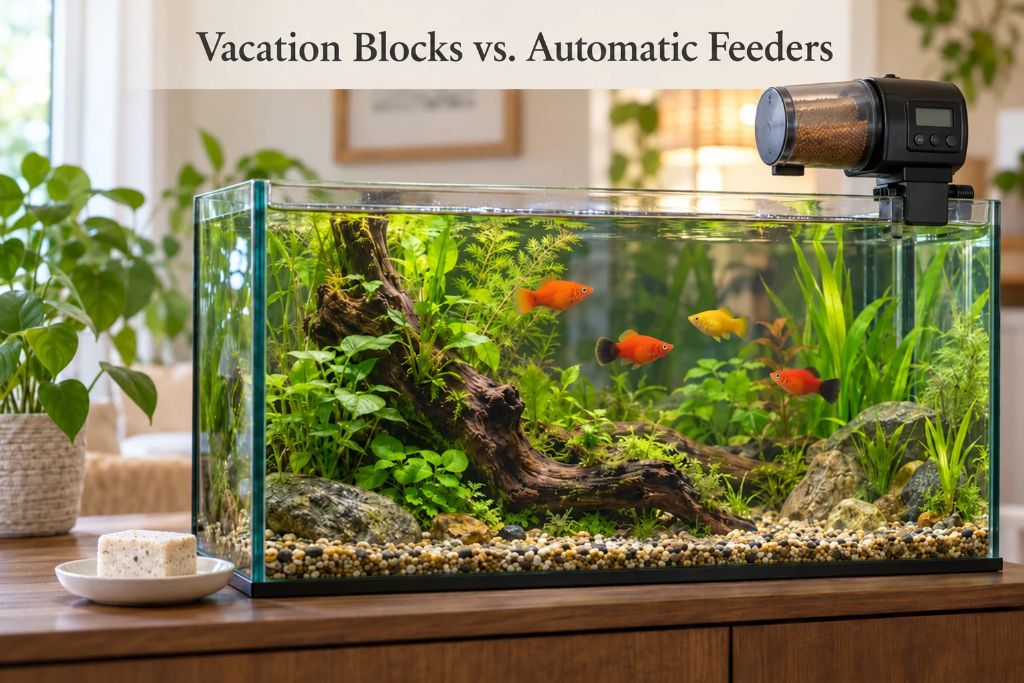
    Automatic fish feeders are generally the better choice for established aquariums whose fish eat compatible dry foods. They dispense food on a programmed schedule and offer greater portion control than vacation feeder blocks. Vacation blocks are simpler but release food less predictably and may affect water quality. Neither option is completely hands-off, so testing your feeding method and arranging appropriate aquarium care before traveling are essential.

    Key Takeaways

    • Automatic feeders provide more control: Most models dispense dry food at scheduled times, although portion sizes can vary.
    • Vacation blocks are convenient but less predictable: Food release depends on the product’s formulation and aquarium conditions.
    • Water quality matters: Uneaten food from either feeding method can break down and increase waste in the aquarium.
    • Your fish’s diet determines the best option: Standard automatic feeders work primarily with dry foods, while specialized diets may require other arrangements.
    • Always test before traveling: Check food portions, feeder placement, and equipment operation while you’re still home.

    Your aquarium doesn’t know you’re going on vacation. The fish still expect dinner, the filter still has a job to do, and that carefully maintained aquatic environment still needs attention.

    So, how do you keep feeding time on track when you’re away?

    For fishkeepers in Hoffman Estates, Schaumburg, and throughout Chicagoland, two common options are vacation feeder blocks and automatic fish feeders. Both are designed to provide food without someone standing beside the tank, but their methods and limitations are quite different.

    A community aquarium filled with pellet-eating fish may do well with a programmed feeder. A tank housing fish with specialized dietary requirements could need a different approach entirely.

    At Aquarium Adventure, we know that successful fishkeeping comes down to understanding the animals in your care. Their diets, feeding behaviors, and aquarium conditions should guide every equipment decision.

    Here’s how these two feeding options compare, where each works best, and what to check before you head out.

    What Are Vacation Feeders, and How Do They Work?

    Vacation feeders are slow-release food products designed to make food available over several days.

    Traditional vacation blocks contain food embedded in a mineral-based material that gradually dissolves. Gel-based products use a different formulation to release food over time.

    Both are designed for convenience, but neither provides the same control over meal timing and portions as a programmable feeder.

    What Are the Benefits and Drawbacks of Vacation Feeder Blocks?

    Their biggest advantage is simplicity. They generally require no batteries, programming, or additional equipment.

    However, there are important limitations:

    • Food-release rates can vary with water conditions and product formulation.
    • Fish may not consume the released food evenly.
    • Uneaten food can break down and affect water quality.
    • Some mineral-based products may influence water chemistry as they dissolve.
    • The available food may not suit every species’ nutritional needs.

    Certain vacation products are formulated for specific fish or feeding behaviors, but suitability should never be assumed.

    For a small community aquarium, a compatible block might be worth considering. Still, we’d recommend testing it before relying on it during a trip.

    How Do Automatic Fish Feeders Work?

    Automatic feeders dispense food at programmed times using a rotating drum, compartment system, or another dispensing mechanism.

    Most standard models accommodate dry flakes, pellets, or granules. More specialized feeders can handle smaller portions, particular food types, or advanced aquarium automation.

    Why Are Automatic Feeders Often the Better Choice?

    Their main advantage is greater control over feeding routines.

    • Scheduled feeding: Food is dispensed at programmed times.
    • Adjustable portions: Many models allow you to change the dispensing amount.
    • Multiple meals: Some devices support several smaller feedings throughout the day.
    • Everyday usefulness: Automatic feeders can also help maintain consistent routines when you’re home.

    However, a programmed portion isn’t necessarily an exact portion. Pellet size, food shape, and the feeder’s opening can affect how much food is released.

    Moisture is another concern. Food can clump inside a dispenser, potentially causing jams or inconsistent feeding.

    A properly selected automatic feeder is useful, but it still needs testing and occasional maintenance.

    Vacation Feeders vs. Automatic Feeders: What Are the Main Differences?

    Here’s how the two options compare for everyday aquarium care.

    Vacation Feeder Blocks vs. Automatic Fish Feeders
    Feature Vacation Feeder Blocks Automatic Fish Feeders
    How they work Release food over time through a mineral-based or gel-based formulation. Dispense food using a programmed mechanical device.
    Meal timing Food release depends on the product and aquarium conditions. Food is dispensed at scheduled times.
    Portion control Limited control over how much food becomes available at once. Usually adjustable, although actual portions can vary.
    Food compatibility Limited to the food included in the product. Most standard models handle compatible dry flakes, pellets, or granules.
    Setup Generally requires no batteries or programming. Requires secure placement, programming, portion testing, and a reliable power source.
    Main concerns Unpredictable release, uneaten food, and possible effects on water chemistry. Moisture, clumping, jams, power issues, and inconsistent portions.
    Water quality Uneaten food can decompose and increase waste. Overdispensed or uneaten food can also decompose and increase waste.
    Before traveling Test compatibility, food consumption, and effects on aquarium conditions. Test several feeding cycles, portions, placement, and equipment operation.

    For most established freshwater and saltwater aquariums that accept pellets or flakes, a tested automatic feeder is usually the more practical choice.

    A reef aquarium with fish that require frequent small meals may benefit from a more advanced system. Meanwhile, fish that rely on frozen or live foods may need a specialized feeder or an experienced caretaker.

    The right equipment should accommodate the fish, not force the fish into an unsuitable feeding routine.

    How Do You Choose the Right Feeder for Your Aquarium?

    Start with what your fish already eat and how they behave at feeding time.

    A few important questions can narrow your options:

    • What foods do your fish need? Confirm that the feeder accommodates their regular diet.
    • How often do they eat? Feeding frequency varies by species, age, and nutritional requirements.
    • How consistent are the portions? Test the actual amount dispensed rather than relying solely on the device’s settings.
    • Where does the food land? Position the feeder so food remains accessible instead of immediately entering an overflow or filter intake.
    • Can the food stay dry? Keep the dispenser away from splashing water and excessive humidity.

    A feeding ring may help contain floating food, particularly in aquariums where surface circulation carries it toward an overflow.

    For fishkeepers around South Barrington and the Poplar Creek area, we recommend observing several complete feeding cycles before traveling.

    And if your aquarium includes fish with specialized diets, our guide to live food for aquarium fish offers additional insight into why feeding requirements vary between species.

    How Should You Prepare Your Aquarium Before Vacation?

    Even the best feeder can’t detect a struggling filter, an equipment malfunction, or a fish behaving unusually.

    Before leaving, follow these steps:

    1. Test the feeder for several days. Check feeding times, portion consistency, and whether the food reaches your fish.
    2. Inspect the power source and placement. Replace weak batteries when appropriate, secure the device, and keep it away from splashing water.
    3. Check aquarium conditions. Test relevant water parameters and confirm that temperature, filtration, and circulation are appropriate.
    4. Complete routine maintenance in advance. Address existing problems without introducing unnecessary last-minute changes.
    5. Prepare a caretaker. For longer absences, arrange check-ins and provide written instructions, emergency contacts, and premeasured food if needed.

    At Aquarium Adventure, we also offer aquarium maintenance and service options for homeowners who want professional help caring for their aquatic environments.

    A reliable feeding routine is important. Keeping the rest of the aquarium stable is just as essential.

    Frequently Asked Questions About Vacation and Automatic Fish Feeders

    Are Automatic Fish Feeders Better Than Vacation Blocks?

    For most established aquariums whose fish eat compatible dry foods, automatic feeders are generally the better option. They offer scheduled dispensing and greater control over food quantities.

    However, their performance depends on correct setup, compatible food, and proper maintenance. Vacation blocks may be suitable for certain tanks, but their food-release rates are less predictable.

    Neither method guarantees that every fish receives an appropriate meal, so observing the feeding process before traveling is important.

    Can Vacation Feeder Blocks Affect Aquarium Water Quality?

    Yes. Some vacation blocks can contribute to cloudy water or changes in water chemistry, depending on their formulation and aquarium conditions.

    Uneaten food may also decompose, increasing the waste that the aquarium’s biological filtration must process.

    Not every vacation product behaves the same way. Mineral-based and gel-based formulations differ, so review the manufacturer’s instructions carefully. Testing a product while you’re home helps you evaluate how it performs in your particular aquarium.

    How Long Can Aquarium Fish Go Without Food?

    There is no single safe fasting period for every aquarium fish.

    Some healthy adult fish can tolerate a short interruption in feeding, while fry, growing fish, ill fish, and species with frequent feeding requirements may be less tolerant.

    Diet, age, species, and health all influence nutritional needs. Rather than assuming your fish can go several days without eating, consult an aquatic veterinarian or knowledgeable aquarium professional about their specific requirements before traveling.

    Can Automatic Feeders Dispense Frozen or Live Fish Food?

    Most standard automatic feeders are designed for dry foods such as flakes, pellets, and granules.

    Specialized refrigerated or frozen-food systems are available, but they require appropriate equipment and maintenance. Live foods present additional storage and dispensing considerations.

    If your fish depend on frozen or live foods, a conventional drum feeder may not provide suitable nutrition. An experienced caretaker or purpose-built feeding system may be necessary to maintain their usual diet.

    Should Someone Check Your Aquarium While You’re Away?

    For longer trips, a trusted caretaker provides an important extra layer of protection.

    Even a properly functioning feeder cannot identify abnormal swimming behavior, equipment failures, or deteriorating water conditions. Someone familiar with your aquarium can check the fish, confirm that essential equipment is operating, and contact you if something needs attention.

    Provide clear instructions and premeasured food when manual feeding is required. This helps prevent well-intentioned overfeeding.

    Which Feeding Option Makes the Most Sense?

    Automatic feeders generally offer better control for aquariums with compatible dry-food diets. Vacation blocks are simpler, but their less predictable food release makes careful evaluation important.

    The best choice is the one that supports your fish’s nutritional needs without compromising the aquarium environment you’ve worked to maintain.

    Let Aquarium Adventure Help You Feed With Confidence

    At Aquarium Adventure, we help fishkeepers throughout Hoffman Estates and the surrounding Chicagoland communities make informed choices about fish nutrition, equipment, and aquarium care.

    From a peaceful freshwater community tank to a more specialized saltwater setup, our team can help you consider the feeding options that make sense for your fish.

    Planning a getaway or looking to improve your everyday feeding routine? Explore our aquarium supplies and services or contact our Hoffman Estates team for guidance tailored to your aquarium.
  • When Should You Hire an Aquarium Maintenance Company?

    When Should You Hire an Aquarium Maintenance Company?

    You have an aquarium because you enjoy the underwater world. You want to understand your fish, learn the equipment, test the water, and keep everything looking its best. That is part of the adventure.

    But aquarium care involves more than clean glass and clear water. As a system becomes larger or more complex, maintenance can require real time, experience, and attention to detail. That is when professional aquarium maintenance can make a meaningful difference.

    Why does timing matter in aquarium maintenance?

    A healthy aquarium depends on balance. Water chemistry, filtration, lighting, temperature, fish health, plants, and the physical environment all work together.

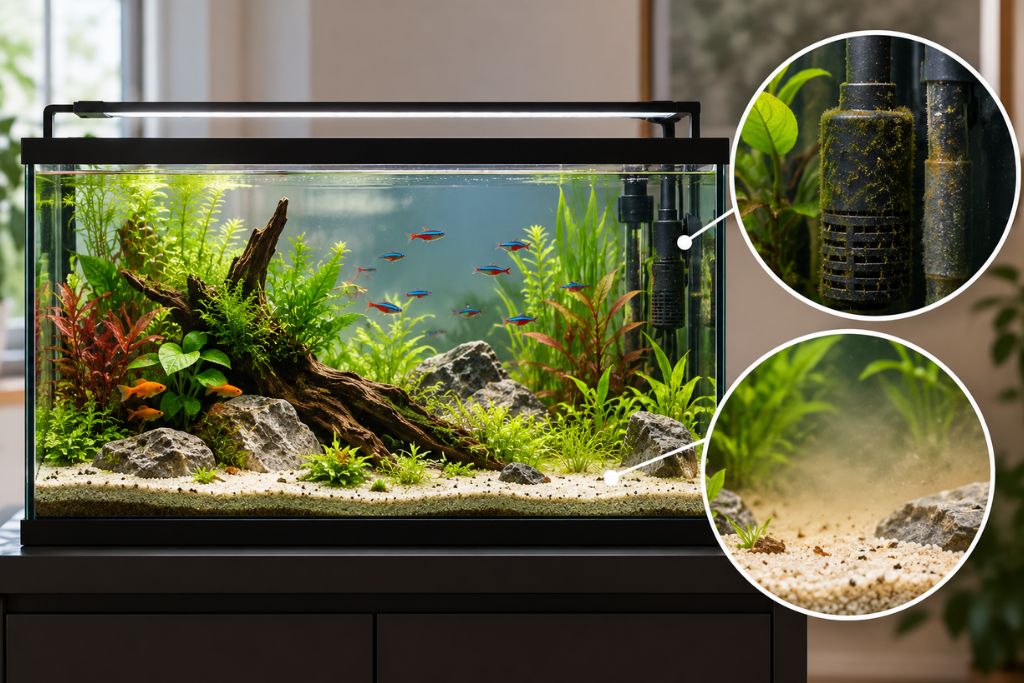
    Small changes can become larger problems when they go unnoticed. Repeated algae growth, unusual fish behavior, cloudy water, or equipment issues can signal that something needs attention.

    Professional maintenance is not simply about making an aquarium look clean. It is about understanding the system and keeping its different parts working together.

    When should you hire an aquarium maintenance company?

    There are several situations when bringing in an aquatic professional makes sense:

    1. You are falling behind on routine maintenance

    Busy schedules happen. Missed maintenance can lead to accumulating algae, debris, and water-quality concerns. A scheduled service can keep essential care on track.

    2. Your aquarium keeps developing the same problems

    Persistent algae, cloudy water, or recurring water-quality issues deserve more than another quick cleaning. A professional can evaluate the system and look for contributing factors.

    3. You are starting a new or more complex aquarium

    New setups bring important decisions about filtration, water chemistry, stocking, lighting, plants, and fish compatibility. Professional guidance can help establish the system correctly from the beginning.

    4. Your fish or plants are behaving differently

    Changes such as unusual hiding, poor appetite, lethargy, or other abnormal behavior should not be ignored. Fish health can be affected by water quality, equipment problems, stress, or disease.

    5. Your aquarium requires more technical care

    Large, saltwater, reef, planted, and specialty aquariums can demand more precise maintenance. Professional care can include testing pH, alkalinity, salinity, and trace elements, plus evaluating filtration and aquatic life.

    6. You are traveling or moving the aquarium

    Aquariums still need attention while you are away. Moving one also requires careful handling of fish, plants, equipment, and the established biological system.

    How can Aquarium Adventure help?

    At Aquarium Adventure, our professional Aquatic Technicians provide complete maintenance for residential and commercial aquariums. Service can include water testing, partial water exchanges, filter evaluation, detailed cleaning, lighting inspections, and fish and plant health checks.

    Our Hoffman Estates team brings aquatic expertise backed by an established aquarium showroom and years of hands-on experience. That means we can help you understand your system, not simply service it.

    From Golf Center to the wider Hoffman Estates and Poplar Creek area, Aquarium Adventure is here to help you keep your aquatic environment healthy, balanced, and beautiful.

    What if I still want to handle some maintenance myself?

    You absolutely can. Professional maintenance does not mean stepping away from the hobby.

    Think of it as having an experienced aquatic resource when your aquarium needs more time, knowledge, equipment, or attention than you can provide. The goal is simple: a healthy aquarium that you can enjoy.

  • Freshwater vs. Saltwater Aquariums: Which Side Are You On?

    Freshwater vs. Saltwater Aquariums: Which Side Are You On?

    Every aquarium owner reaches this moment.

    You’re ready to dive into the hobby. You’ve cleared the perfect spot for a tank. You’ve already imagined yourself relaxing as fish glide through the water after a long day.

    Then comes the first big question: Freshwater or saltwater?

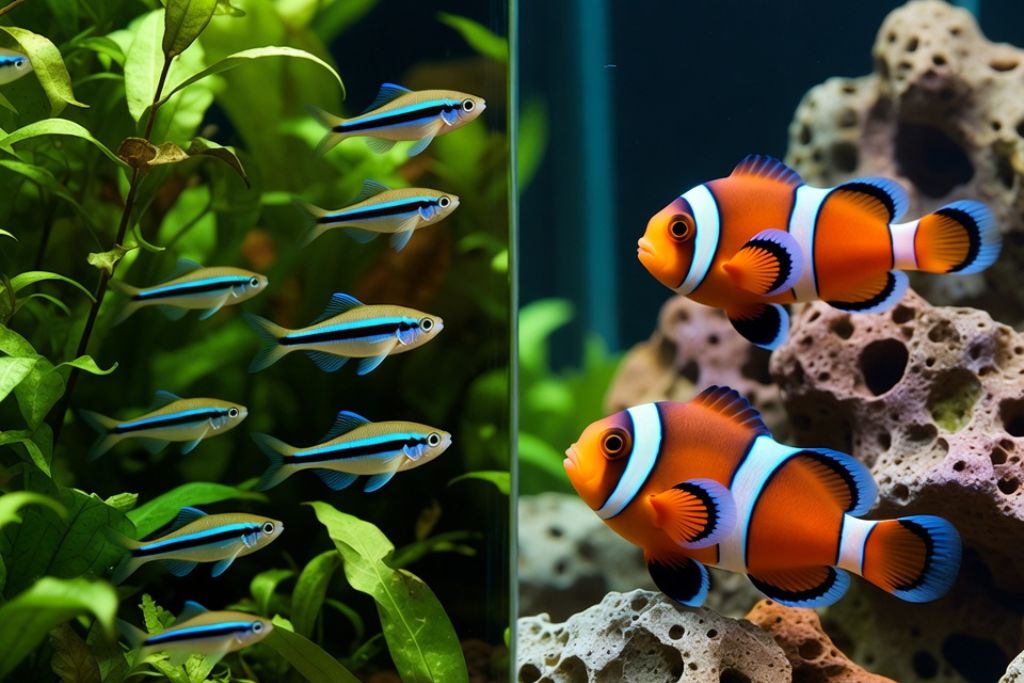
    You can’t combine the two in the same aquarium, so it’s time to pick a team. At first, that decision feels enormous. Freshwater tanks have a reputation for being more forgiving, while saltwater aquariums are famous for their dazzling marine fish and breathtaking reef displays.

    It’s a bit like choosing between the mountains and the beach. Both are incredible. Both have loyal fans. Ask ten fishkeepers which is better, and don’t be surprised if you hear twelve different opinions.

    One thing is true across the board: both freshwater and saltwater aquariums require proper cycling, regular maintenance, and consistent water quality to help fish thrive.

    At our Hoffman Estates and Bolingbrook stores, we see this debate play out every week. Someone walks in planning to start a freshwater tank, catches sight of a colorful reef display, and suddenly they’re asking about clownfish instead. It happens just as often the other way around. Hobbyists visiting from Schaumburg, South Barrington, Naperville, and Plainfield discover the incredible variety of freshwater fish and realize they’ve found exactly what they were looking for.

    Team Freshwater: Relaxed, Colorful, and Full of Personality

    Freshwater aquariums are a popular starting point because they’re generally simpler to set up and maintain than saltwater systems. They also require less specialized equipment, making them an approachable choice for many beginners.

    That doesn’t mean they’re boring. Far from it.

    From peaceful planted aquariums filled with tetras and corydoras to elegant angelfish or vibrant African cichlids, freshwater offers remarkable variety. Every tank tells its own story.

    Team Freshwater might be for you if…

    • You enjoy learning at a comfortable pace.
    • You want lots of fish choices.
    • You’d rather spend more time admiring your aquarium than fine-tuning equipment.

    Team Saltwater: The Ocean Comes Home

    Saltwater aquariums have a way of stopping people in their tracks.

    Brilliant marine fish, fascinating invertebrates, live rock, and colorful corals can transform a room into something that feels remarkably close to a living reef. Watching a mature marine aquarium change and grow over time is part of what makes the hobby so rewarding.

    Saltwater systems usually require additional equipment, careful salinity management, and closer attention to water chemistry. For hobbyists who enjoy learning and refining their setup, that’s often part of the fun.

    Team Saltwater might be for you if…

    • You love a hands-on hobby.
    • You enjoy learning the finer details.
    • You’ve always dreamed of creating your own slice of the ocean.

    The Winner? It Depends on the Fishkeeper

    After countless conversations in our stores (and more than a few friendly debates!) the answer hasn’t changed.

    Both sides win.

    The best aquarium is the one that matches your interests, your schedule, and the experience you’re hoping to create. Some hobbyists happily keep freshwater aquariums for decades. Others eventually fall in love with reef keeping. Many enjoy both at different points in their fishkeeping journey.

    Whichever Side You Choose, Enjoy The Journey

    Every week, our team helps families and hobbyists from Hoffman Estates, Schaumburg, South Barrington, Bolingbrook, Naperville, and Plainfield build aquariums they’re excited to come home to. Some leave with the beginnings of a peaceful freshwater community tank. Others start planning their very first marine aquarium.

    No matter which path you choose, you’ll find experienced guidance, healthy fish, quality equipment, and plenty of friendly advice at Aquarium Adventure. After all, every unforgettable aquarium starts with one simple decision. 

    And there’s no wrong side to be on when you’re building it with care.

  • 10 Common Aquarium Mistakes New Fish Owners Make (And How to Avoid Them)

    10 Common Aquarium Mistakes New Fish Owners Make (And How to Avoid Them)

    You’ve been dreaming about this for ages.

    Now the aquarium is finally sitting in your home. You’ve imagined the fish you’ll keep, picked out decorations, and can already picture yourself unwinding while your new underwater world comes to life. It’s exciting. It’s rewarding. And yes—it can feel a little intimidating at first.

    Then reality kicks in.

    “Is my tank actually ready?” “Did I buy the right fish?” “How much should I feed them?” If those questions sound familiar, you’re in excellent company. Every experienced fishkeeper started exactly where you are.

    Across Hoffman Estates, Schaumburg, South Barrington, Bolingbrook, and nearby communities, we meet first-time aquarium owners every day. Some visit our stores after spending the afternoon at The Promenade Bolingbrook or The Arboretum of South Barrington, excited to begin their first tank. The same questions come up again and again. And thankfully, so do the solutions.

    1. Adding Fish Before the Tank Is Cycled

    It’s hard to wait when the aquarium is finally set up.

    However, a new tank needs time to establish beneficial bacteria that convert harmful ammonia into less toxic compounds. Introducing fish too early can expose them to unsafe water conditions. Cycling the aquarium first gives your fish a much healthier start.

    2. Choosing Fish That Aren’t Compatible

    Just because two fish look great together doesn’t mean they’ll enjoy living together.

    Some species are peaceful community fish. Others become territorial or simply grow much larger than many beginners expect. Researching adult size, temperament, and water requirements before stocking your tank prevents many common problems.

    3. Feeding Too Much

    Your fish may always look hungry. That doesn’t mean they need another meal.

    Extra food sinks to the bottom, breaks down, and quickly affects water quality. Feed only the amount your fish can comfortably consume within a few minutes, following the recommendations for the species you’re keeping.

    4. Starting with a Tiny Aquarium

    Small aquariums are often marketed to beginners. Ironically, they’re usually less forgiving.

    Water chemistry changes much faster in smaller tanks, making it harder to maintain stable conditions. A larger aquarium often gives new hobbyists a smoother learning experience.

    5. Skipping Water Tests

    Clear water isn’t always healthy water.

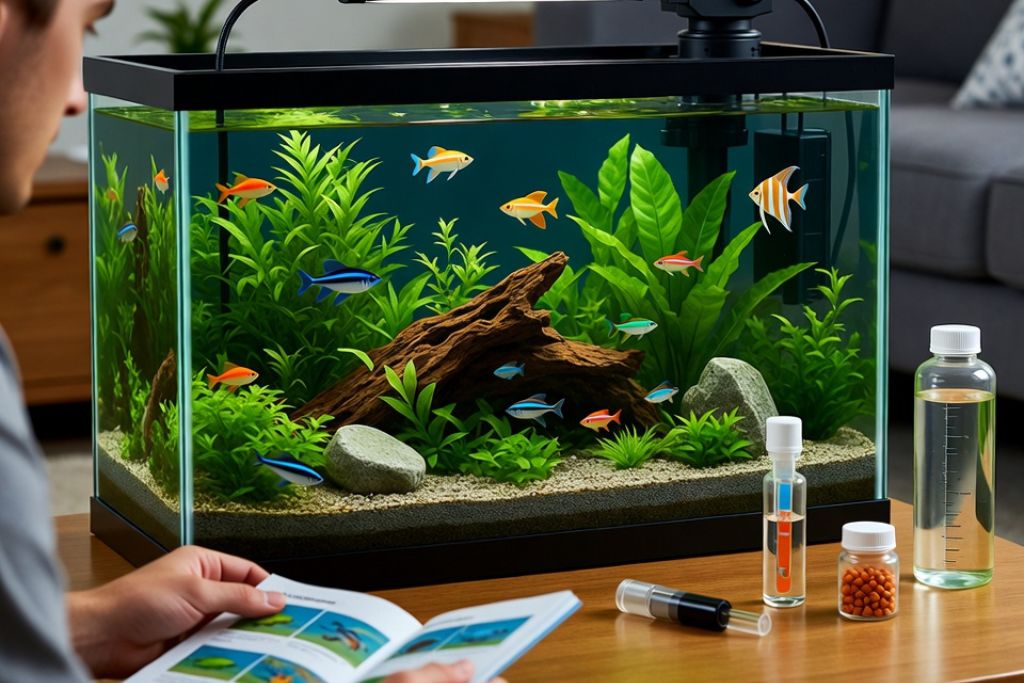
    Regular testing helps monitor ammonia, nitrite, nitrate, and pH before they become problems. It’s one of the easiest ways to protect your fish.

    6. Forgetting Water Changes

    Even the best filter can’t remove everything.

    Routine partial water changes help remove excess nitrate, replenish important minerals in freshwater aquariums, and support stable water quality.

    7. Deep Cleaning the Entire Aquarium

    A sparkling tank sounds like a good goal. Cleaning everything at once isn’t.

    Beneficial bacteria colonize your filter media, substrate, decorations, and virtually every hard surface in the aquarium. Replacing all of your filter media or deep-cleaning everything at once can disrupt the biological filtration your tank depends on.

    8. Ignoring Your Equipment

    Filters, heaters, and air pumps work hard every day.

    Checking them regularly helps you catch small issues before they become big ones.

    9. Constantly Adjusting the Water

    New fishkeepers sometimes chase the “perfect” water parameters.

    In reality, stable conditions are usually far healthier than numbers that constantly swing. Make changes gradually and only when they’re truly needed.

    10. Trying to Learn Everything Alone

    Nobody becomes an aquarium expert overnight.

    Asking questions, learning from experienced fishkeepers, and getting advice before making changes can save you a lot of frustration and help your fish thrive.

    Start Your Aquarium Adventure with Confidence

    Setting up an aquarium is one of the most rewarding hobbies you can enjoy, and you don’t have to figure everything out by yourself. The team at Aquarium Adventure is always happy to help hobbyists throughout Hoffman Estates, Schaumburg, South Barrington, Bolingbrook, Naperville, and surrounding communities choose compatible fish, quality equipment, and the right supplies for lasting success.

    Every thriving aquarium starts with curiosity, a little patience, and a willingness to learn. Before long, the questions that seemed overwhelming become second nature, and you’ll be enjoying the underwater world you’ve built with confidence. With a little patience, reliable guidance, and the right setup from the start, you’ll spend less time troubleshooting and a lot more time enjoying the incredible underwater world you’ve created.

  • Choosing the Right Fish for Your Aquarium Size.

    Choosing the Right Fish for Your Aquarium Size.

    Walking through rows of colorful fish is one of the best parts of the aquarium hobby.

    You spot a bright school of tetras. Then a striking angelfish catches your eye. A few tanks later, you’ve mentally redesigned your entire aquarium. And then reality checks in.

    Not every fish is the right fit for every tank.

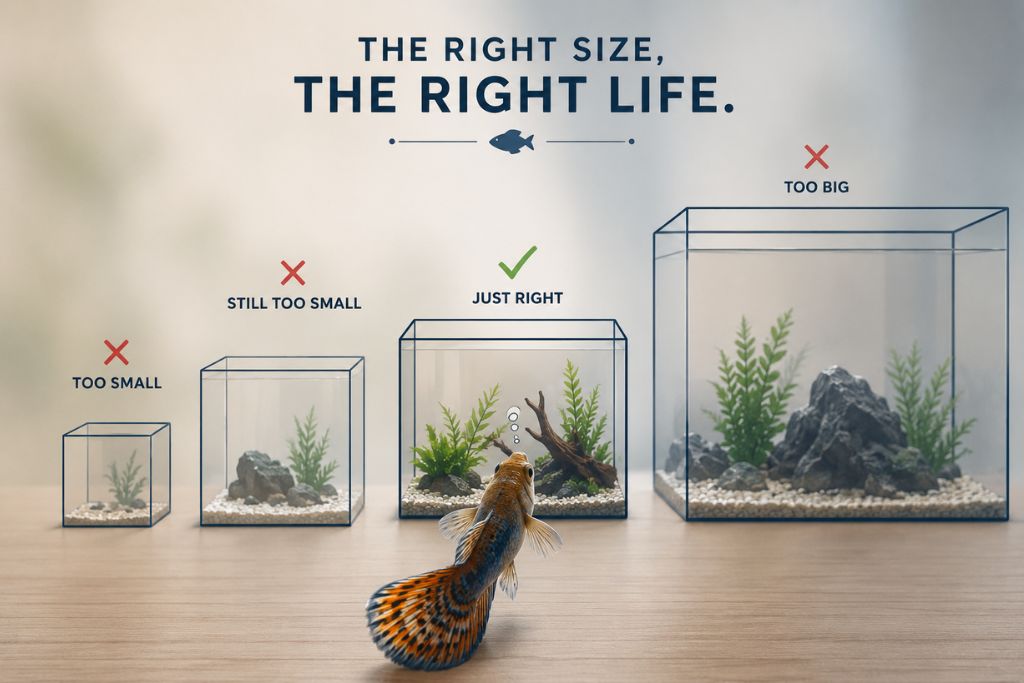
    Choosing fish based on appearance alone can lead to overcrowding, compatibility issues, and unnecessary stress for the animals you’re trying to care for. The healthiest aquariums start with a simple question: How much space can my fish realistically grow into?

    From first-time hobbyists setting up tanks near The Promenade Bolingbrook to experienced aquarists around Hoffman Estates, South Barrington, and the Poplar Creek area, one rule stays the same: the right fish in the right-sized aquarium is the foundation of a thriving tank.

    Let’s break down how to make the best choice.

    Start With Your Tank Size

    Before choosing fish, look at the aquarium itself.

    Every tank has limits based on water volume, filtration capacity, and swimming space. A fish that thrives in a 55-gallon aquarium may struggle in a 10-gallon setup, even if water quality appears good.

    A smaller aquarium in a Hidden Lakes townhome has very different stocking options than a large display tank in a South Barrington living room. Starting with your tank size helps narrow your choices and sets realistic expectations.

    Research Adult Size, Not Store Size

    One of the most common mistakes new hobbyists make is buying fish based on how they look today.

    Many fish sold in stores are juveniles. Some species may double, triple, or even quadruple in size as they mature.

    This is a common challenge for fishkeepers throughout Schaumburg, Streamwood, and Hoffman Estates. A fish that seems perfect for a small aquarium can quickly outgrow its space.

    Always check the expected adult size before making a purchase.

    Consider Swimming Habits

    Not all fish use their space the same way.

    Some species spend most of their time exploring open water. Others prefer plants, caves, driftwood, or hiding spots.

    Schooling fish also need room to move together as a group. Even smaller species can require more space than many beginners expect.

    Understanding behavior helps create a healthier and more natural environment.

    Build a Compatible Community

    Tank size isn’t the only factor.

    Fish should also be compatible with their tankmates. Temperament, activity level, and environmental needs all matter.

    Community aquariums remain popular among families from Bartlett to Bolingbrook because they allow multiple species to coexist peacefully when planned correctly.

    A well-balanced aquarium often experiences less stress and fewer behavioral issues.

    Get Expert Guidance Before You Buy

    Fishkeeping becomes much easier when you have the right information from the start.

    At Aquarium Adventure, we help hobbyists throughout Hoffman Estates, Bolingbrook, Schaumburg, and surrounding communities choose fish that fit their aquariums and long-term goals. Visitors stop in from near NOW Arena, The Arboretum of South Barrington, Boughton Road, and beyond for guidance they can trust.

    The best aquarium isn’t the one packed with the most fish. It’s the one where every fish has the space, environment, and compatibility it needs to thrive. A little planning today can help create a healthier, more enjoyable aquarium for years to come.