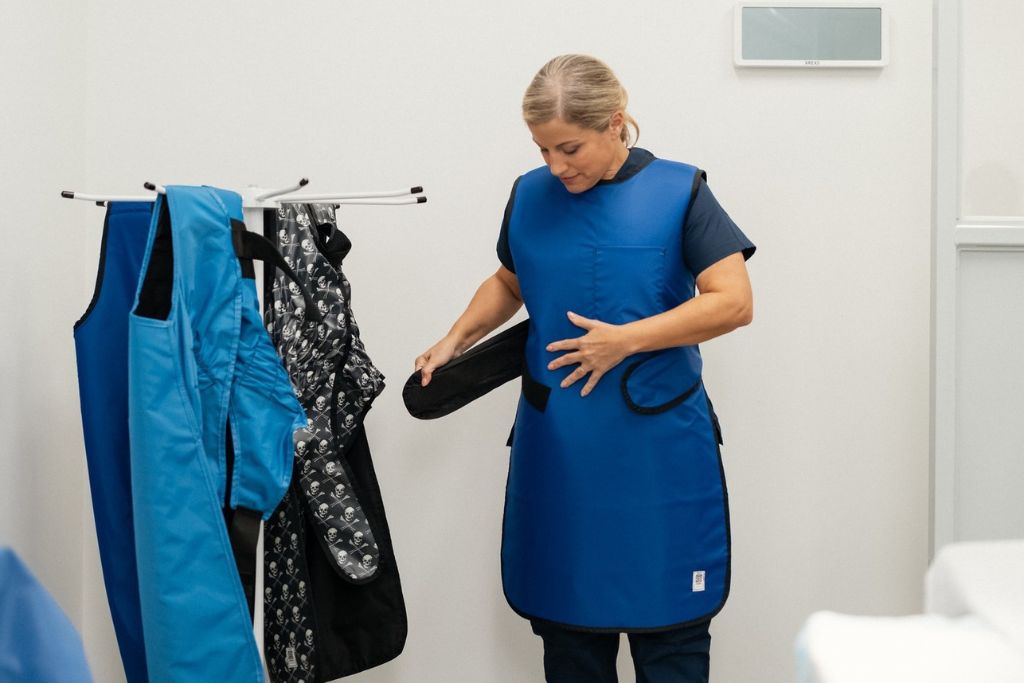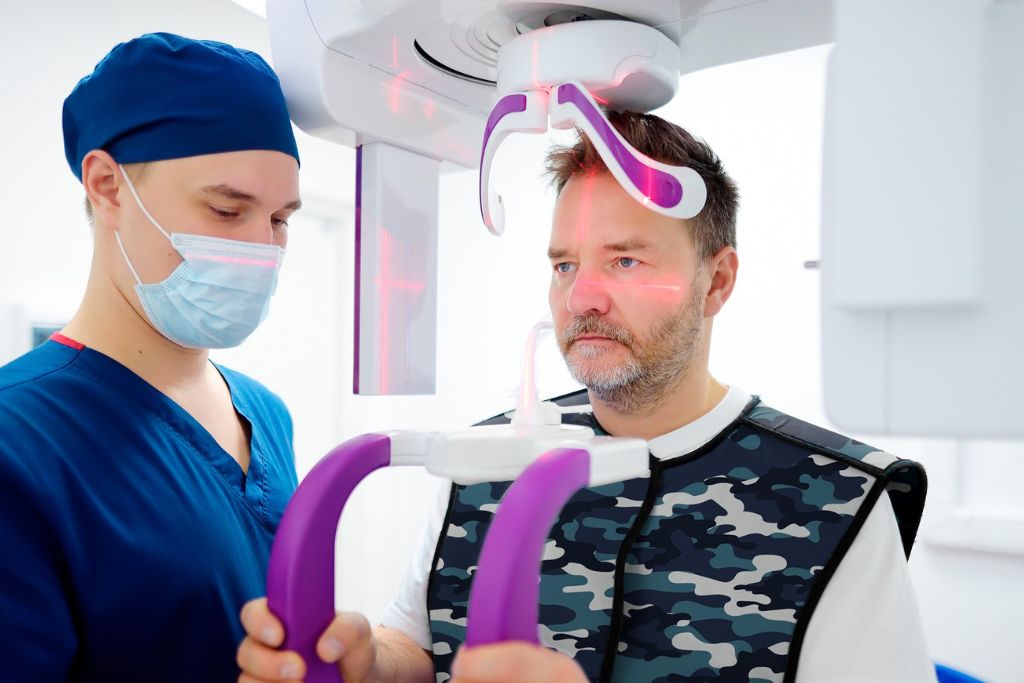
Radiation protection is part of everyday life for many healthcare professionals.
Choosing the right lead apron is one of the most important decisions you’ll make not just for compliance, but for your comfort throughout the workday.
No two clinical roles are exactly alike. An interventional radiologist performing lengthy fluoroscopic procedures has different protection needs than a veterinary professional taking diagnostic X-rays or a surgical technologist assisting in the operating room. Procedure length, proximity to the imaging source, mobility, and frequency of radiation exposure all influence which apron features may be the best fit.
Attenutech offers a broad range of customizable lead aprons in multiple ergonomic styles, lightweight core material options, and 0.35 mm Pb and 0.50 mm Pb lead equivalencies, helping healthcare professionals select protective apparel that aligns with their clinical responsibilities and their facility’s radiation safety protocols.
Interventional Radiologists: Ergonomic Support for Long Procedures
Interventional radiologists frequently perform image-guided procedures using fluoroscopy, often spending extended periods close to the imaging field. Over time, repeated exposure to scatter radiation makes properly fitted personal protective equipment an essential part of radiation safety.
Because these procedures can last for extended periods, many clinicians prioritize apron designs that help distribute weight more comfortably while maintaining comprehensive coverage.
Attenutech offers ergonomic options such as the Reverse Vest & Skirt, which distributes weight between the shoulders and hips through its two-piece design, and the Reverse Flex Jacket One-Piece, which combines full frontal protection with a flexible ergonomic fit for prolonged wear.
Cath Lab Staff: Protection Designed for Extended Wear
Cardiac catheterization laboratories rely heavily on fluoroscopy, and physicians, nurses, and technologists may spend several hours each day working around imaging equipment. Consistent protection from occupational scatter radiation is essential throughout these procedures.
Since long cases can place additional strain on the neck, shoulders, and back, many healthcare professionals look for lead aprons that improve weight distribution while allowing unrestricted movement.
Attenutech’s Reverse Vest & Skirt provides overlapping front protection while shifting weight more evenly across the body. The Reverse Flex Jacket One-Piece also offers ergonomic support for professionals who prefer a single-piece design.
Orthopedic Surgeons: Protection That Supports Mobility
Orthopedic surgeons commonly use C-arm fluoroscopy during fracture fixation, trauma surgery, and many joint procedures. Although fluoroscopy times vary, surgeons often move around the operating table while remaining close to the imaging equipment.
Protective apparel that fits securely and allows comfortable movement can help support efficiency throughout these procedures.
Attenutech’s Flexiback Frontal Apron features an ergonomic design with adjustable closure options that help maintain a secure fit while allowing the mobility required in the operating room.
Pain Management Physicians: Comfortable Protection for Repetitive Procedures
Pain management physicians routinely perform fluoroscopy-guided procedures throughout the day. Individual cases may be relatively brief, but repeated procedures can contribute to cumulative occupational scatter radiation exposure over time.
Comfort becomes especially important when protective apparel is worn repeatedly throughout a busy clinical schedule.
Attenutech’s Flexiback Frontal apron styles combine dependable frontal protection with ergonomic features designed to support comfort during frequent daily use.
Veterinarians: Flexible Protection for Active Clinical Environments
Veterinary professionals often assist with diagnostic radiography while positioning animals that may shift during imaging. Their work regularly involves bending, kneeling, and moving between patients of different sizes.
A properly fitted lead apron should provide dependable protection while allowing comfortable movement throughout the workday.
Attenutech offers several customizable frontal and wraparound apron styles that can be configured to meet the needs of veterinary imaging environments, allowing practices to select protection that best supports their workflow.
Surgical Technologists: Reliable Coverage Throughout the Procedure
Surgical technologists frequently assist during procedures that utilize fluoroscopy, including orthopedic, vascular, and pain management cases. They often move around the sterile field while remaining close to imaging equipment and surgical staff.
Protective apparel that remains securely positioned can improve comfort during longer procedures while providing dependable radiation protection.
Attenutech’s Surgical Drop Frontal Apron features cross-back shoulder straps and a secure waist closure designed to help maintain proper positioning throughout surgical procedures while supporting all-day comfort.
Find the Right Protection for Your Clinical Environment
Selecting a lead apron involves more than choosing a lead equivalency. The type of procedures you perform, the amount of time spent wearing protective apparel, your mobility requirements, and your workplace’s radiation safety policies should all be part of the decision.
At Attenutech, we design customizable lead aprons that support the diverse needs of today’s healthcare professionals. With multiple ergonomic styles, lightweight material options, and customizable configurations, our protective apparel is built to help you stay comfortable, protected, and focused on delivering exceptional patient care throughout every procedure.