Tag: puppy

  • What Can Puppies Eat? Tasty Treats and Food to Avoid

    What Can Puppies Eat? Tasty Treats and Food to Avoid

    Few things tug at your heartstrings more than your puppy gazing longingly at your dinner plate. One adorable, pleading look can make you want to give in and share your meal (understandably so, those puppy eyes are powerful!). But before slipping them a bite, it’s important to know what’s safe and what’s not. Puppies are still growing, and while some people food can make healthy treats, others are harmful or even toxic. Knowing what foods puppies can eat helps you give them safe, nutritious treats while avoiding harmful options.
    Why Educating Yourself Matters

    Your pup depends on you to make the right choices. A small “treat” from your plate can either boost their nutrition or send you racing to the vet. Knowing what’s safe and what’s not keeps your puppy healthy while giving you peace of mind.

    When Puppies Can Try People Food

    Puppies can begin sampling small amounts of safe human foods once they’re weaned and fully eating puppy kibble, usually around 8 weeks old. Keep portions tiny and occasional. People food should never replace a balanced puppy diet, but it can be a fun way to add variety. Think of it as a bonus treat, not the main course. 

    Safe Foods for Puppies (in Moderation)

    Some people foods are safe and even nutritious for puppies when served properly:

    Carrots – Crunchy, low-calorie, and packed with vitamin A. Perfect for teething pups and great for dental health when chewed raw.

    Apples (no seeds or core) – A sweet source of vitamins A and C, plus fiber. Slice thinly to avoid choking hazards.

    Blueberries – Tiny antioxidant powerhouses that support brain health. A great training treat because of their small size.

    Pumpkin (plain, cooked, or canned) – Rich in fiber and gentle on digestion. Helps with both diarrhea and constipation when served in spoonfuls.

    Bananas – Loaded with potassium, vitamins, and fiber. Best given in small chunks due to their natural sugar content.

    Cooked Chicken or Turkey (plain, no seasoning) – A lean protein that supports growing muscles. Shred into small pieces and avoid skin or fat.

    Salmon (cooked, boneless) – High in omega-3 fatty acids, which promote a shiny coat and healthy skin. Never serve raw or with bones.

    Plain Rice or Pasta – Bland but filling, and great for soothing an upset stomach. Serve plain, without sauces or butter.

    Cheese (low-fat, in moderation) – Pups love cheese, and it can be a good training reward. Stick to small amounts to avoid tummy troubles.

    Dangerous Food to Avoid

    Other foods should never be given to puppies, as they can cause illness or worse:

    Chocolate – Contains theobromine, toxic to dogs and especially harmful to puppies. Dark chocolate is the most dangerous.

    Grapes and Raisins – Even tiny amounts can cause sudden kidney failure. Best to avoid completely.

    Onions, Garlic, and Chives – These damage red blood cells and can lead to anemia. They’re unsafe in any form—raw, cooked, or powdered.

    Avocado – Contains persin, which upsets a puppy’s stomach and can be dangerous in large amounts.

    Macadamia Nuts – Known to cause weakness, tremors, and vomiting in dogs. Never feed them.

    Xylitol (artificial sweetener in gum, candy, and some peanut butters) – Extremely toxic. Even a small lick can cause low blood sugar, seizures, or liver failure.

    Alcohol and Caffeine – Both can cause rapid heart rate, seizures, and even death. Never let your pup near coffee, soda, or cocktails.

    Fatty or Fried Foods – Can trigger pancreatitis, stomach upset, and long-term weight issues.

    Cooked Bones – Dangerous because they splinter and can choke or injure your puppy’s digestive tract.

    Why Puppies Love Eating With You

    Sharing meals feels natural to your pup because they see you as family, part of their pack. But the safest way to bond is with approved snacks and nutritious treats.

    Knowing which foods are safe (and which are dangerous) is a vital part of raising a healthy pup. By sticking to dog-friendly options and avoiding risky ones, you’ll keep your puppy safe while still making them feel included at the table. After all, a healthy puppy is a happy puppy. And that’s the best treat of all!
  • Springtime Makes for the Perfect Fur Baby Photo!

    Springtime Makes for the Perfect Fur Baby Photo!

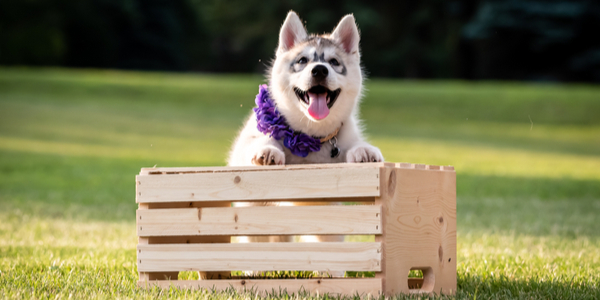
    Spring brings the flowers to bloom and the greenery back to life, and it’s no doubt one of your pup’s favorite seasons. Lots of time to be spent in the great outdoors and what’s more, the weather is getting warm too. 

    For a bit of fun this spring, one trend you can consider is playing dress up! Picture dressing your fur baby in a nice, smart plaid shirt and maybe wearing one to match too! You could have loads of fun like organizing photo shoots, maybe a party or two too! 

    Many people love to play dress up with their dogs and post photos on social media, and this definitely makes for an excellent idea. For starters, it is a great way to share the moment and cute pictures with the rest of the world via the internet. 

    In addition, posting on platforms like Instagram allows you to save pictures on there for as long as you want and you can use it as a form of album or cloud storage for Max’s pictures. In the years to come, you could easily access the images from your smart device and recall the enchanting memories that you created that day. 

    There are quite a number of dogs on Instagram, some even having their own accounts and in collaboration with their partners, may work as influencers. They commonly have pictures of them taken, for instance, there’s @magnusthetherapy dog on Instagram. You would commonly find him posing with his owner in various getups, even a chef’s cap!

    Also, @barked, a community for dogs on Instagram commonly posts up cute photos of different dog breeds. It should be no surprise to find a dog all suited up complete with a tie. What more are you waiting for? Get to creating memories!

    Conclusion 

    A well dressed dog gets compliments and pats from all and sundry. Give your pet the chance to be a hotshot dresser this spring!

  • What are the Benefits of Owning a Dog?

    What are the Benefits of Owning a Dog?

    The only downside to owning a dog is that those gooey eyes would charm you anytime, anyway. That said, there are loads of benefits to owning a dog; emotional, physical, mental, social, basically loads. This article highlights some of these benefits: 

    Companionship 

    If you’ve been battling loneliness for a while, owning a dog is precisely what you need. There is no feeling lonely when you have a pup that constantly craves your attention and worships you. It’s no wonder then that dogs are known as man’s best friend. 

    Uplifts Your Mood 

    There’s no feeling depressed around your dog. Pups are generally lively and full of energy and are ready to play at every turn. Their antics are bound to crack you up and you would find yourself bursting into laughter now and again. Dogs make humans happy.

    Longevity 

    People with pets have generally been shown to live longer. This is especially true for seniors. Having to care for a pet extends their lifespans and this applies to middle aged individuals too. 

    Teaches Vital Lessons 

    Owning a pet teaches vital life lessons like caring for other people besides ourselves. Knowing that a vulnerable pet totally depends on you teaches responsibility especially to kids at a young age. It improves social skills too. 

    Improved Mental Health 

    People battling depression and other mental health issues are often assigned support dogs to help them through. This is because having a dog that adores you stimulates feelings of hope and happiness. 

    Conclusion 

    There’s really nothing as blissful as owning and caring for a dog. In addition to the benefits outlined above, the daily walks are beneficial to physical health too while providing good bonding time with your pup. 

  • Should I Crate Train My Dog?

    Should I Crate Train My Dog?

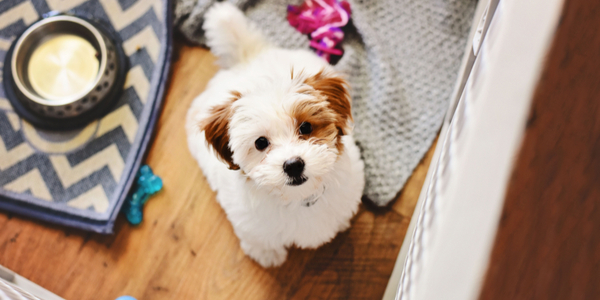
    Crate training is the process of introducing your dog to view and accept a dog crate as a personal safe space. There are various benefits that crate training offers particularly for your pet. Here are the most profound ones: 

    Provides a Familiar, Safe Space 

    Sometimes, your pet needs a place to retire, particularly if they encounter something new. For instance, some dogs are not great at getting used to strangers and would rather stay away. A crate provides a form of escape for your pup and allows them to retreat from new, disturbing changes until they can eventually adapt. 

    Provides a Den Feeling 

    Many advocates point to the fact that dogs are den animals and a crate can serve as a substitute for a den. Daisy’s den is where she reigns supreme and feels like her own personal kingdom. This space serves as a sanctuary and your dog feels very secure in that space. 

    Helps With Potty Training 

    Dogs generally keep their sleeping areas clean as a matter of instinct. Providing your pup with a crate would help them learn to hold and this in turn strengthens bladder and bowel muscles. They inadvertently learn housebreaking on their own. 

    Makes Life Easier Generally 

    Crates generally make yours and your pet’s life easier. Transporting Daisy is safer using a crate whether by road for long distance trips or air trips. It results in less distractions for the driver and you would be able to have your dog with you whenever you travel.  

    Conclusion 

    Crate training your pup offers too many benefits for you to pass it up. During the process, ensure that you’re patient and reward with treats for good behavior. 

  • How Often Should I Groom My Dog?

    How Often Should I Groom My Dog?

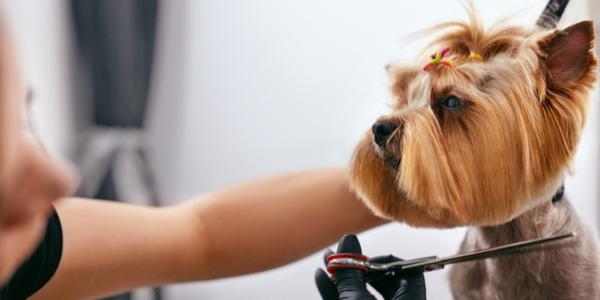
    Various aspects of grooming are typically done at different times.  For instance, brushing is recommended at least 1 to 3 times a week, baths every 1 to 2 months, and trimming of the areas around the paws, ears, face, and sensitive areas around every 4 to 6 weeks. 

    Visiting a professional groomer should be done at least once a month, and the session would typically consist of your pet being brushed, bathed, sanitized, as well as nails trimmed or clipped. 

    Wire-haired dogs may grow a softer and different colored coat if they are shaved down, so this should be avoided. Similarly, it is ideal to place long-haired dogs on a grooming schedule. 

    For breeds with wavy or curly hair, routine coat maintenance is important so that they don’t get up getting shaved bald. Routine grooming also helps breeds who blow their coat. 

    Benefits of Grooming 

    Brushing down your pet’s coat helps to allow air in, providing ventilation and facilitating healthy and strong hair growth as well as removing old or damaged hair. 

    Grooming also reduces the amount of grease in the coat. Excess grease can cause pore blockage leading to irritation and a range of other skin problems. 

    Similarly, regular grooming helps you rapidly identify underlying conditions or diseases early enough. This allows for quick treatment and staying the spread of such ailment. 

    Trimming nails also helps to promote good posture and prevents bone deformation. 

    Usually, grooming may be breed-specific while some others are general like a puppy cut. Discussing which is ideal for your dog with your veterinarian is essential. 

    Conclusion 

    Proper dog grooming makes for a clean, happy, and healthy dog. Definitely the dream of any pet parent!

  • A New Puppy For The New Year

    A New Puppy For The New Year

    Yay! It’s the new year! Many people have their new year resolutions outlined and are already putting them into effect. 

    For some, one of these resolutions is to get a new fur baby at the beginning of the year.

    Just like any other parenting, puppy parenting can be somewhat overwhelming but fun overall. 

    There are a lot of things for both of you to learn and you have to get started on your part before bringing your cuddly fur baby home. 

    Here are a few things to note when getting a new puppy:

    Your Schedule

    Puppies are fun to be with however, they require a lot of care and attention in their first few months. You’ll have to feed Max two to three times daily. 

    In addition, you would have to take him on walks and get him socialized later on. 

    You have to factor all of these into your schedule. This phase may be tasking, but it’s definitely rewarding for any new puppy owner.

    Bonding Time

    The first few months of Max’s life are the perfect time to bond with him and get to know him. There’s a lot that you can learn about him just by spending time with him. 

    You can learn about your playful puppy’s personality, temperament, tastes, and intelligence. 

    Everyone loves puppy breath and you’ll definitely be getting a lot of that in your face along with licks of gratitude.

    Training

    It is essential to start training your dog early. At this young age, Max is ready to learn. All he’s waiting for is for you to work with him as soon as you can. 

    Training provides tremendous benefits to continued good behavior both inside your home and in public. 

    You can teach your Max basic obedience and then step up to potty training, chew training, and crate training.

  • Petland In the Community

    Petland In the Community

    Petland stores pride themselves on giving back to the community that has given so much to us in terms of patronage and trust. It is mainly for this reason that we run several charity programs and events to touch the lives of several people/pets across different states where our stores are located. Here are details of some of the different programs that we are involved in:

    Safari Stan’s Children’s Charities by Petland 

    This charity program was officially launched for children in 1994, and we currently have two organizations. For the Make-A-Wish Foundation of America, since 1998, Petland has helped bring over 850 pet-related wishes. Likewise, for St. Jude Children’s Research Hospital, Petland has collected over $1.2 million for thirteen years and counting!

    Pet Therapy at Petland

    This program benefits young children and the elderly in our communities. Petland occasionally takes some of our pets on visits to schools and nursing homes for some animal and human bonding experience. This has been proven to be an incredible experience for people!

    Pets in the Classroom 

    This is a program run by the Pet Care Trust, with Petland as an active member. This program seeks to generate funds to enable teachers to purchase pets and pet-related supplies for their classrooms. The aim of this is to promote a healthy relationship between kids and their pets if/when they have one.

    Adopt A Pet

    Petland takes in homeless pets from various sources such as pet rescue groups, local animal shelters, or people with more pets than they can properly take care of. Petland counselors work hand-in-hand with the welfare groups to find satisfactory homes for these pets.

    Other activities include:

    • Providing funds and feeding for several therapy dogs,service dogs, and k9 units.
    • Providng therap and companion dogs for incapacitated veterans
    • Providing extra protection for all their pets through technology

    Now, this is our little way of giving back, and we would definitely be looking to do even more!

  • The Popular Poodle Prevails

    Poodles have quite the reputation to live up to year after year and yet they rise to the top each time!

    The power of the Poodle is amazing because they are known for their somewhat quirky haircuts and being used as show dogs. This goes for all sizes, including Miniature Poodle puppies for sale! There is so much more to learn about the popular Poodle and why they reign supreme.

    Let’s jump right into their hair because we know you want to “hair” about it! Well, they are not big shedders, so put away the vacuums. The other neat thing to know is that they are hypoallergenic. You can host parties in peace and your guests with allergies will most likely be unaffected! For the curly-coated Poodle, they will require grooming every six to eight weeks. Without regular clipping, there’s a great chance that their hair will become matted and that won’t be pretty! They’re known for their hairstyle so professional grooming would be perfect for them.

    People love Miniature Poodle puppies for sale because they cute, yes, but they’re also smarty pants. They rank high in the intelligence department for pooches. Considered one of the smartest dog breeds, the Poodle is highly trainable and typically enjoys learning new things. It should come as no surprise as to why they were regularly popular as circus performers.

    If you’re looking for a puppy that’s extremely friendly, purchase one of our Miniature Poodle puppies for sale! They love being around people and they seem to be born to be entertainers. They like to be the center of attention. Because of their affable personalities and generally amiable nature, they excel as therapy dogs. You’ll see that Poodles serve as service animals in hospitals, schools, and nursing homes. They have a predictable charming nature and are well disciplined.

    Basically, what we’re saying is that Miniature Poodle puppies for sale are gorgeous little canines with a stylish and famous mane and are extremely intelligent and equally friendly! If you’re interested in owning one contact us today. We have many colors from which you can choose!